
Staying Grounded Through Life’s Biggest Changes: A Somatic Guide to Navigating Transition and Building Internal Steadiness
Many individuals navigating major life transitions - whether it’s a career shift, a relationship change, a physical move, or the loss of a familiar structure -tend to approach these moments from a purely cognitive standpoint. We analyze, we make endless to-do lists, and we attempt to think our way out of being stressed and worried into feeling secure. While psychological adaptation is an important aspect of moving through change and adapting to new circumstances and environments, your somatic reality and embodied experience is the true foundation of how you live through change and transition.
When your external terrain shifts, your brain and body register that ambiguity not just as an analytical puzzle to resolve, but as a direct, physiological threat. If you have experienced feeling exhausted, anxious, reactive, or strangely numb during periods of change, this is completely natural and normal. It's a sign that your nervous system is operating exactly as it was designed to in order to protect you.
As a somatic nervous system coach and mindfulness researcher trained at the Polyvagal Institute, I've come to understand the value of looking at change and life transitions through a deeply neurobiological lens. The following exploration is intended for educational purposes only and doesn't constitute medical advice, diagnosis, or treatment. If you have a history of trauma activation, severe dissociation, or complex neurological conditions, remember to move through these practices gently, honoring your body's pacing, and with the support of a qualified practitioner or/ and under the supervision of a supportive doctor.
The Physiology of Transition: Why Change Feels So Dysregulating
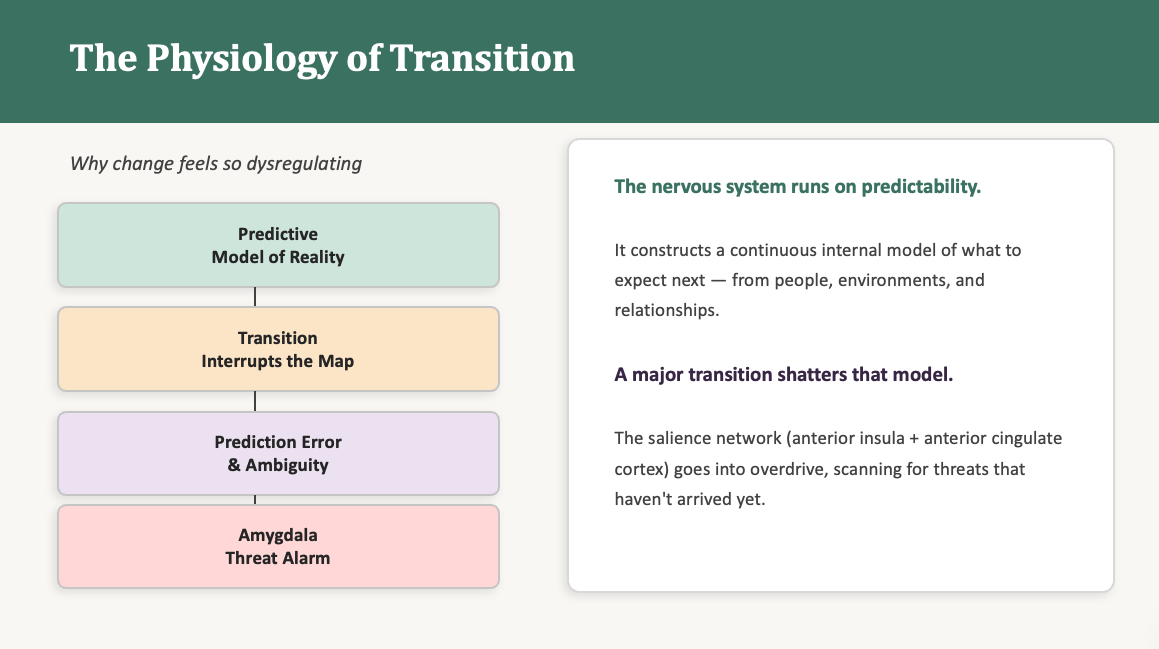
To understand why change leaves us feeling so ungrounded, we have to look at the predictive architecture of the human brain. The nervous system runs on pattern recognition and predictability. It constantly uses past experiences to construct an internal model of what's coming next, allowing you to move through the world with a baseline sense of safety and stability.
A major life transition shatters that internal model. Suddenly, the old map no longer matches the actual terrain of the brain and the existing neural pathways.
[Predictive Model of Reality] ---> Interrupted by Change ---> [Prediction Error / Ambiguity] ---> [Amygdala Threat Alarm]
When a transition occurs, the brain's salience network - which is anchored by the anterior insula and the anterior cingulate cortex - goes into overdrive. This network’s job is to scan the environment for salient, unresolved, or ambiguous data. During times of uncertainty, that ambiguity acts as a persistent, low-grade alarm signal in the body. The amygdala (the brain's threat detection center) reads "not knowing" the exact same way it reads immediate physical danger. It cues the body to mobilize or protect, meaning your nervous system is never fully at rest.
The Energy Cost of Neuroplasticity
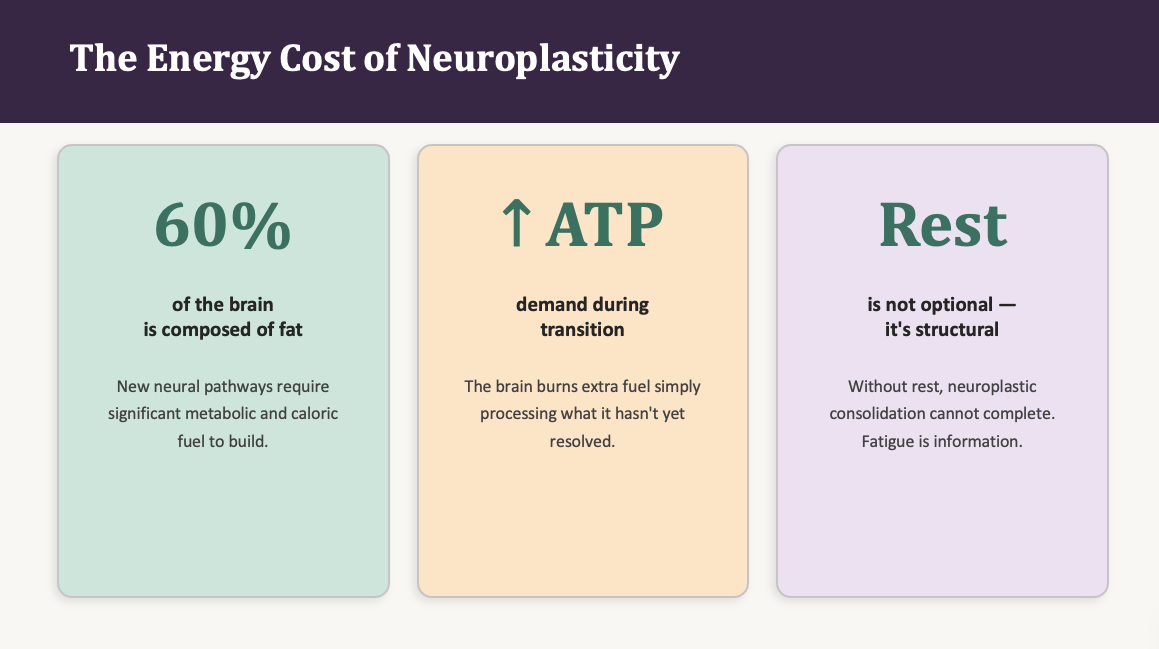
Furthermore, rebuilding an internal map requires a massive amount of metabolic and caloric fuel. The brain is composed of approximately 60% fat. To lay down new neural pathways and mitigate the neuroinflammation that comes with chronic stress, the brain needs high-quality structural fuel. Clean fats - such as high-quality EPA/DHA found in cod liver oil, which closely matches our brain chemistry - are critical. A minimum of 1,000 mg of EPA/DHA is recommended for neuroinflammatory support, scaling up to 3,000 to 3,600 mg for comprehensive cardiovascular and systemic resilience, according to a successful evidence based protocol developed by best-selling author American Cardiologist, Dr William Davis.
When you're navigating a transition, your brain is burning extra fuel simply to process what it hasn't yet found a way to resolve and to lay down new neural pathways to adapt your new circumstances. This is why you might feel completely exhausted, drained, and overwhelmed, even when your day-to-day life isn't necessarily physically demanding.
The Landscape of Liminality
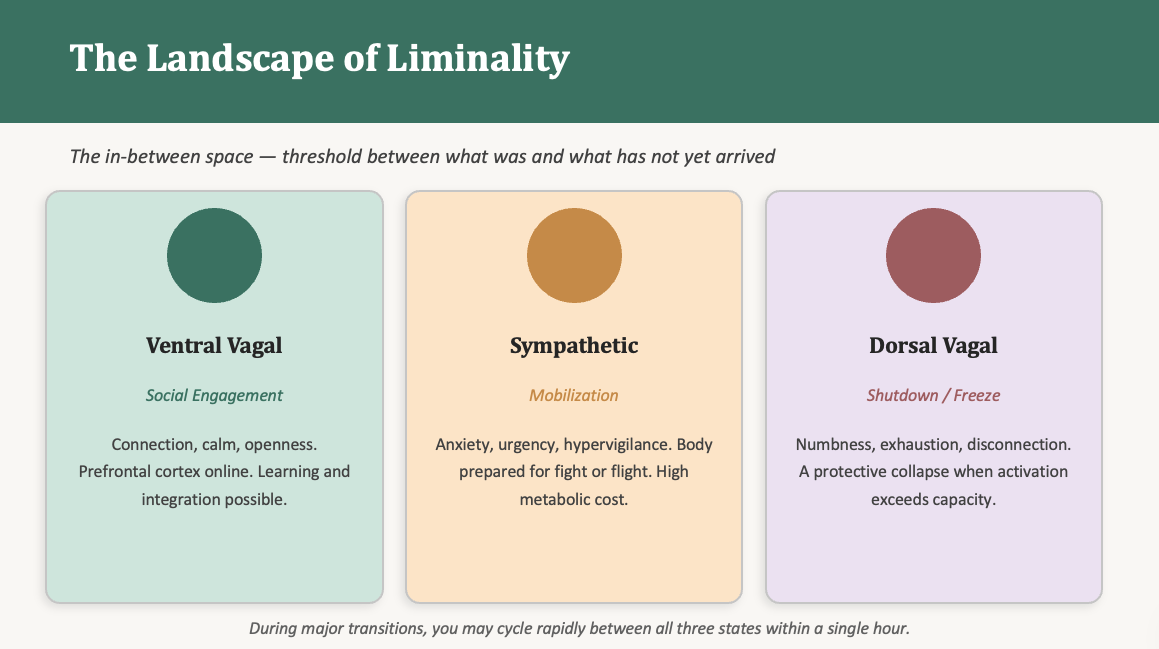
This disorienting, in-between space - the threshold between what was and what has not yet arrived - is called liminality. First described by anthropologists as a distinct phase in all major human transitions, liminality is inherently unstable because it lacks a familiar structural map and the associated neural pathways to navigate the new terrain and circumstances.
Under the framework of Polyvagal Theory, our autonomic nervous system (ANS) shifts between three primary neurophysiological states:
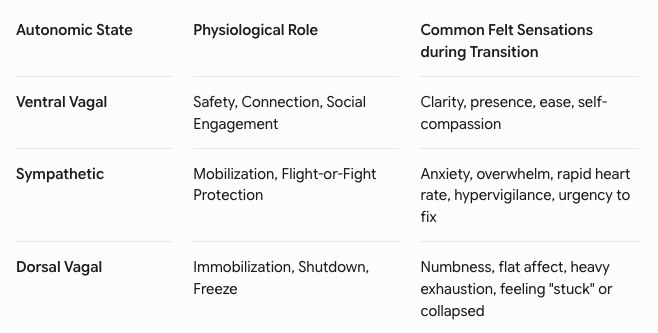
During a major life shift, it's incredibly common and biologically wired to find yourself cycling rapidly between these states. You might feel highly activated and anxious one hour (sympathetic mobilization), and completely flat, unmotivated, or numb the next (dorsal shutdown). This biological cycling is a direct, natural somatic response to a genuine loss of predictability - it's your body's valid way of navigating unfamiliar terrain.
Our goal when navigating change is not to bypass the transition or force a resolution prematurely. Instead, we want to build internal steadiness from within the uncertainty itself, expanding our capacity to stay connected to our bodies while the world around us is in flux and thus expanding our window of tolerance for the unknown.
The Somatic Practice Sequence for Transitional Stability
The following five sequential somatic practices are structured to move your nervous system through a natural arc of regulation. They're designed to bring your social engagement system back online, access ventral vagal safety, and gently expand your window of tolerance.
Practice 1: Somatic Arriving & Present-Moment Anchoring
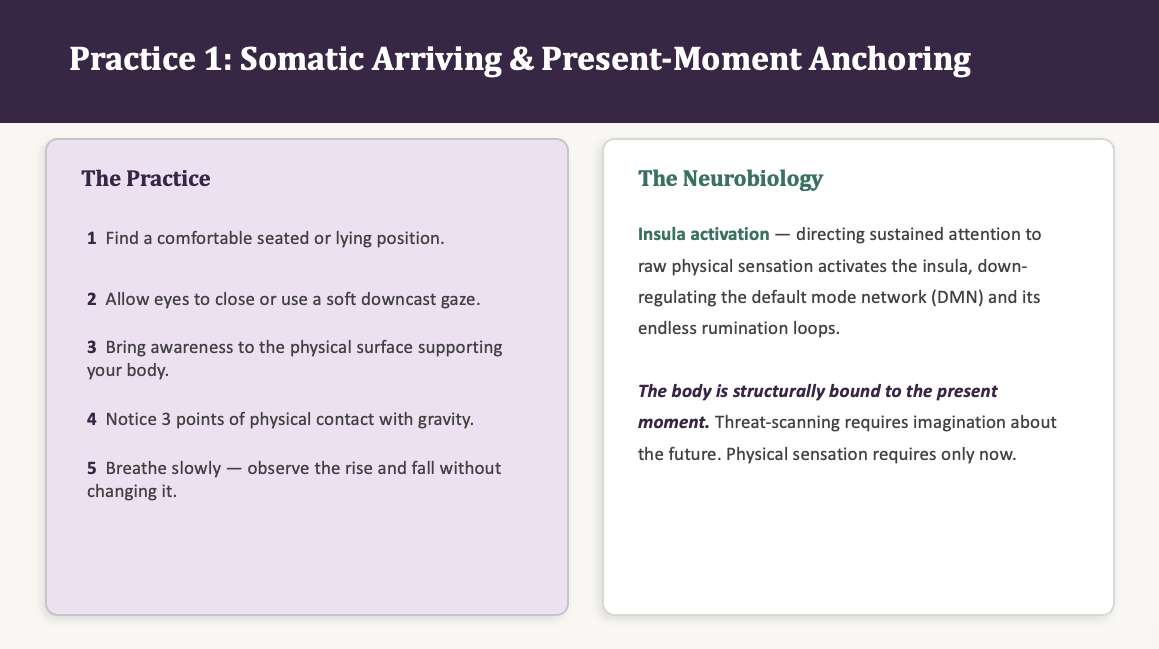
Before we can work with the nervous system's activation, we must first learn how to arrive safely inside our own skin. This practice interrupts the brain's endless threat-scanning loops by providing a concrete, tactile anchor in the present moment.
The Practice: Find a comfortable seated or lying position. Allow your eyes to close gently, or maintain a soft, downcast, open gaze. Bring your awareness down to the physical surface your body is resting on. Let the literal weight of your muscles and bones yield into the support beneath you. Press your feet firmly against the floor, feeling the resistance, and notice how the ground pushes back to support you. Ask yourself internally: “How does it feel to be in my body right now?” Simply track your internal sensations - whether it’s tightness, restlessness, a heavy heart, or a soft ease - without attempting to fix or change a single thing. Take one slow, full inhalation, and release it with an audible, soft sigh: “Ahhhh.” Pause, rest, and notice how even a single conscious breath begins to shift your internal landscape.
The Neurobiology: The body is structurally bound to the present moment. Directing sustained attention to raw physical sensations activates the insula, down-regulating the default mode network (DMN). The DMN is the neural network responsible for rumination, future-projection, and catastrophic daydreaming. By anchoring your awareness in proprioception (the sensation of weight and pressure), you pull energy out of the DMN and quiet anticipatory anxiety.
Practice 2: Environmental Orienting & Resourcing
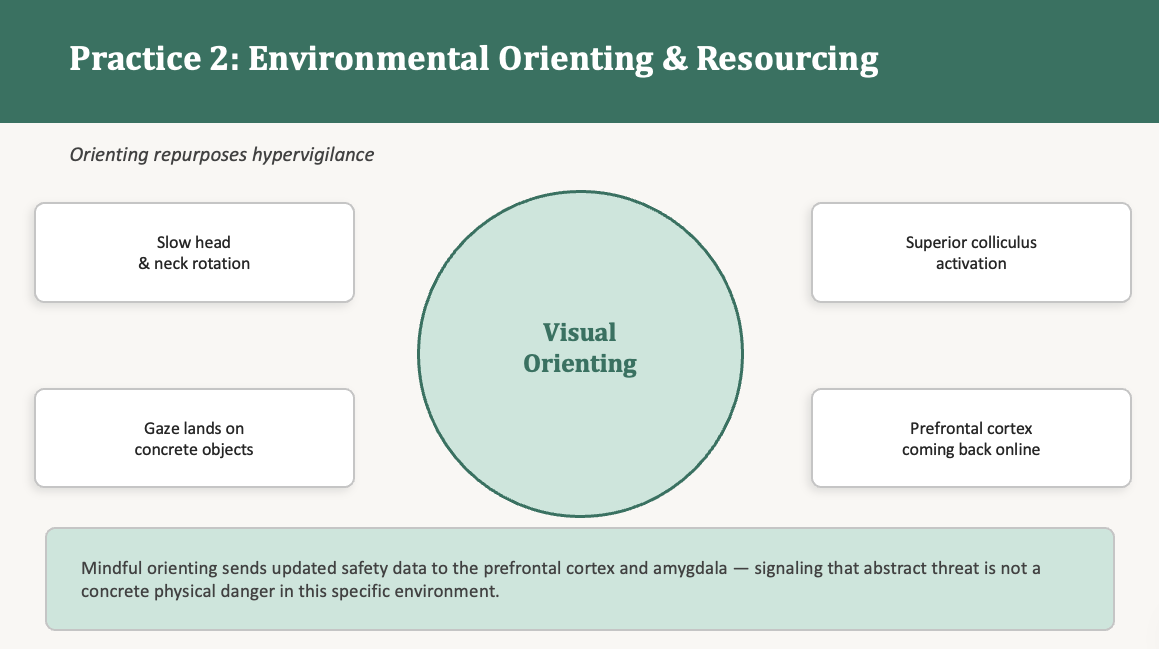
When a nervous system is caught in a liminal transition, it often falls into hypervigilance - an endless, metabolically expensive background scanning for abstract threats. Orienting repurposes this survival mechanism for active regulation.
The Practice: Sit quietly and slowly allow your head and neck to rotate, letting your eyes wander deliberately around your physical space. Let your gaze land on concrete objects one by one. Notice the structural stability of a wall, the grain of a wooden table, the color of a plant, or the light coming through a window. Let your eyes find something that feels visually familiar, neutral, pleasant, or even delightful. Once you've scanned the space, close your eyes or soften your focus and locate an internal resource. This is a spot or area in your physical body that feels neutral, stable, or relaxed right now. It could be the warmth of your hands resting on your lap, the solid contact of your heels on the floor, or a space in your shoulders that feeling relaxed because it's not currently holding habitual tension. Rest your awareness completely on this internal anchor. If turning your awareness inward feels inaccessible or generates a sense of distress, you can choose to focus entirely on an external resource instead. Individuals navigating unresolved trauma, high states of survival activation, or post-traumatic stress often find direct interoceptive awareness- the internal tracking of bodily sensations - to be disorienting or dysregulating, as the interior landscape itself can hold signals of past threat. In these moments, an external resource, such as the grounding presence of a companion animal, the steady texture of a favorite stone, a beautiful flower or plant, or a calming photograph, serves as a reliable anchor that allows the nervous system to settle safely from the outside in.
The Neurobiology: Mindful orienting activates the superior colliculus, a midbrain structure involved in visual processing and orientation behaviors. This sends updated data to the prefrontal cortex and the insula, confirming that your immediate environment can be evaluated as safe rather than merely reacted to. This intentional evaluation down-regulates the amygdala’s alarm signal. Accessing an internal resource, or an external one if that's more suitable for your current nervous system, activates the ventral vagal branch of the ANS, providing titration support - the essential neurological preparation that allows the body to approach difficult emotions without flooding or destabilizing.
Practice 3: Somatic Pendulation For Building Flexibility
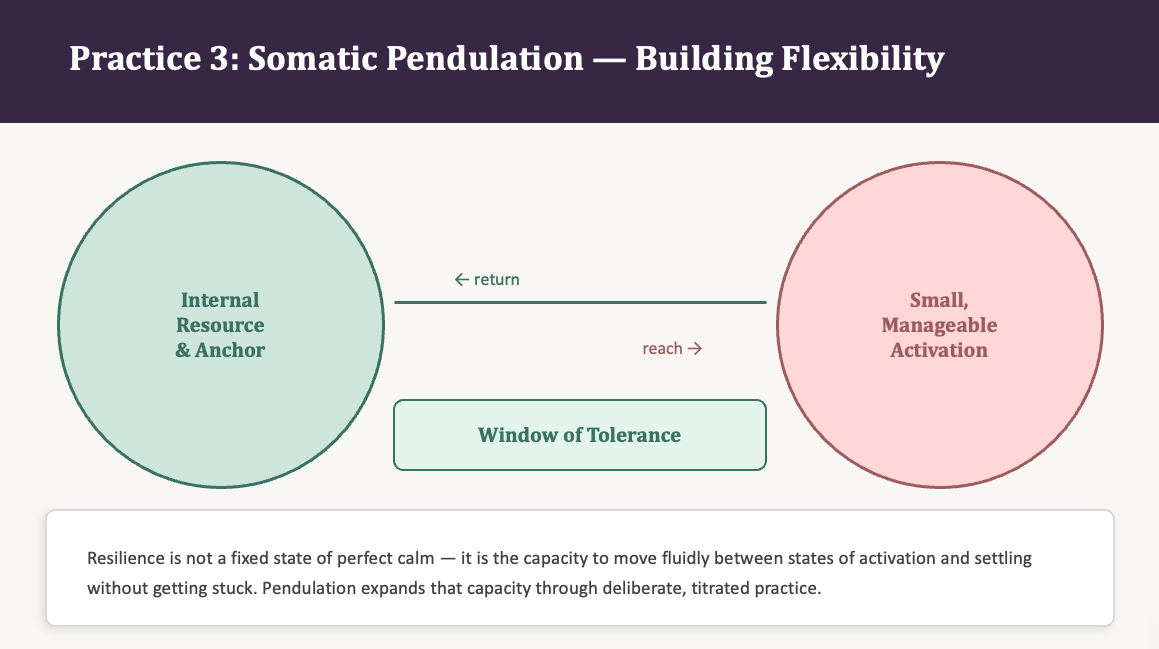
Resilience is not a fixed state of perfect calm; it's the capacity of your nervous system to move fluidly between states of activation and settling without getting stuck in either state.
The Practice: Reconnect with the internal resource/anchor you located in the previous practice. Take a few slow, grounding breaths there. Now, deliberately call to mind a small, manageable piece of the uncertainty from your current transition. Be sure to select an aspect of the transition you're moving through that carries a mild, manageable quality of "not knowing." Choosing a small, gentle piece of the uncertainty and staying on the edge of what feels uncomfortable allows you to stay comfortably at the edge of the activation, keeping your nervous system safe and well within your capacity and your window of tolerance, which is where deep change can take place. Dip your toes into this thought, staying right at the edge of the activation. Track where this uncertainty lands in your body - perhaps rising shoulders, a slight tightening in your chest, a knot in your stomach, or a brief holding of your breath. Simply witness it for a few seconds without diving deep into any story or narrative that might be running in the foreground of your somatic embodied experience. Now, smoothly and gently guide your attention back to your internal resource (your feet, your hands, your breath, or any other place or sensation that feels resourcing and supportive). Feel the immediate settling that occurs. Repeat this deliberate oscillation 2 to 3 times, swinging your awareness gently between the activation and the resource.
The Neurobiology: The concept of the window of tolerance was first developed by Dr. Dan Siegel, and then expanded upon within Somatic Experiencing by Dr. Peter Levine and within Sensorimotor Psychotherapy by Dr. Pat Ogden. Developed within the framework of Somatic Experiencing, pendulation expands your window of tolerance - the optimal zone of autonomic arousal where you can integrate stress without throwing your nervous system into hyperarousal (panic) or hypoarousal (shutdown). This practice builds inhibitory control, strengthening the prefrontal cortex's capacity to calm the amygdala. Each completed cycle of activation and return reinforces the neural pathway that states: “I felt the stress, I returned to baseline, and I am okay.”
Practice 4: Somatic Honoring of Endings and Grief
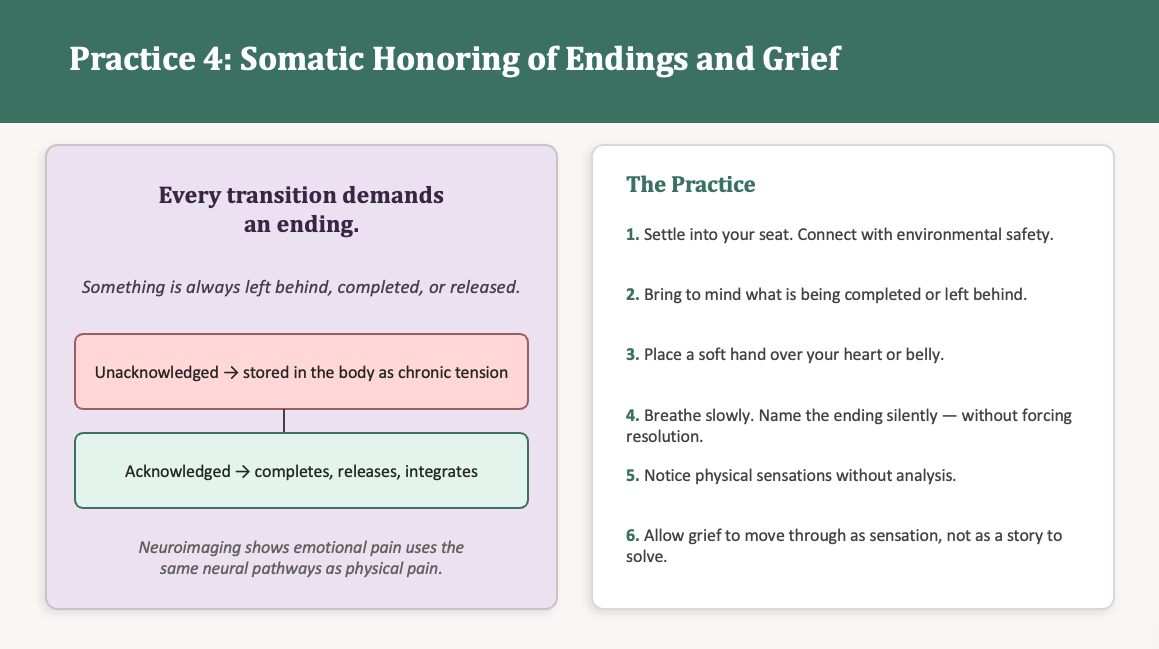
Every transition, no matter how joyful or consciously chosen, demands an ending. Something is always left behind, completed, or released. If this somatic grief isn't acknowledged, it stores itself in our tissues as a chronic, low-level physical constriction, a heavy chest, or a bracing pattern in the musculature.
The Practice: Settle deeply into your seat and connect with your environmental safety. Bring to mind what is being completed or left behind in this chapter of your life. Place a soft, gentle hand over the center of your chest or heart space. Let this physical contact be a non-judgmental gesture of witnessing. Internally or softly aloud, say to yourself: “I see that something is ending. I honor what I am leaving behind.” If a wave of sadness, tightness, or emotional pain arises, simply allow it to be there without trying to fix, analyze, or push it away. Give the sensation permission to be seen. When you feel ready, take a slow breath, bring your awareness back to your present-moment resource, and return to the space.
The Neurobiology: Neuroimaging studies show that emotional pain and somatic grief utilize the exact same neural pathways and brain structures as physical pain. When a life structure concludes, the hippocampus (which houses autobiographical memory) must structurally update its model of the self in context, which is highly demanding and calorically costly work. Self-compassion research shows that moving toward difficult emotional realities with deliberate care reduces physiological stress markers. The physical touch of a hand on the chest stimulates localized vagal branches around the heart, down-regulating sympathetic acceleration and creating the literal neurophysiology of self-compassion.
Practice 5: Multi-Modal Grounding for Ongoing Uncertainty
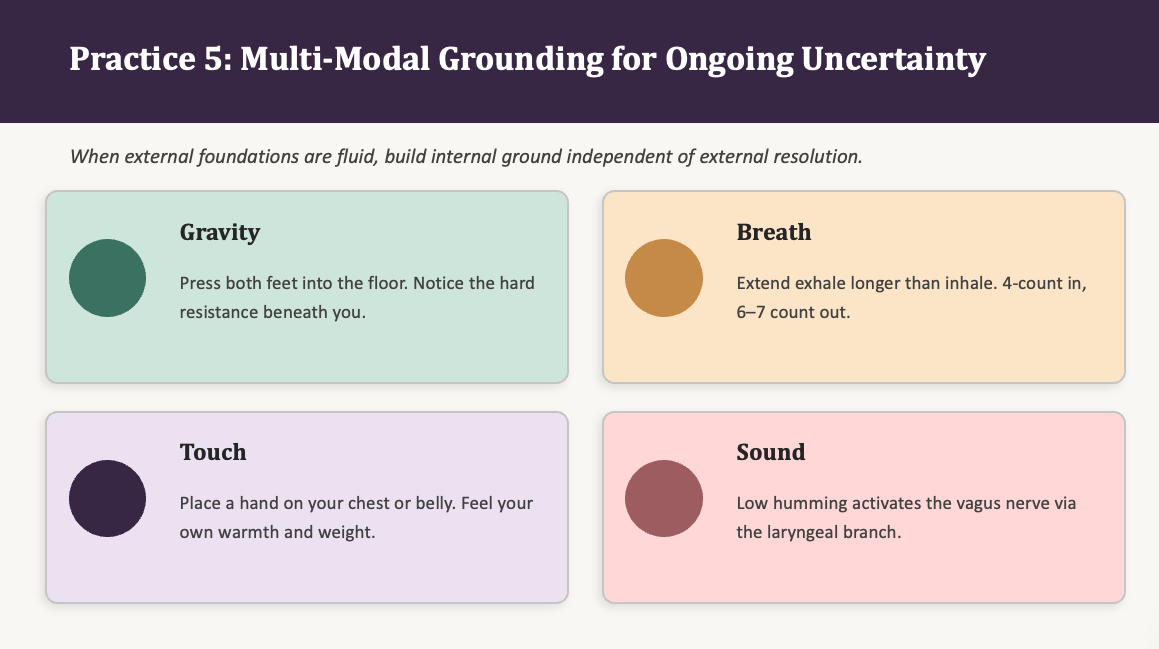
When external foundations are fluid as we move through change, we must build an internal sense of ground and inner safety that is independent of external resolution, without anything else having to change. This practice utilizes gravity and respiratory pacing to establish deep, internal containment.
The Practice: Direct your focus down into the core of your body - your throat, your chest, your stomach, and your lower belly. Slowly press both feet down into the floor, noticing the hard resistance of the architecture beneath you. Allow your sitting bones to sink completely into your seat, feeling yourself fully held by gravity. Now, initiate a structured, regulated breathing pattern: inhale deeply through your nose for a count of 4, then exhale slowly and smoothly through your mouth for a count of 6 to 8. As you exhale, let your gaze drop slightly toward your belly button, and imagine the breath dropping all the way down through your torso, through your legs, and deep into the earth. If it supports your focus, silently repeat the anchor word "ground" or "here" on each extended exhalation. Continue this pattern for 1 to 2 minutes.
The Neurobiology: During intense change, a sense of groundlessness can feel literal because the body has lost its orientation to familiar environmental spatial markers. This practice uses multi-modal anchoring, which engages proprioception, gravity tracking, and interoception simultaneously. Research demonstrates that multi-modal somatic interventions create far more stable and durable state shifts than single-channel tools. Furthermore, extending your exhalation longer than your inhalation stimulates the efferent fibers of the vagus nerve, slowing down your heart rate and lowering systemic sympathetic tone.
The Crucial Stage: Integration and Neuroplasticity
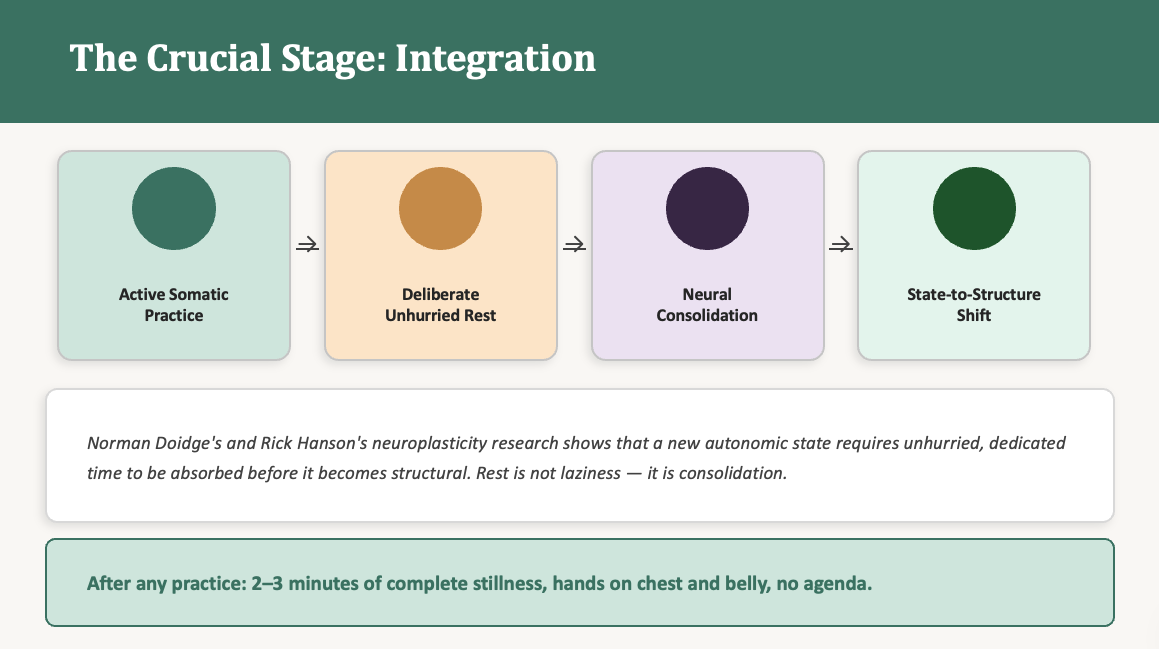
Once you complete any active somatic practice, the most vital step is to give your system unhurried time to rest.
The Integration Practice: Let your breath return to its completely natural, undirected rhythm. Place one hand on your chest and one on your lower belly. Spend 2 to 3 minutes doing absolutely nothing. Notice the changes in your system: Does your body feel heavier? Softer? More spacious? Is there a slight softening in your jaw? Do your shoulders drop?
Now, transition cleanly into the final integration sequence: Pause, Rest, Notice. What feels different in your body right now? This explicit rest period is laying down, building, and reinforcing new neural pathways of self-awareness and self-regulation. Following this pause, introduce slow, alternating bilateral stimulation - such as gently tapping opposite shoulders or thighs - to allow for a deeper somatic integration that balances both brain hemispheres. Take a final deep breath, let out a soft sigh, and return to your day.
[Active Somatic Practice] ---> [Pause, Rest, Notice] ---> [Bilateral Stimulation] ---> [Deliberate Unhurried Rest] ---> [State-to-Structure Shift]Pioneering neuroplasticity research reveals that a new autonomic state requires unhurried, dedicated time to be absorbed before the next external demand arrives. During a transition, the world often demands rapid, decisive actions before our body feels ready. Leaving a few minutes for this exact integration sequence allows the brain stem, insula, and hippocampus to actively consolidate these changes in real time.
By first pausing to track the physical shift and then applying rhythmic bilateral stimulation, you bridge the communication between the analytical left hemisphere and the somatic, emotional right hemisphere where charged unresolved emotions and trauma might otherwise stay stuck and out of reach for integration. This process directly encodes the newly regulated state into your neural biology, building an integrated pattern that, through consistent repetition, eventually becomes a permanent, structural trait.
Navigating Common Somatic Roadblocks: A Relational Guide
When we begin working directly with our bodies during periods of intense life changes, we often encounter protective responses from our nervous system. Understanding these common experiences can help you cultivate profound self-compassion as you practice.
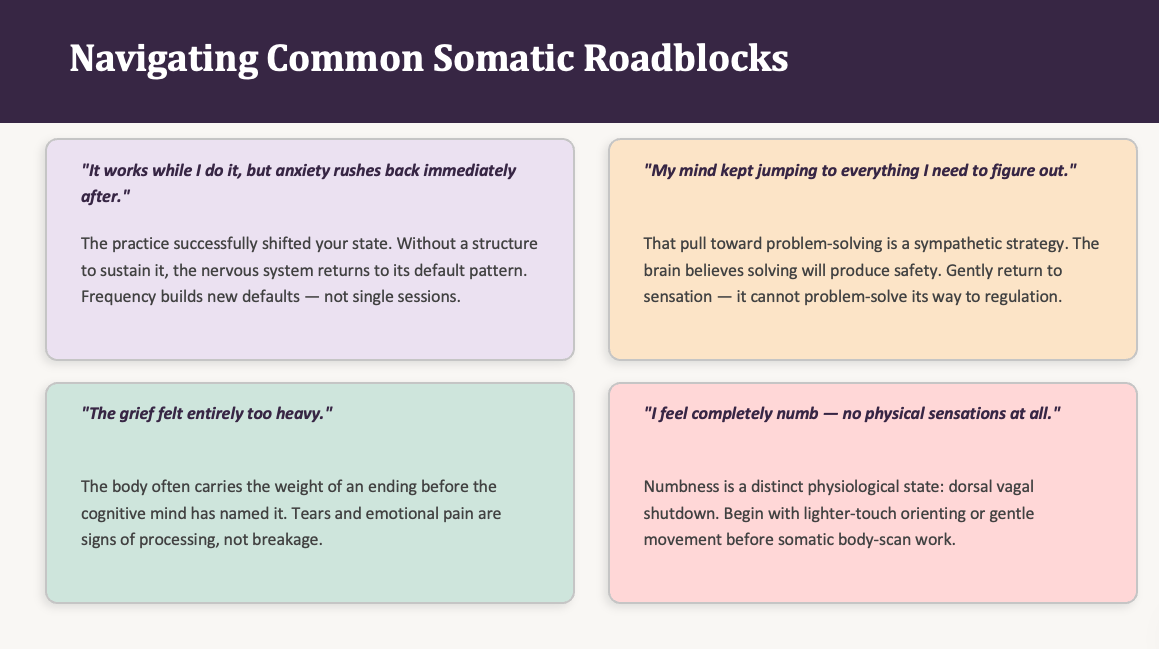
1. "The practices work while I do them, but as soon as I stop, my anxiety rushes back."
This is incredibly common and provides helpful information about how your nervous system was wired to keep you safe. The practice successfully guides your body into a temporary ventral vagal state. However, when the explicit structure of the exercise ends, your nervous system naturally returns to its habitual survival pattern - the stress loop it currently relies on to navigate the transition. This behavior is simply your stress pattern doing what it knows best to protect you, as the nervous system naturally returns to the habitual survival loop it relies on to navigate transition. This is exactly why consistency is needed to bring about long lasting change. Over time, as you repeatedly show your system the pathway back to regulation, that state gradually becomes your new familiar baseline.
2. "I couldn't stay focused on my resource. My mind kept jumping to all the things I need to figure out."
That intense pull toward analytical problem-solving and obsessive planning is a classic sympathetic nervous system strategy for managing uncertainty. Your brain believes that if it can just solve the future, the body will finally be safe. This is your nervous system trying to do its job; you do not need to fight, judge, or suppress it. Instead of trying to force your mind to stop thinking, simply practice making your somatic resource equally accessible. Over time, you train your nervous system to see that it has two options available, not just one, which is the very foundation of true autonomic choice.
3. "The grief piece felt entirely too heavy. I wasn't expecting that much pain to surface."
The body often carries the weight of an ending long before the cognitive mind has fully named it. The emergence of emotional pain or tears is a sign that your system finally feels safe enough to begin processing what it has been carrying - this is your body actively digesting stored stress and moving toward integration. However, if the sensation ever feels flooding or overwhelming, that's valuable information about your pacing. It means your nervous system needs a more highly titrated approach. Take some time away from what's activating or brining pain, work with much smaller pieces of the transition, and keep your attention firmly anchored on your external safety cues and internal resources.
4. "I feel completely numb. I couldn't connect to any physical sensations during the practices."
Numbness is a distinct physiological state - specifically, a dorsal vagal shutdown response. When autonomic activation has been too intense or sustained for too long, the body protects itself by turning down the volume on all interoceptive signals to prevent overload. If you feel numb, don't try to force a deep or intense sensation. Your ideal entry point is the simplest form of the arriving practice: merely noticing the solid contact of your feet on the floor, or tracking the rise and fall of your breath without trying to alter it. Meet your body exactly where it is, and your nervous system will naturally begin to thaw at its own innate pace.
Bringing the Practices into the Peak of Transition
Here is the updated section, seamlessly incorporating Deb Dana's concepts of glimmers and somatic savoring into the scientific and practical framework of the micro-dose approach:
Bringing the Practices into the Peak of Transition
How do you use these tools when you are in the middle of an acute, highly stressful transition moment?
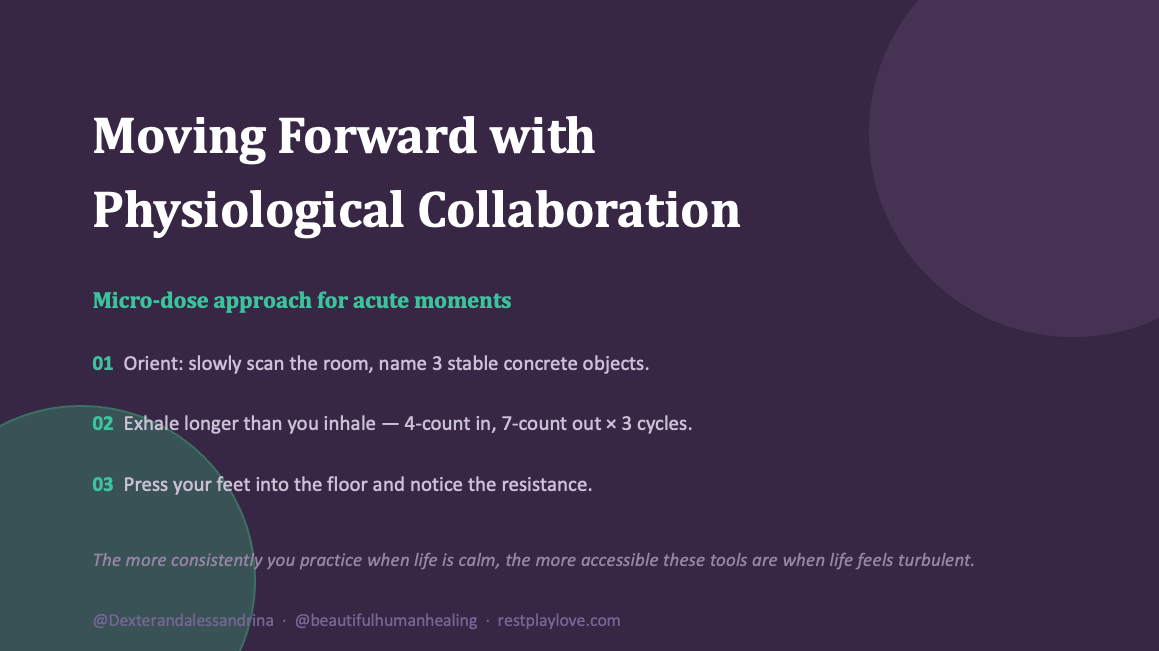
Unlike popular belief, you don't need to find a quiet room and close your eyes for 30 minutes to reset your nervous system state and rewire your brain to more adaptive patterns and behaviors. Instead, use the micro-dose approach:
Orient immediately: Look around the room slowly. Visually locate three concrete, stable objects to gather sensory evidence that you are physically safe right here, in this exact micro-moment. This simple action can interrupt a threat-response spiral.
Exhale longer than you inhale: Drop your eyes slightly and complete three simple cycles of a 4-count inhalation and a slow, 7-count exhalation.
Locate a Glimmer: Grounded in the Polyvagal framework developed by Deb Dana, actively scan your immediate environment for a "glimmer" - a micro-moment of safety, connection, or regulation. Unlike a major positive event, a glimmer is a tiny, subtle cue that signals biological safety to your nervous system. It could be the texture of light catching a surface, the sound of a bird outside, the warmth of a cup in your hands, or a brief moment of quiet in your surroundings. Tracking these micro-cues intentionally shifts your autonomic state out of defensive survival tracking and into a baseline neuroception of safety.
Engage in Somatic Savoring: Once your eyes or senses land on a glimmer, don't simply note it intellectually and move on. Dedicate 10 to 15 seconds to somatically savor the experience. Allow the physical sensation of ease, warmth, softening, or peace associated with that glimmer to physically expand into your body. Notice where the resonance lives in your chest, your belly, or your shoulders, and deliberately stay with that sensation to deepen the neural imprint of safety. Another profound method of practicing somatic savoring is to consciously recall a specific, lived memory that naturally evokes these exact same feelings and nourishing sensations. For individuals who find an accessible memory difficult to locate in the present moment, you can actively generate these nourishing sensations through future-scripting or intentional future-manifestation. By vividly imagining a future scenario where you feel entirely anchored, safe, and at ease, your brainstem and autonomic nervous system process those imagined sensory details as a current physiological reality, allowing you to cultivate and savor the exact same neuroception of safety from the inside out.
The Science of the Micro-Dose Approach
Emerging neuroscientific research validates that completing short, 10 to 30-second practices repeated 7 to 10 times throughout the day is a highly effective way to permanently rewire the brain and shift autonomic baselines. Pioneering neurodevelopmental research by Dr. Bruce Perry demonstrates that structural changes in the neural architecture depend entirely on the frequency and repetition of activation rather than the duration of a single session. Because the brain requires active stimulation to alter its pathways, introducing brief, frequent intervals of regulation throughout the day continually provides the neural networks with the updated data required to update their default settings.
This methodology aligns directly with spaced learning theory and homeostatic metaplasticity. Cognitive studies, including foundational work by Dr. R. Douglas Fields on synaptic plasticity, show that cellular pathways consolidate memory and structural changes far more efficiently when stimulation is delivered in brief, spaced intervals with distinct periods of rest, rather than accumulated into one prolonged session. Massed, long-duration practices can inadvertently overtax an already stressed nervous system, leading to cognitive fatigue or an increased metabolic load that limits long-term potentiation.
By actively pairing environmental orienting with Deb Dana's practices of locating glimmers and somatic savoring, you're explicitly utilizing what neuropsychologist Dr. Rick Hanson describes as the process of turning a passing positive experience into a lasting neural trait. The immediate activation of safety cues, combined with the deliberate somatic absorption of that state, physically alters your synaptic connections.
In our modern world, high-frequency micro-practices are highly practical because they require no environmental modifications or scheduling adjustments. By scattering these 10 to 30-second somatic resets throughout your regular routine, you accumulate 7 to 10 daily iterations of explicit safety data. This consistent repetition keeps your prefrontal cortex actively engaged and prevents your amygdala from remaining in a chronic state of survival accumulation, making regulation an automated, structural trait over time.
Moving Forward with Physiological Collaboration
Traditional top-down approaches to stress management ask us to use conscious logic to talk our bodies out of survival states. However, the literal architecture of our anatomy tells a different story and requires different and more effective interventions. An incredible 80% to 90% of the nerve fibers within the vagus nerve are afferent, meaning they travel bottom-up, carrying safety and threat data from the organs up to the brain. Only 10% to 20% are efferent (top-down).
The brain is primarily a receiver of the body's data, not the absolute dictator of it. When your body is caught in a state of survival during a major life transition, no amount of cognitive rationalization can override the massive influx of bottom-up threat signaling flooding your brainstem. Permanent neural integration requires a bottom-up somatic, nervous system informed intervention to change the physiological baseline first.
By utilizing physical grounding, environmental orienting, pendulation, and somatic honoring, you alter the direct neurochemical and electrical data your brain relies on to determine whether you are safe. You stop trying to manage your body, and you begin to collaborate with it.
Transitions are undeniably challenging, but they are also the precise evolutionary mechanism through which we grow. Your nervous system is learning, in real time, that it can meet uncertainty and remain beautifully connected to itself throughout the entire process. Be gentle with your body, respect your pacing, and take beautiful care of yourself as you step through this threshold.
Somatic and Neuroplastic Resources for Your Transition Library
To deepen your relationship with bottom-up healing and neurophysiological resilience theories and approaches, I highly recommend adding these foundational texts to your integration practice:
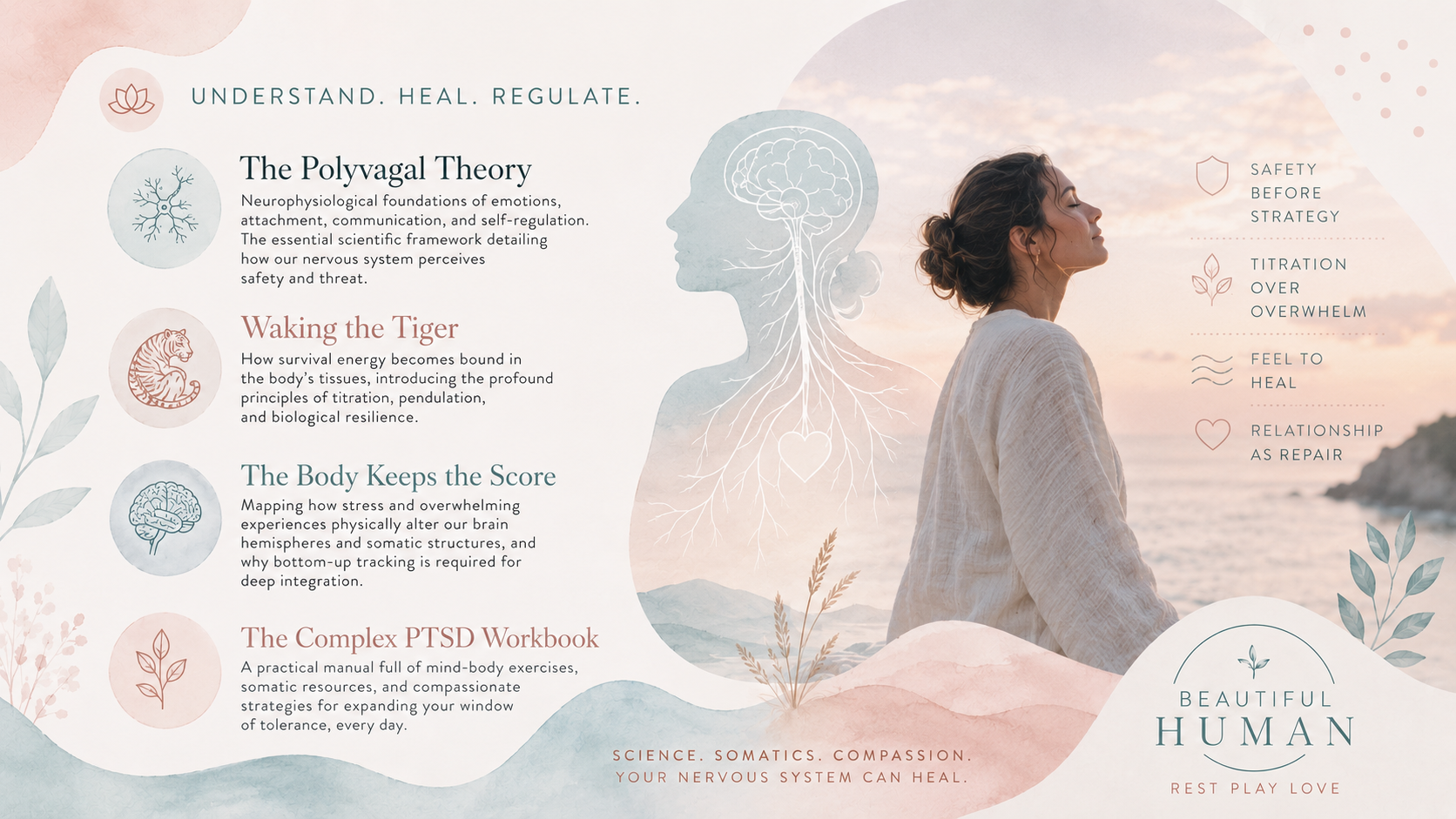
The Polyvagal Theory: Neurophysiological Foundations of Emotions, Attachment, Communication, and Self-regulation - The essential scientific framework detailing how our autonomic nervous system perceives safety and threat, highlighting the 80-90% afferent-to-efferent structural bias of the vagus nerve.
Waking the Tiger: Healing Trauma - An extraordinary look into how survival energy becomes bound in the body's tissues, introducing the profound principles of titration, pendulation, and biological resilience.
The Body Keeps the Score - A masterpiece mapping how stress and overwhelming experiences physically alter our brain hemispheres and somatic structures, and why bottom-up tracking is required for deep integration.
The Complex PTSD Workbook - A practical manual full of mind-body exercises, somatic resources, and compassionate strategies for expanding your window of tolerance on a daily basis.
This section contains affiliate links. I only share books, protocols, and tools that I have personally integrated and found deeply meaningful enough to include in my professional work and writing.
What are you taking with you from this somatic exploration today? Feel free to connect and share reflections in the comments below.
Guided Practice Video Demonstration
For individuals who process information more effectively through visual or auditory guidance, a complete video demonstration is available to support your personal integration. This recorded live session, titled Navigating Change and Transitions: Somatic Practices for Anxiety and Nervous System Regulation, contains the complete sequence of somatic practices detailed throughout this post, along with the foundational neuroscience that explains their impact on the autonomic nervous system. You can access the full recording directly at https://youtu.be/clWeZ4fmMIc.
Get support while navigating change and transitions: Gentle Offerings
Join the community: Instagram: @beautifulhumanhealing
Free Meditations on YouTube: @Dexterandalessandrina
