The Physiology of Regulation: A Deep Dive into Breathwork as a Bridge to Safety and Emotional Regulation

Breathwork for Emotional Regulation: How Your Breath Changes Your Nervous System State in Real Time
Breathing patterns shape our nervous system state continuously, including how we feel emotionally, how reactive we become, how energized or depleted we are, and how present we can be with ourselves and others. This is happening not just during exercise, acute stress, or meditation, but across every ordinary moment of every ordinary day, bidirectionally and largely beneath our awareness.
What I came to understand through years of studying somatic neuroscience and through sustained breathwork and nervous system practice is that breathing isn't simply a passive maintenance function keeping the body healthy and alive in the background of our conscious experience. It's one of the primary and most direct mechanisms through which the autonomic nervous system continuously regulates internal state, moment by moment, largely beneath the threshold of our awareness.
The relationship between our breath and our nervous system runs in both directions. The way we breathe reflects the state our nervous system is currently organized around, and changing the rhythm, pace, depth, and structure of our breath also changes the signals being sent back into our nervous system, which then changes our physiology, emotional tone, perceptual filtering, and cognitive availability in response. This bidirectionality is what makes our breath such an unusually direct access point into autonomic functioning, and it's the foundation of why breathwork practices produce tangible, measurable physiological effects rather than simply inducing a subjective sense of calm and relaxation.

Why Emotional Dysregulation Is Physiological Before It’s Psychological
There is a strong cultural tendency to interpret emotional states through a primarily psychological lens, as though anxiety, chronic irritability, emotional flooding, dissociation, numbness, shutdown, and overwhelm are mainly problems of thought, interpretation, attitude, or insufficient coping capacity. In reality, these states are deeply physiological and are organized through the autonomic nervous system before conscious cognition is involved at all.
Stephen Porges's Polyvagal Theory offers one of the most useful frameworks for understanding this. The autonomic nervous system, through a process Porges calls neuroception, is continuously scanning the internal and external environment for cues of safety, danger, and life threat, and this scanning happens automatically, below conscious awareness, meaning our body is already responding to information before it has been consciously interpreted. Neuroception drives state shifts in our nervous system that then shape perception, thought, emotional tone, relational availability, and behavioral output from the bottom up.
When our nervous system detects any type of threat, whether the source is physical, relational, environmental, social, or carried through implicit memory and prior experience, our body reorganizes around protection rather than restoration, connection, or flexibility. For some people this takes the form of sympathetic activation: anxiety, hypervigilance, urgency, restlessness, racing thoughts, insomnia, muscular bracing, difficulty settling, irritability, and the persistent internal pressure that something unresolved needs immediate attention. For others, particularly when a perceived threat has been prolonged or overwhelming, our nervous system shifts toward dorsal vagal shutdown, which can manifest as exhaustion, numbness, emotional flatness, dissociation, difficulty initiating, low motivation, cognitive fog, burnout, and a pervasive sense of moving through life without full access to oneself.
Most nervous systems oscillate between these states throughout the day depending on what’s being perceived from moment to moment, and many people spend years, sometimes decades, cycling between chronic activation and collapse without recognizing that their physiology has adapted around survival and protection rather than regulation.
Breathing patterns both reflect and reinforce these nervous system states. During sympathetic activation, respiration tends to become rapid, shallow, and chest-oriented in preparation for mobilization, which then increases sympathetic arousal further through shifts in carbon dioxide and oxygen balance, heart rate, vagal signaling, and muscular tone. During dorsal shutdown, breathing often becomes restricted, collapsed, or minimally engaged, reinforcing immobilization patterns. In both cases the breath is not simply accompanying the nervous system state; it is actively participating in maintaining it. This is precisely why working directly with the breath can alter the underlying nervous state state rather than merely managing its surface expression.
Why the Breath Is Such a Direct Access Point Into the Autonomic Nervous System (ANS)
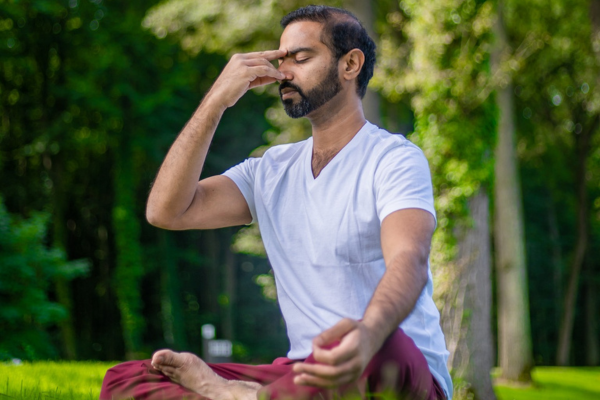
Breathing is unique among autonomic functions because it’s governed simultaneously by the brainstem and the voluntary motor cortex. Most autonomic processes, heart rate, digestion, blood pressure, inflammatory signaling, vascular tone, operate entirely outside of voluntary conscious control. The breath doesn’t. It proceeds automatically and can also be consciously shaped, which means it occupies an unusual position as a bridge between the voluntary and involuntary nervous systems.
When we intentionally alter the rhythm, pace, depth, duration, or texture of the breath, we’re not simply relaxing or energizing in a subjective sense. We’re changing autonomic signaling throughout the whole body. Respiratory patterns influence vagal tone, carbon dioxide and oxygen balance, heart rate variability, sympathetic and parasympathetic balance, muscular tension, blood chemistry, and the activity of brain regions involved in threat detection and emotional regulation.
The vagus nerve plays a central role in this process. The vagus, meaning the ‘wandering’ nerve because of how innervates so many organs in our body, is the tenth cranial nerve and primary pathway of the parasympathetic nervous system. It extends from the brainstem through the throat, larynx, heart, lungs, diaphragm, and abdominal organs, carrying information bidirectionally between our body and our brain. Approximately eighty to ninety percent of vagal fibers are afferent, meaning they carry information upward from the body to the brain rather than downward from the brain to the body. The brain is, in large part (up to 90%), receiving a continuous report about internal physiological state rather than issuing commands. When breathing patterns shift toward slower, more regulated rhythms with lengthened exhales, the vagus nerve transmits signals associated with safety and settling, slowing heart rate, increasing parasympathetic activation, reducing sympathetic dominance, and altering activity in regions like the amygdala and prefrontal cortex in ways that improve emotional regulation and reduce the appraisal of threat. These are measurable, replicable physiological changes in autonomic functioning rather than subjective impressions.

Interoception and the Fear of Internal Sensation
One of the aspects of emotional dysregulation that receives less attention than it truly deserves is that many people are not only struggling with emotions themselves but with the bodily sensations that accompany emotion, which is why dissociation is such a common phenomenon. A racing heart, constriction in our throat, pressure in our chest, heat moving through our face, a sense of urgency or activation moving through our body are all physiological responses to some perceived threat in our internal or external environment. For nervous systems shaped by chronic stress, unresolved trauma, emotional invalidation, a strong inner critic, perfectionism, or prolonged overwhelm, these internal sensations often become associated with danger rather than information about our nervous system state and what it’s neurocepting at any moment in time. Our body begins interpreting physiological activation itself as threatening, which initiates a secondary defensive response on top of the original one, compounding dysregulation. This is often called the ‘body-brain’ or ‘gut-brain’ feedback loop.
This is where interoception becomes most relevant to breathwork practice. Interoception refers to our capacity to perceive and interpret the internal state of our body accurately and without excessive threat appraisal and downline reactivity. Chronic dysregulation tends to narrow and distort our interoceptive awareness, either toward hyperawareness or hypersensitivity in which sensation is immediately interpreted as alarming, or toward numbing or dissociation in which internal signals are difficult to detect at all because we’re repressing or suppressing them.
Breathwork can support interoceptive development gradually by creating conditions in which internal sensations can be noticed and remained with in manageable, titrated doses rather than immediately suppressed, intellectualized, escaped through activity, or catastrophized into overwhelm and eventually shutdown. Over time the nervous system can begin updating its associations, learning through repeated physiological experience rather than through cognitive reassurance that activation can exist, move through, and resolve without becoming catastrophic.

Extended Exhales and the Physiology of Downregulation
One of the simplest and most physiologically reliable practices for anxiety, emotional activation, and sympathetic overwhelm involves lengthening the exhale relative to the inhale. During inhalation, our heart rate naturally increases slightly as our vagus nerve briefly reduces its influence on the sinoatrial node. During exhalation, vagal influence increases and our heart rate begins slowing again. When the exhale becomes slower and longer than the inhale, parasympathetic activation is sustained for a greater proportion of each respiratory cycle.
When practiced consistently over multiple breath cycles, extended exhale breathing begins shifting heart rate variability, which is one of the primary measurable indicators of autonomic flexibility and vagal tone. Heart rate variability refers to the variation in time between successive heartbeats, and a healthy nervous system maintains a rhythmically responsive HRV pattern rather than a rigid or erratic one. Low HRV is associated with chronic stress, anxiety, depression, burnout, inflammation, and reduced emotional regulation capacity. Higher HRV reflects greater autonomic adaptability, flexibility, and resilience.
A key point about extended exhale breathing is that the body is not responding to a positive thought or a relaxation suggestion. It’s responding to physiological information and specifically cues of safety, being transmitted through our vagus nerve. The conditions associated with settling and safety are being created at the level of the autonomic nervous system itself, which is why the practice can produce noticeable shifts even when the person doing it is skeptical, distracted, or emotionally flooded.
For nervous systems accustomed to chronic urgency, forcing very long exhales too quickly can itself feel dysregulating because unfamiliar slowness can initially register as uncertainty or even threat. A more attuned approach involves extending the exhale by only a small amount at first, perhaps inhaling for a count of four and exhaling for a count of five or six, allowing the exhale to remain soft, unforced, and complete. Gradual pacing matters because the nervous system changes through repeated experiences of safety, not through coercion.

Box Breathing and Interoceptive Tolerance
Box breathing works differently than extended exhale practices because it introduces structure, sequencing, rhythm, and breath retention into the respiratory cycle, engaging attentional regulation networks more directly alongside autonomic shifting.
The structure of box breathing typically involves four equal phases: inhale for a count, hold at the top, exhale for the same count, hold at the bottom. The equality of the breathing phases creates physiological steadiness and attentional anchoring, which is part of why this technique has been adopted in high-performance environments where both emotional regulation and cognitive clarity are simultaneously required under pressure.
From a neurological perspective, the counting and sustained attention involved in box breathing support activation of the dorsolateral prefrontal cortex, which is associated with executive functioning and deliberate attentional regulation, while reducing the relative dominance of amygdala-driven threat appraisal. But the breath holds themselves carry a particular function that is often underappreciated: they activate the parasympathetic nervous system and build interoceptive tolerance by creating structured opportunities to remain present with our internal sensations without immediately mobilizing away from them.
For many dysregulated nervous systems, sensations like fullness, pressure, stillness, constriction, or uncertainty are immediately followed by defensive responses because the body has learned through accumulated experience to associate those sensations with overwhelm or danger. Structured breath holds, practiced with enough presence and gentleness to remain within the window of tolerance, gradually teach our nervous system that these sensations can be experienced and moved through without requiring immediate escape or shutdown. This is one reason why breathwork can expand emotional capacity over time rather than only creating temporary state changes. As we practice box breathing, our nervous system is not simply calming in the moment. It’s also learning a new relationship to our internal experience.

Coherent Breathing and Long-Term Autonomic Flexibility
Of the various breathing approaches supported by research, coherent breathing, sometimes called resonance frequency breathing, has one of the most well-established evidence bases for long-term nervous system health and emotional regulation capacity.
Coherent breathing typically involves breathing at approximately five to six breath cycles per minute with equal inhale and exhale durations, often around five seconds in and five seconds out. At this pace, respiration begins synchronizing with the body's Mayer wave, a natural blood pressure oscillation cycling at a similar frequency, creating a state of maximal synchronization between respiratory rhythm, cardiovascular rhythm, and autonomic nervous system oscillation.
Research by Paul Lehrer, Richard Gevirtz, and others has demonstrated that this breathing rate produces peak HRV amplitude and improves vagal tone over time, with documented improvements in emotional regulation, anxiety, resilience, cardiovascular function, and autonomic flexibility across clinical and nonclinical populations.
What I personally find most meaningful about coherent breathing is not any single session but what consistent practice does to our nervous system's resting baseline over weeks and months. For people living in chronic states of hypervigilance, urgency, perfectionism, or high-functioning anxiety, practices that strengthen autonomic flexibility create something more fundamentally helpful and supportive than momentary relief. They begin shifting what the nervous system treats as its default operating range, gradually making regulation more accessible before activation escalates into overwhelm and eventually shutdown or collapse.

The Physiological Sigh
One of the fastest-acting tools for reducing acute autonomic activation is the physiological sigh, a breathing pattern consisting of a double inhale through the nose followed by a long, slow exhale, often paired with a sigh. This pattern occurs naturally throughout the day and during sleep as our body regulates carbon dioxide levels and resets respiratory efficiency. Research by Andrew Huberman, David Spiegel, and colleagues has demonstrated that intentional physiological sighing can produce rapid reductions in stress arousal and sympathetic activation, with measurable effects appearing within a single breath cycle and often triggering a yawn, a sign that we’ve released some of our activation and shifted into parasympathetic nervous system system functioning, within 2-3 breath cycles.
The first quick inhale followed immediately by a second smaller and slightly sharper inhale fully reinflates collapsed alveoli in the lungs, optimizing gas exchange, and the extended exhale that follows discharges excess carbon dioxide while maximizing the parasympathetic vagal response. What makes this practice particularly useful during moments of acute overwhelm, panic, emotional flooding, or cognitive spiraling is its accessibility. It requires no formal practice session, no specific posture, no breath training, and takes only a few seconds to produce a meaningful physiological and desired shift in our nervous system and entire body.

Resistance Breathing as a Grounding Anchor
For some nervous systems, particularly those shaped by trauma, dissociation, hypervigilance, or chronic difficulty tolerating inward attention, slow silent breathing practices can initially feel destabilizing rather than regulating. Quieting the breath and directing awareness inward can sometimes intensify a sense of vulnerability, anxiety, or dissociative responses, especially when introduced without adequate titration or attunement.
Resistance breathing can be more accessible for these more sensitive or heightened nervous systems because it creates tangible sensory feedback that provides a concrete anchor for the body to orient toward. Breathing slowly through pursed lips or through a straw creates back pressure during exhalation, which naturally slows respiration, increases diaphragmatic engagement, and grounds awareness in physical sensation without requiring intense inward focus or emotional processing. The resistance itself becomes an anchor, something our body can feel clearly while moving through the practice.
This is one reason trauma-sensitive breathwork approaches tend to emphasize grounding, orientation, choice, and pacing before depth or complexity. Nervous system regulation doesn’t always begin with deep internal exploration. Sometimes it begins with very small physiological experiences of stability, containment, and rhythm, and from that foundation gradually expands capacity for more sustained inward attention.

Completing the Stress Cycle Rather Than Suppressing It
How we interpret our experiences with breathwork is important because regulation doesn't always look or feel like immediate calmness or relaxation.
The stress response is a biological process involving muscular activation, hormonal mobilization, increased respiration, cardiovascular acceleration, and attentional narrowing organized around action. When that activation cycle cannot fully complete, because the threat is relational, chronic, socially mediated, or internalized rather than physical, our nervous system often retains incomplete stress responses in the form of muscular bracing, constriction, hypervigilance, emotional suppression, shutdown, or chronic partial mobilization. Emily and Amelia Nagoski's research on stress cycle completion describes this phenomenon clearly: the stressor may have resolved cognitively while the body continues carrying the unfinished physiological process.
Certain forms of more active breathwork can help complete these cycles and should be practiced prior to downregulating our nervous system through more calming breathing such as extended exhale. Connected breathing patterns involving fuller diaphragmatic activation and more dynamic respiratory movement temporarily increase sympathetic arousal before resolving through extended exhalation and parasympathetic settling, creating conditions in which the body can move through an incomplete cycle that has remained physiologically suspended.
This is why emotional release during breathwork, crying, shaking, heat, spontaneous trembling, waves of grief or anger, is not a side effect or a sign that something has gone wrong. It’s often our nervous system finally accessing stored activation and allowing something to resolve that has remained physiologically unfinished. What matters most in these moments is not analyzing or interpreting the emotion but allowing the body to complete its process without interruption, self-judgment, or the impulse to immediately manage what’s arising.
More activation doesn’t inherently support more healing, though. Flooding a nervous system beyond its current capacity can be destabilizing rather than regulating, and this is why pacing, titration, peculation, and attunement to one's own window of tolerance are not secondary concerns but the central ones. The goal is physiological completion through the amount and pace our nervous system can actually integrate rather than catharsis through intensity.

When Breathwork Activates Rather Than Regulates
Not every nervous system experiences breathwork as immediately calming, which is very important to note. For some people, particularly those with histories of trauma, panic, dissociation, chronic hypervigilance, medical trauma, or nervous systems shaped by prolonged overwhelm, respiratory manipulation can initially feel activating, disorienting, or even unsafe. Slowing the breath may increase awareness of sensations that have long been suppressed or avoided. Deep breathing can sometimes intensify dizziness, panic, grief, dissociative responses, or a flooding sense of vulnerability, particularly when introduced aggressively, too quickly, or without adequate grounding.
There's no universally correct pace for nervous system work. For some people the safest beginning is simply noticing their breath without trying to change it at all, building observational capacity before introducing any deliberate modification. For others it means shorter practices, gentler rhythms, and grounding through external orientation or movement-based regulation before moving into more direct autonomic work.
Breathing practices are only supportive when they’re approached with enough attunement to recognize when our body needs slowing and enough flexibility to respond to that signal without treating it as failure or not meeting some self-imposed expectation. Regulation is not measured by how much activation you can sustain. It is built through consistent experiences of safety, pacing, and physiological completion within the range our nervous system can currently integrate.

Building Regulation Through Repetition
One breath can shift your state temporarily. Repeated, consistent practice changes your baseline. This distinction matters more than it initially seems, because many people approach nervous system work hoping for rapid transformation while underestimating how deeply practiced survival physiology becomes after years or decades of chronic activation. The defensive patternsare highly efficient adaptations our nervous system has learned and rehearsed through repetition rather than weaknesses or character flaws.
Neuroplasticity follows the same logic. Our nervous system changes through repeated experiences of regulation, safety, settling, orientation, and physiological completion, until those pathways become more familiar and more automatically accessible than the older defensive patterns. The moments of of what may feel like passive rest following breathwork practice are part of when integration occurs, when the nervous system consolidates the physiological experience that just happened rather than immediately returning to its habitual organization.
Over time, consistent practice strengthens the neural pathways associated with self-regulation, vagal efficiency, interoceptive awareness, and autonomic flexibility. The goal with any breathing practice geared toward increased nervous system regulation is not the elimination of stress, activation, or emotional difficulty. It’s increasing our nervous system's capacity to move through those states without becoming trapped inside them, and to recover more efficiently when activation occurs.
That capacity is built slowly, through repetition, through gentleness, and through enough sustained practice for new patterns to become the body's new familiar ground.
Supporting Regulation Beyond Breathwork
While breathwork remains one of the most accessible and direct ways I support my own nervous system, I also pay attention to the broader physiological conditions that influence regulation capacity, including sleep quality, inflammation, recovery, mitochondrial function, energy availability, and cellular repair.
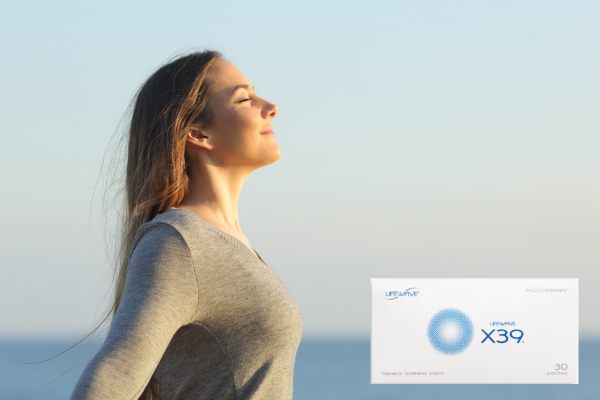
One tool I've personally explored in support of this is LifeWave phototherapy technology, particularly the X39 patches. My interest developed through the growing research around light signaling, peptide activation, tissue repair, and the relationship between cellular energy production and nervous system resilience.
I am careful about what I share here because I know how vulnerable people can feel when they're dysregulated, exhausted, overwhelmed, or searching for something that will bring them relief. I don't believe there's a single 'magic' solution that resolves nervous system dysregulation. Regulation is layered, relational, physiological, environmental, emotional, and deeply individual. What I've personally found meaningful about combining breathwork with additional physiological support is that it creates multiple simultaneous pathways through which our body can begin receiving signals of safety, repair, and restoration.
If you're curious about exploring LifeWave for yourself, you can learn more here: [LifeWave X39]
This is an affiliate link, which means I receive a small commission if you choose to purchase through it. I only share products and tools I've personally explored and found meaningful enough to include in my work and writing.
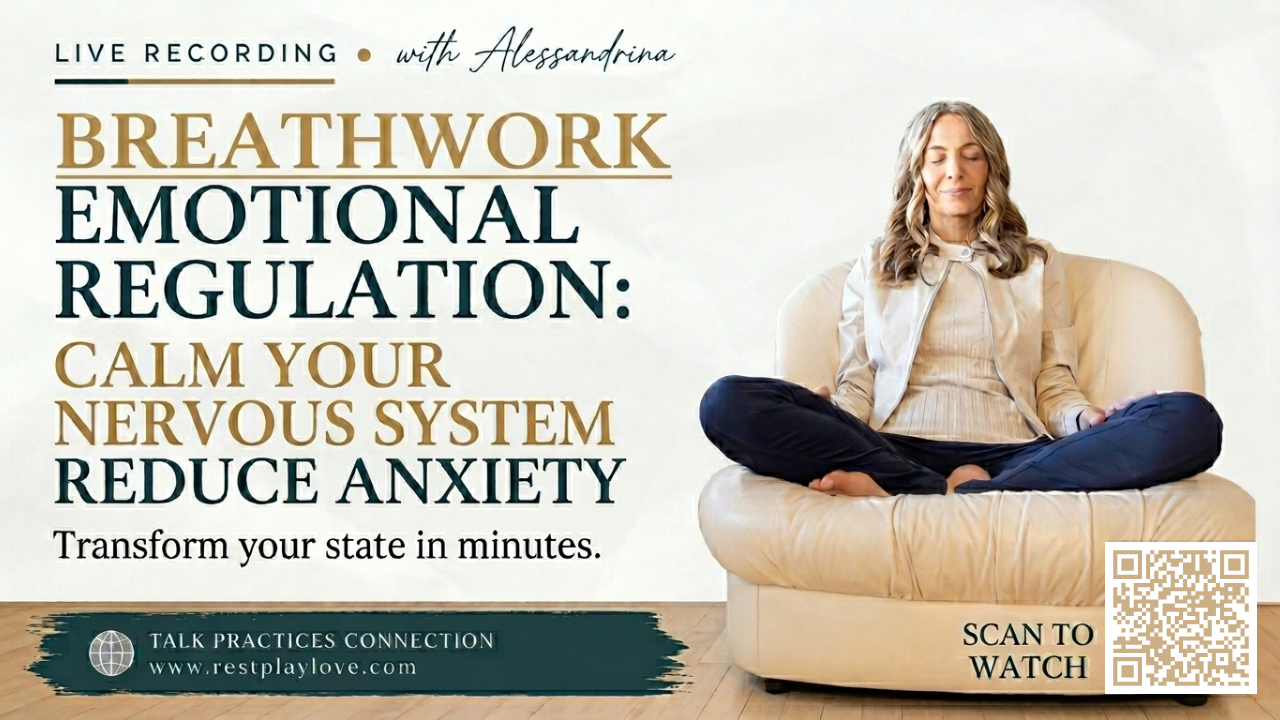
Live Breathwork Session Recording: Breathwork for Emotional Regulation
On Thursday, May 14th, 2026, I held a live session on breathwork for emotional regulation with over 200 people, and I'm grateful for everyone who showed up and practiced alongside me.
During our time together we moved through the physiology of the breath as a direct access point into the autonomic nervous system, several guided practices including extended exhale, box breathing, coherent breathing, gentle active breathwork for emotional release, and more, as well as a Q&A space where questions and practice wove together as they often do.
If you weren't able to join live or want to return to the material, the recording is available on YouTube: [Recording Link]
This session was designed for anyone working with open stress loops, stress, anxiety, stuck emotion, shutdown, burnout, or simply wanting grounded, somatic tools they can return to whenever their nervous system needs support. Everything covered in the recording maps directly onto what you've been reading throughout this post.
Learn more about learning breathwork for emotional regulation:[Gentle Offerings]
Join the community: Instagram @beautifulhumanhealing
Free Meditations on YouTube@Dexterandalessandrina
