Ocular Neuromodulation: Using Eye Movements for Autonomic Regulation, Memory Consolidation, and Emotional Processing
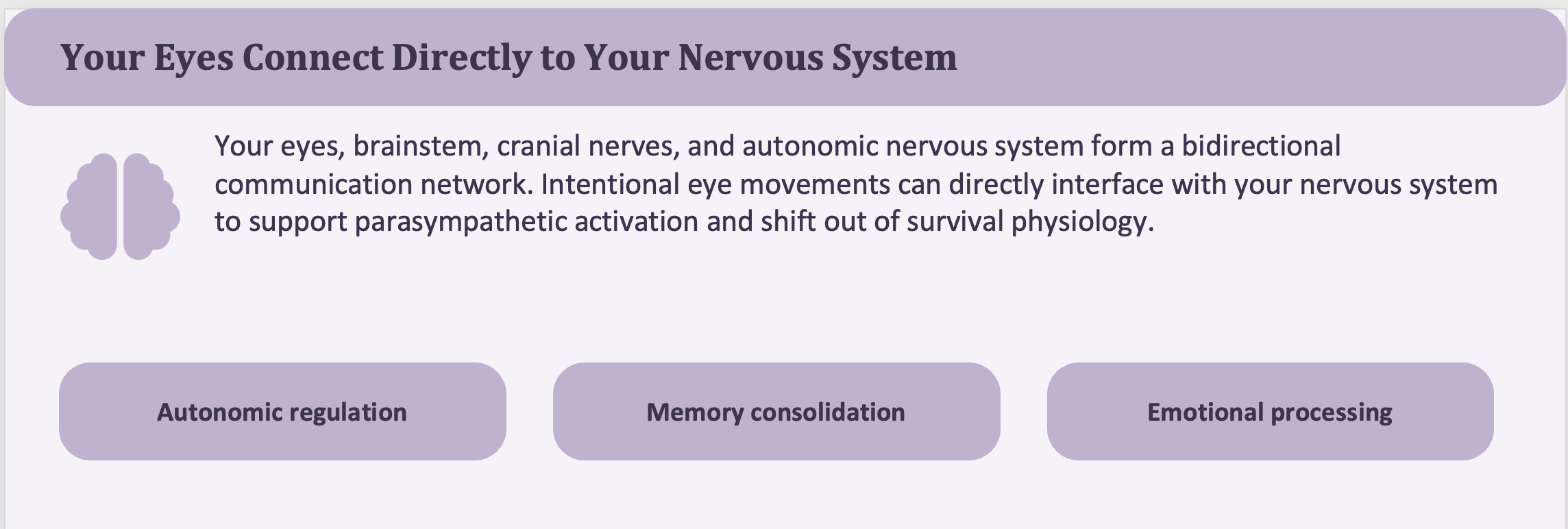
Many individuals navigating chronic stress, anxiety, or traumatic activation may have spent years working exclusively within a cognitive framework.While psychological exploration is an important dimension of developing greater self-awareness and healing, your emotional and cognitive experiences are also deeply shaped by bottom-up physiological signals.Your eyes, brainstem, cranial nerves, and autonomic nervous system are structurally connected in a bidirectional communication network. By utilizing specific, intentional eye movements, you can directly interface with your nervous system to support parasympathetic activation, shift out of survival physiology, and facilitate memory consolidation and emotional processing.
As a somatic nervous system coach and mindfulness researcher trained at the Polyvagal Institute, I look at these tools through a physiological lens.The following exploration is educational only, not medical advice, diagnosis, or treatment.If you have a history of seizures, vertigo, dissociation, significant trauma activation, dysautonomia, or neurological conditions, it’s important that you approach these practices slowly and with appropriate professional support from a therapist, trained coach, and medical doctor.
1. The Vagus Nerve Eye Movement Technique
This gentle practice utilizes slow visual shifts to support parasympathetic activation, helping your nervous system begin transitioning out of chronic stress states.
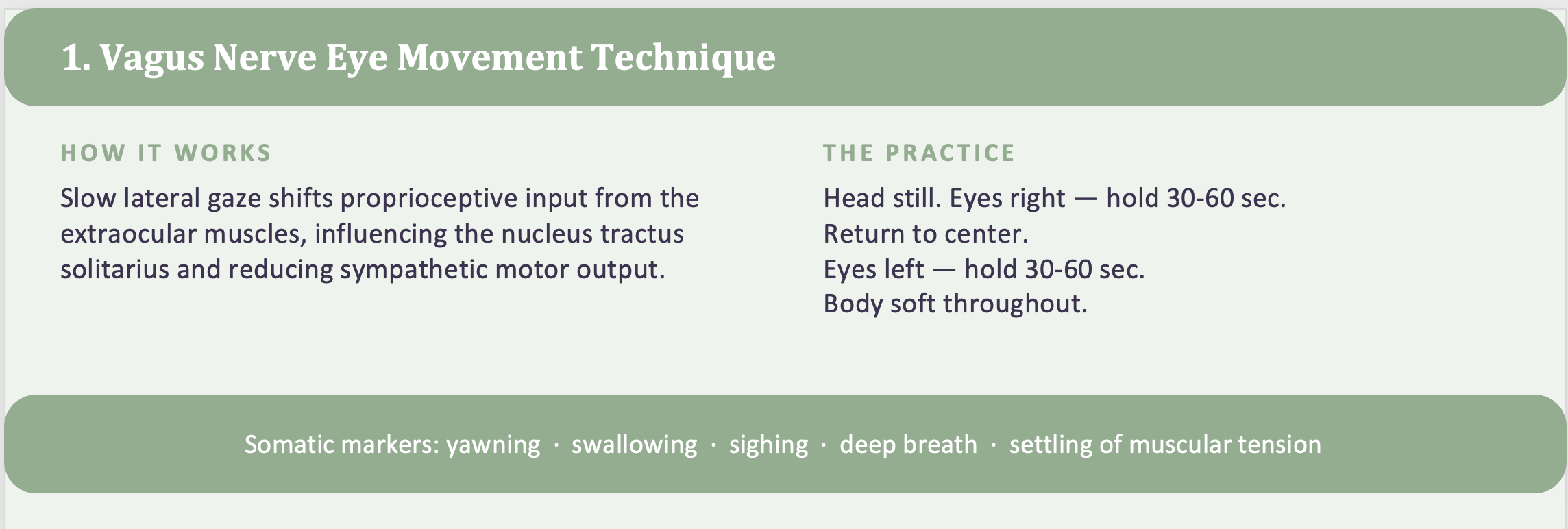
The Mechanism: Your eye movements are controlled by cranial nerves (oculomotor, trochlear, and abducens) that originate in your brainstem, in close proximity to the vagus nerve nuclei.Sustained lateral gaze shifts proprioceptive input from the extraocular muscles, influencing the reticular activating system and the nucleus tractus solitarius. This pathway alters your autonomic state by reducing sympathetic motor output and encouraging vagal toning.
The Practice: Sit or lie down comfortably while keeping your head and neck straight and relaxed.Without rotating your head, slowly move your eyes as far to the right as is comfortable.Hold your gaze there for approximately 30 to 60 seconds until you get a yawn or some other form of release.Return your eyes to the center, then repeat the movement by looking as far to the left as comfortable for another 60 seconds until you get a release.Keep your body as relaxed and soft as possible throughout the entire process.
Somatic Markers: During or immediately following this practice, you may notice spontaneous responses such as yawning, swallowing, sighing, spontaneous deep breaths, burping, or a gradual settling of muscular tension.These involuntary physical releases are signs that your autonomic state is shifting toward parasympathetic dominance.
If you are a visual learner and it feels more supportive to see this practice demonstrated, you can follow along directly with my full video demonstration to guide your personal integration here.
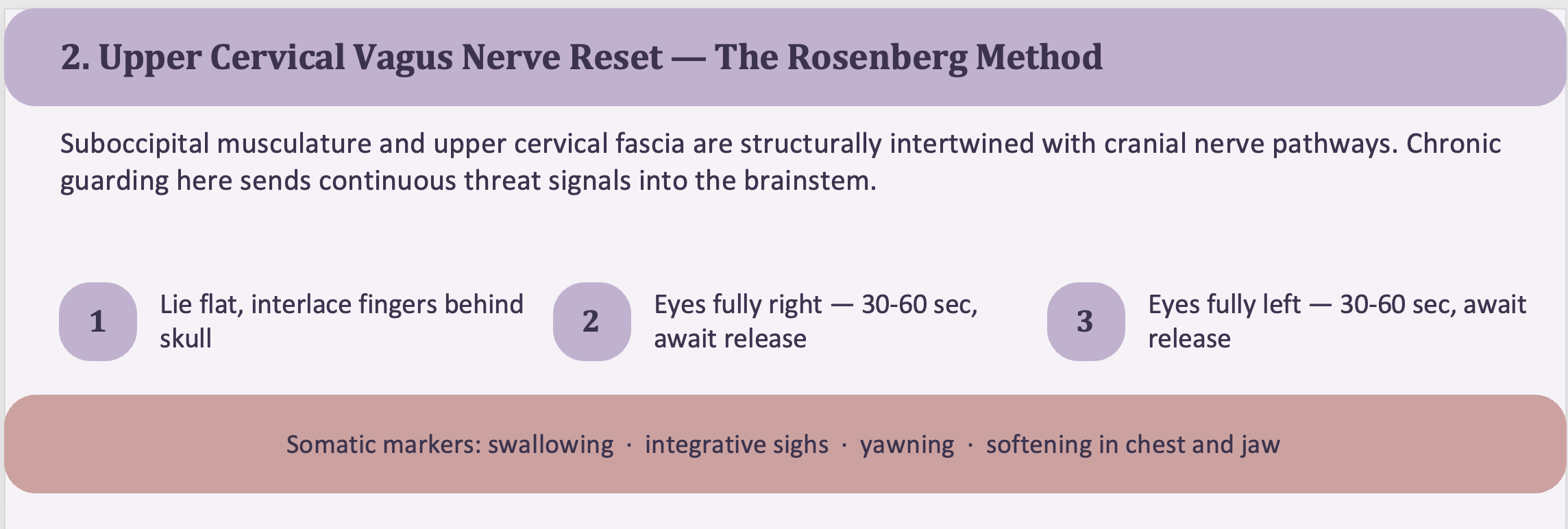
2. Upper Cervical Vagus Nerve Reset (The Stanley Rosenberg Method)
This approach focuses on the structural and neurological junction at the base of your skull, a region dense with connective tissue, musculature, cranial nerve pathways, and autonomic signaling.
The Mechanism: The upper cervical spine and suboccipital musculature are intertwined with the cranial nerves responsible for visual orienting and parasympathetic regulation.Fascial restriction or chronic muscular guarding in this area can send continuous signals of threat up into your brainstem.Providing light, paced, and intentional sensory contact to this region alters the proprioceptive feedback loop, allowing your nervous system to shift toward a more regulated parasympathetic state.Rather than heavily manipulating tissue, this emphasis on sensory awareness helps your system unwind at its own pace.
The Practice: Lie flat on your back and interlace your fingers behind your head, resting the weight of your skull comfortably in your hands.Keeping your head completely still and your neck soft, shift your eyes fully to the right.Maintain this lateral gaze for 30 to 60 seconds until you experience a physiological release marker.Bring your eyes back to center and then shift your gaze fully to the left for another 30 to 60 seconds, waiting for a secondary release.
Somatic Markers: This structural reset frequently triggers swallowing, deep integrative sighs, yawning, digestive sounds, a clearing of throat tension, or a profound softening in your chest and jaw.
If you are a visual learner and it feels more supportive to see this practice demonstrated, you can follow along directly with my full video demonstration to guide your personal integration here.
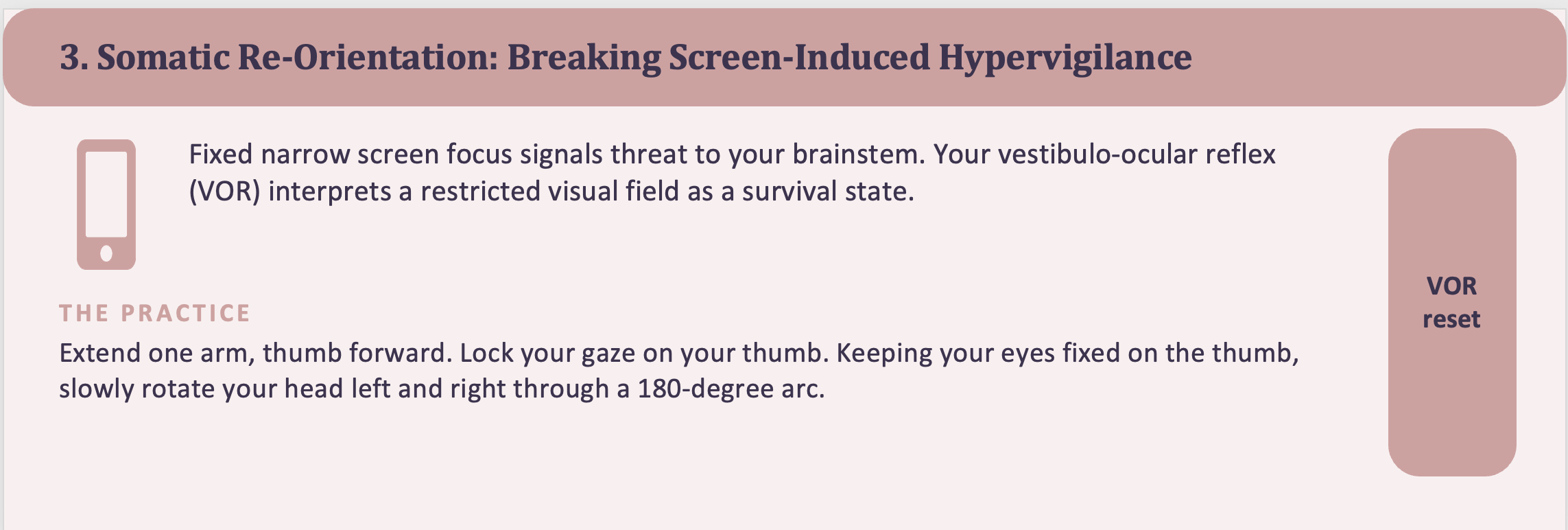
3. Somatic Re-Orientation: Breaking Screen-Induced Hypervigilance
Digital devices demand a narrow, fixed visual focus.Spending hours looking at small screens constricts your visual field, which your brainstem interprets as a biological signal of threat or hypervigilance. This narrow focus can lock your autonomic nervous system into a chronic survival state.
The Mechanism: Gaze stabilization during head movement engages the vestibulo-ocular reflex (VOR) and coordinates signaling between your extraocular muscles and the suboccipital muscles at the base of your skull.Moving your head while maintaining a fixed visual focal point simulates a full environmental scan.This sensory input signals safety to your brain, down-regulates hypervigilance in the reticular activating system, and helps your system re-orient to your actual space.
The Practice: Extend one arm straight out in front of you, parallel to the ground.Form a distinct thumb with your hand.Lock your gaze onto your thumb.Keeping your eyes fixed on your thumb, slowly and smoothly rotate your head and neck to the left as far as comfortably possible, and then to the right, covering a 180-degree arc.
Somatic Markers: As you break the constricted screen strain, you may experience peripheral vision expansion, a slower heart rate, a deeper breath, or an immediate sensation of presence.
If you are a visual learner and it feels more supportive to see this practice demonstrated, you can follow along directly with my full video demonstration to guide your personal integration here.
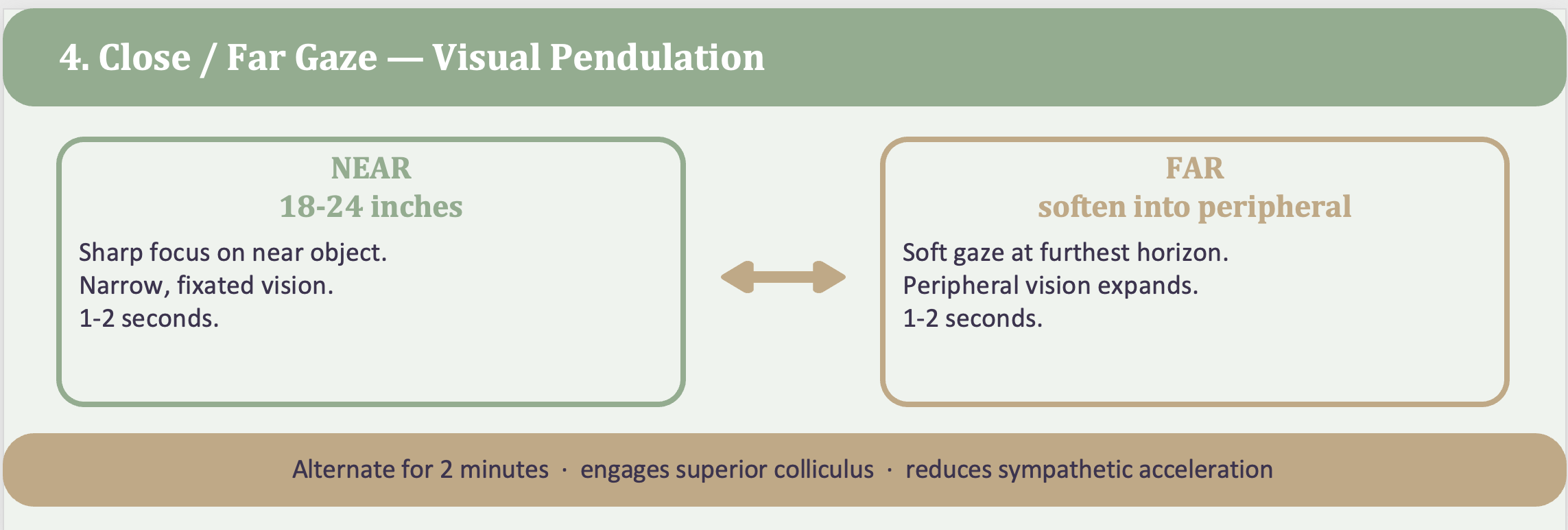
4. The Close/Far Gaze Technique (Visual Pendulation)
Derived from principles in Somatic Experiencing and Brainspotting, this technique alternates between narrow focal vision and a wider orienting gaze to assist your system in shifting out of acute panic, hypervigilance, and stress activation.
The Mechanism: Under perceived threat, vision naturally narrows to scan for danger.This visual constriction is tied to sympathetic nervous system activation.Shifting visual focus between a near point and a distant, broad horizon engages midbrain and brainstem networks, including the superior colliculus.Alternating between narrow fixation and broad awareness acts as a visual form of pendulation, reducing sympathetic acceleration and supporting parasympathetic settling.
The Practice: Hold your hand or a small object 18 to 24 inches away from your face.Focus your eyes sharply on it for 1 to 2 seconds.Then, soften your gaze, let your eyes expand into your peripheral vision, and look at the furthest horizon or wall available to you for 1 to 2 seconds.Alternate smoothly between the near object and the distant, soft gaze for approximately two minutes while staying physically grounded.
Somatic Markers: Look for softening in your jaw or chest, tingling, warmth, or a spontaneous sigh as the survival pattern is interrupted.
If you are a visual learner and it feels more supportive to see this practice demonstrated, you can follow along directly with my full video demonstration to guide your personal integration here.
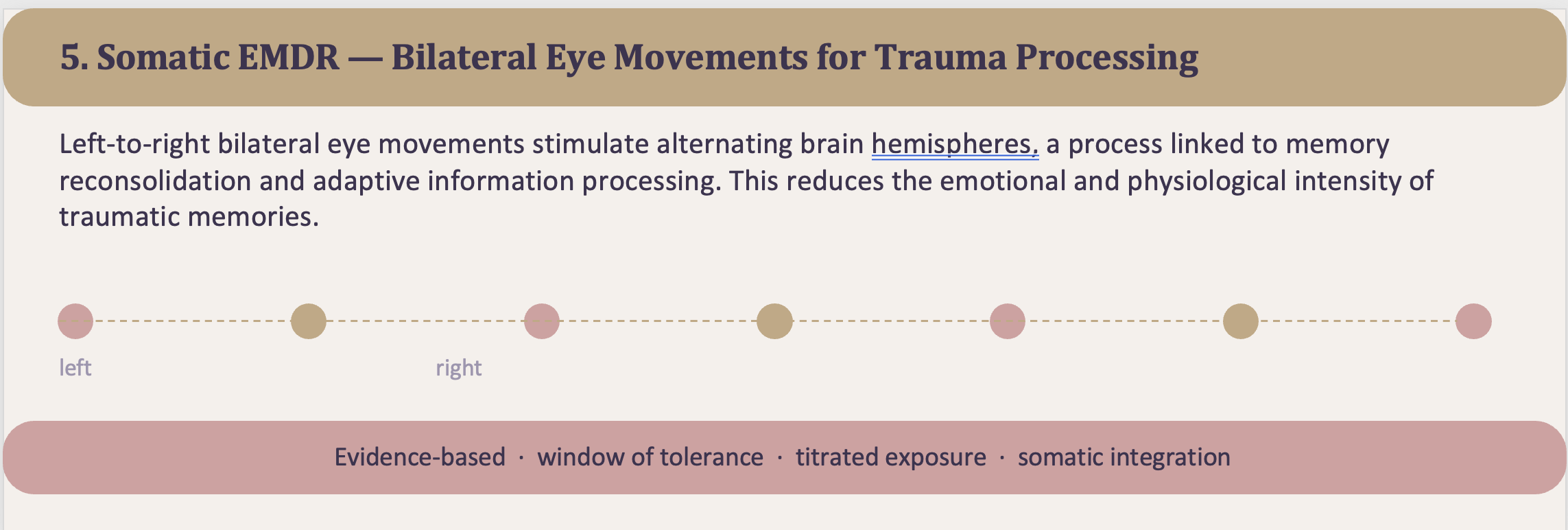
5. Somatic EMDR: Bilateral Eye Movements for Trauma Processing and Memory Reconsolidation
Eye Movement Desensitization and Reprocessing (EMDR) is an established, evidence-based trauma treatment highlighted as one of the three most effective ways of integrating traumatic experiences by world-renowned researchers such as Dr. Bessel van der Kolk, author ofThe Body KeepsTheScore. Somatic EMDR pairs traditional bilateral stimulation with explicit somatic awareness, resourcing, titration, and pendulation to process distressing experiences without overwhelming your nervous system and flooding your body with uncomfortable sensations, thus allowing you to remain within your window of tolerance.
The Mechanism: When difficult experiences remain unresolved, reminders of the past can continue to trigger chronic anxiety, hypervigilance, or freeze and shutdown states. Functional brain scans of individuals with traumatic experiences reveal a striking hemispheric asymmetry: when trauma is triggered, the language- and logic-centered left hemisphere drops in activity, while the emotional, survival-driven right hemisphere lights up intensely. Because the left brain cannot contextualize the experience, the raw emotional and somatic fragments of the trauma essentially become"stuck" in the right hemisphere, living on as if the danger is still happening in the present moment. Left-to-right bilateral eye movements stimulate alternating hemispheres of your brain, bridging this neurological divide. This process is linked to memory reconsolidation and adaptive information processing, helping the left brain come back online to integrate the experience. This mechanism reduces the emotional and physiological intensity of traumatic memories, helping your brain integrate experiences that remained un-integrated after overwhelming stress.
The Practice: While maintaining physical connection to internal resources, grounding, and present-moment body safety, you follow a visual track moving your eyes rhythmically back and forth from left to right.The pacing and exposure are carefully titrated to keep you within your window of tolerance, allowing your nervous system to gain greater flexibility and capacity.
Somatic Markers: As the traumatic charge processes and integrates, the physical body reflects this processing through yawning, deep integrative sighs, a clearing of throat tension, or a profound softening of long-held muscular guarding.
If you are a visual learner and it feels more supportive to see this practice demonstrated, you can follow along directly with my full video demonstration to guide your personal integration here.
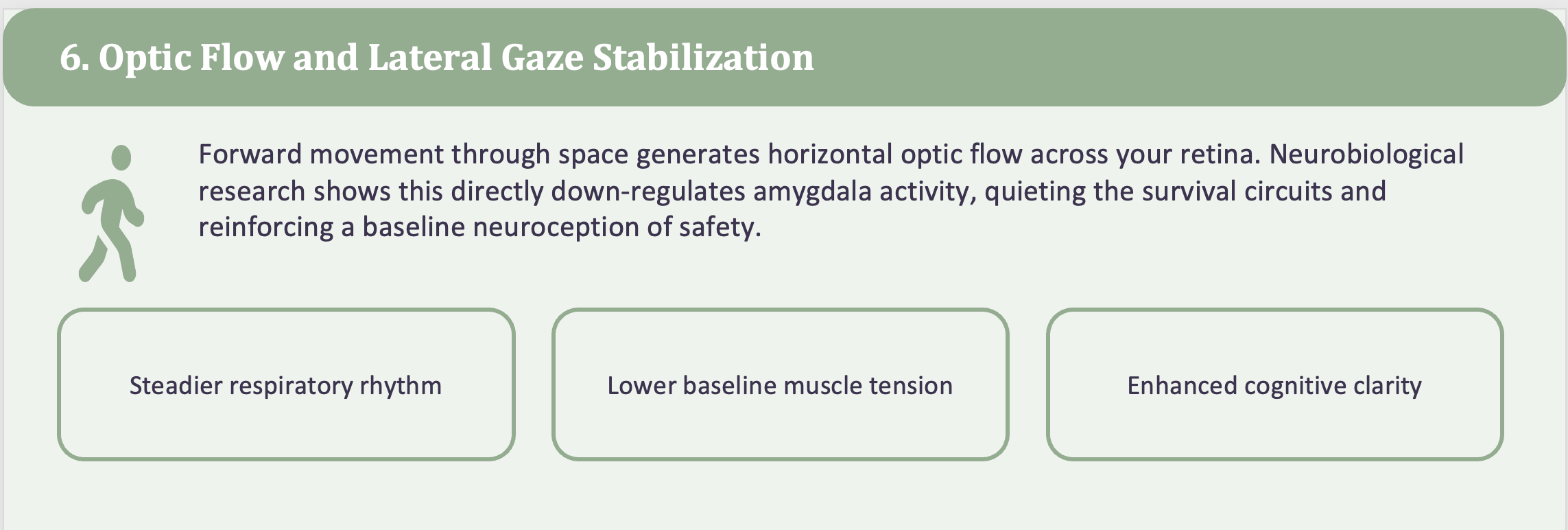
6. Optic Flow and Lateral Gaze Stabilization
A foundational way to support autonomic flexibility is through the engagement of continuous optic flow and lateral stabilization.
The Mechanism: When you move forward through space, such as walking, running, or cycling, visual images pass by your eyes horizontally. This phenomenon is known as optic flow. Neurobiological research demonstrates that horizontal optic flow directly down-regulates the activity of the amygdala, the threat-detection center in your brain. Instead of sending signals of alarm, lateral eye movements and passing visual stimuli quiet the survival circuits, suppressing active fight-or-flight tracking and reinforcing a baseline neuroception of safety.
The Practice: Engage in a daily forward-moving activity, such as an outdoor walk, without looking down at a mobile device. Allow your eyes to naturally scan the environment, letting the horizontal movement of the landscape pass across your retina. Alternatively, keep your gaze fixed on a distant point ahead while walking forward, allowing your peripheral vision to track the lateral movement around you.
Somatic Markers: This practice lowers systemic anxiety over time, resulting in a steadier respiratory rhythm, lower baseline muscle tension, and enhanced cognitive clarity.
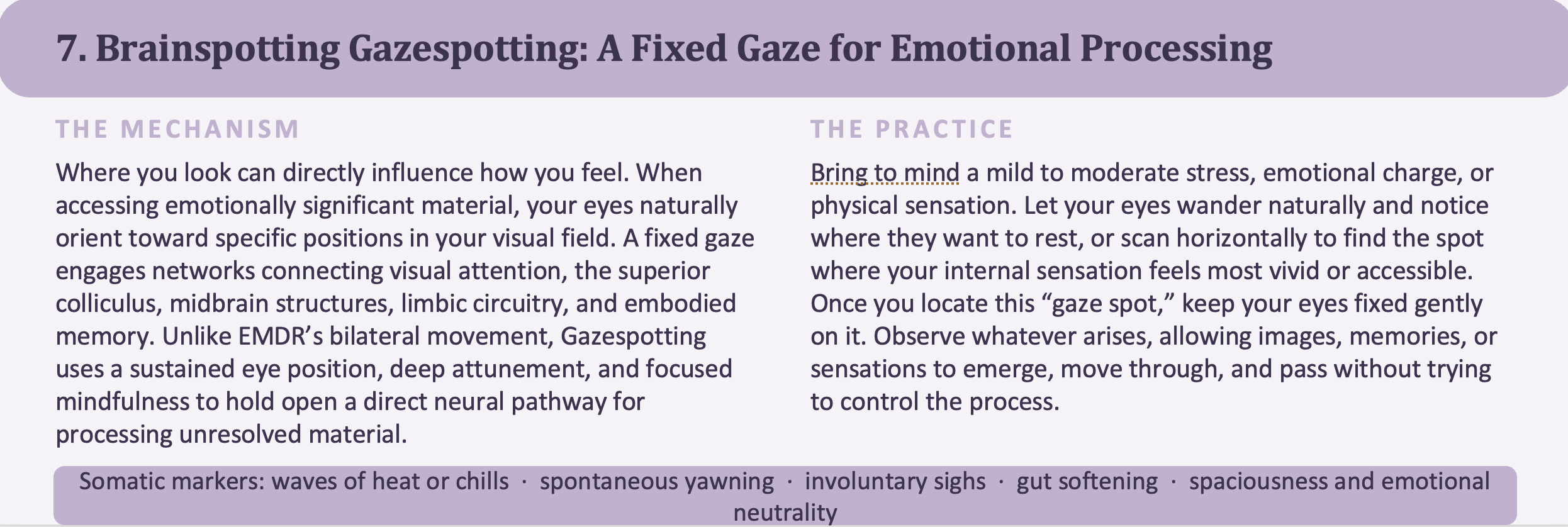
7. Brainspotting Gazespotting: How a Fixed Gaze Can Unlock Emotional Processing & Trauma Integration
Derived from the pioneering trauma protocols of Brainspotting developed by Dr. David Grand, this technique utilizes a sustained, focused eye position to access and process deep-seated emotional and somatic material held within the subcortical regions of the brain.
The Mechanism: Most of us have had the instinctual experience of staring into space, becoming absorbed in a spot on the wall, or looking out a window while reflecting, grieving, or processing something difficult. This response is not random; it’s a natural somatic orientation mechanism. Brainspotting emerged from the observation that where we look can directly influence how we feel and what memories we access. When accessing emotionally significant experiences or traumatic activation, your eyes naturally orient toward specific, corresponding positions in your visual field. Neurobiological research and clinical models suggest this mechanism engages complex networks connecting visual attention, orienting responses, the superior colliculus, midbrain structures, limbic circuitry, autonomic nervous system regulation, and embodied memory. While standard EMDR utilizes active lateral eye movements to process memories across both hemispheres, Gazespotting works through a fixed eye position, deep attunement, and focused mindfulness to follow the body's own natural processing capacity. By maintaining a fixed gaze on an external point that correlates to an internal feeling, you alter the physiological signaling entering your brainstem, holding open a direct neural doorway to safely integrate material that previously remained unresolved.
The Practice: Bring to mind a mild to moderate point of stress, an emotional charge, or a physical sensation in your body. Allow your eyes to naturally wander across your room or visual field. Notice where your eyes naturally want to rest, or scan horizontally and find the exact spot where your internal sensation feels the most vivid, deep, or accessible.
Once you locate this "gaze spot," keep your eyes fixed gently on it. Rather than analyzing, forcing, or talking about the experience from a distance, simply stay with this eye position and mindfully observe whatever arises. Allow images, memories, emotions, physical sensations, or nervous system impulses to emerge, move through, and pass without trying to control the process.
Somatic Markers: As your system processes the material from this fixed position, you may experience transient waves of heat or chills, spontaneous yawning, deep involuntary sighs, micro-movements or twitching in the musculature, a sudden softening in the gut, or an ultimate feeling of spaciousness and emotional neutrality.
If you are a visual learner and it feels more supportive to see this practice demonstrated, you can follow along directly with my full video demonstration to guide your personal integration here.
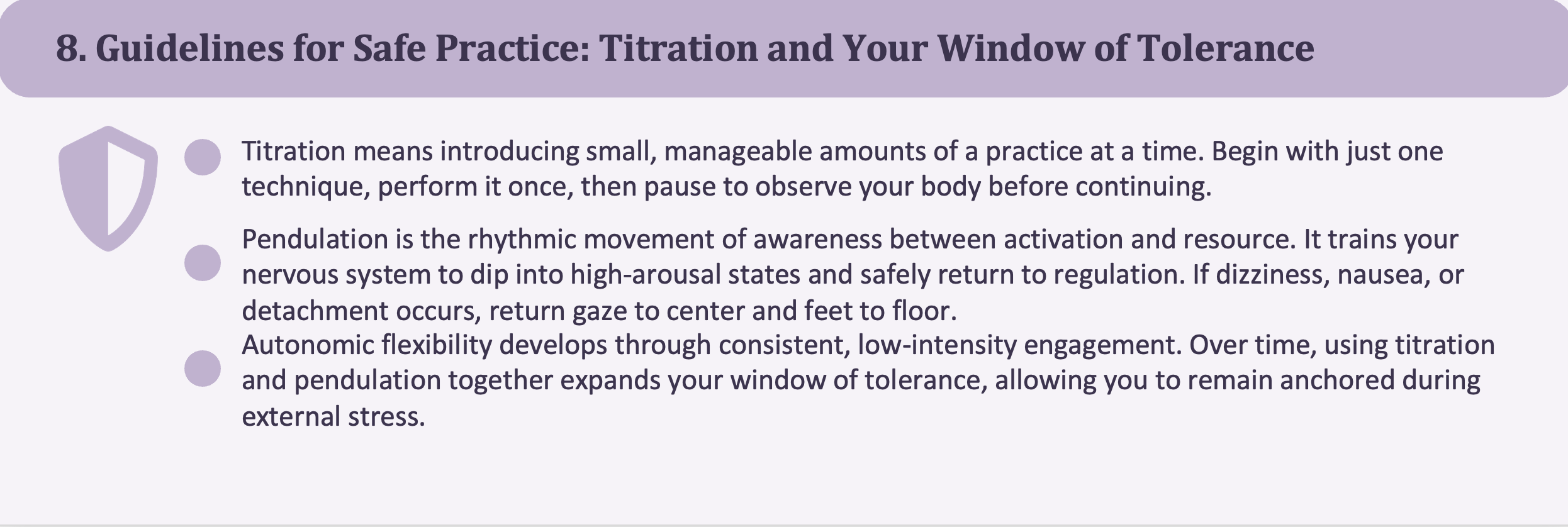
8. Guidelines for Safe Practice: Titration and Your Window of Tolerance
Because these practices communicate directly with your brainstem and autonomic regulation centers, they can generate rapid shifts in your physiological state. Navigating these shifts requires an understanding of titration, which is the process of introducing small, manageable amounts of a practice to ensure your system can integrate the changes without becoming overwhelmed.
Crucial to this process is the practice of pendulation, the natural, rhythmic movement of your awareness between areas of stress or activation in the body and areas of resource, calm, or neutral ground. Just as a pendulum swings back and forth, pendulation teaches your nervous system that it can dip into a state of activation and safely move back into a regulated, integrated state. This deliberate shifting expands your capacity, helping you realize that high-arousal states are temporary and manageable.
Pacing Your Practices: Begin by selecting just one technique to explore daily. If you choose theVagusNerve Eye Movement Technique, perform it once and then pause to observe your body. Forcing your system to remain in a sustained lateral gaze for too long can induce fatigue in the extraocular muscles, which your brainstem may interpret as an additional stress signal and cue of danger.
Through pendulation, if you notice this fatigue or activation beginning to surface, consciously swing your attention away from that discomfort and rest your focus on a part of your body that feels grounded, or look out a window at a calming view, allowing your system a moment to settle before continuing.
Recognizing Boundaries: If you experience dizziness, nausea, heightened anxiety, or a sensation of detachment from your environment while practicing, your nervous system is signaling that the input exceeds its current capacity, i.e. you' re moving outside of your window of tolerance. If these symptoms occur, gently return your gaze to a neutral center, focus on a fixed point in the room, and bring your awareness to the physical contact between your feet and the floor to re-establish a sense of present-moment safety and embodied groundedness.
Building Long-Term Flexibility: Autonomic flexibility develops through consistent, low-intensity engagement rather than sporadic, intense effort. By utilizing titration and pendulation together, you train your body to navigate high and low states of arousal with fluidity. Over time, as your nervous system integrates these small inputs, your window of tolerance continues to expand, allowing you to remain anchored and present during moments of external stress.
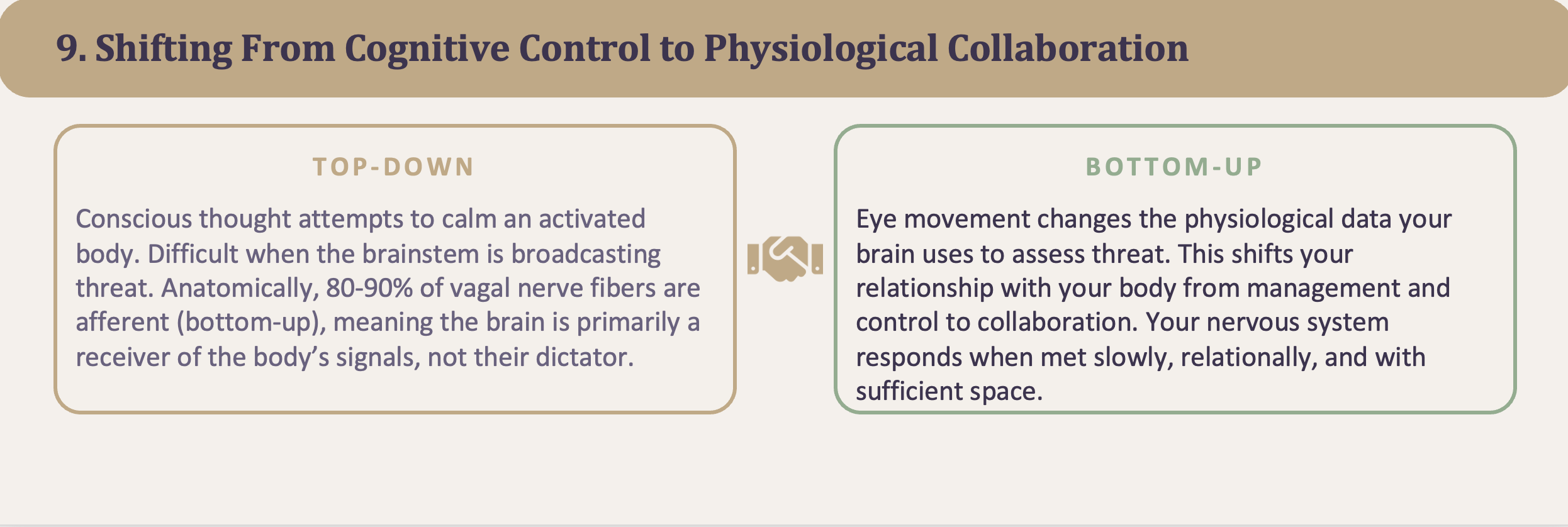
9. Shifting From Cognitive Control to Physiological Collaboration
Traditional approaches to stress management frequently rely on top-down strategies, where you attempt to use conscious thought and control to calm an activated body. While cognitive awareness is highly valuable, trying to think your way out of a physiological survival state can be exceptionally difficult when your brainstem is actively broadcasting signals of threat.
The biological reality of why top-down strategies struggle to create permanent, lasting change lies in the very architecture of our anatomy. An astonishing 80% to 90% of the nerve fibers in the vagus nerve are afferent, meaning they travel bottom-up, carrying information from the organs and body up to the brain, while only 10% to 20% are efferent (top-down).
This profound anatomical bias means the brain is primarily a receiver of the body's safety and threat signals, not the dictator of them. As you may have personally experienced during an activation, when your body gets trapped in a state of survival, no amount of cognitive persuasion can override the massive influx of bottom-up threat data flooding the brainstem. Lasting neural integration requires a bottom-up somatic intervention to change the physiological baseline first.
Ocular neuromodulation shifts the focus to a bottom-up framework. By changing the physical orientation, movement, and focus of your eyes, you change the electrical and chemical signaling entering your brainstem. In this way, you’re not attempting to persuade your mind that you are safe; instead, you’re altering the physiological data your brain relies on to determine whether a threat is present or not.
This methodology changes your relationship with your body from one of management and control to one of collaboration. Your nervous system responds predictably when it’s met slowly, relationally, and with sufficient space to process inputs at its own pace.
10. Neurophysiological References & Scientific Foundations
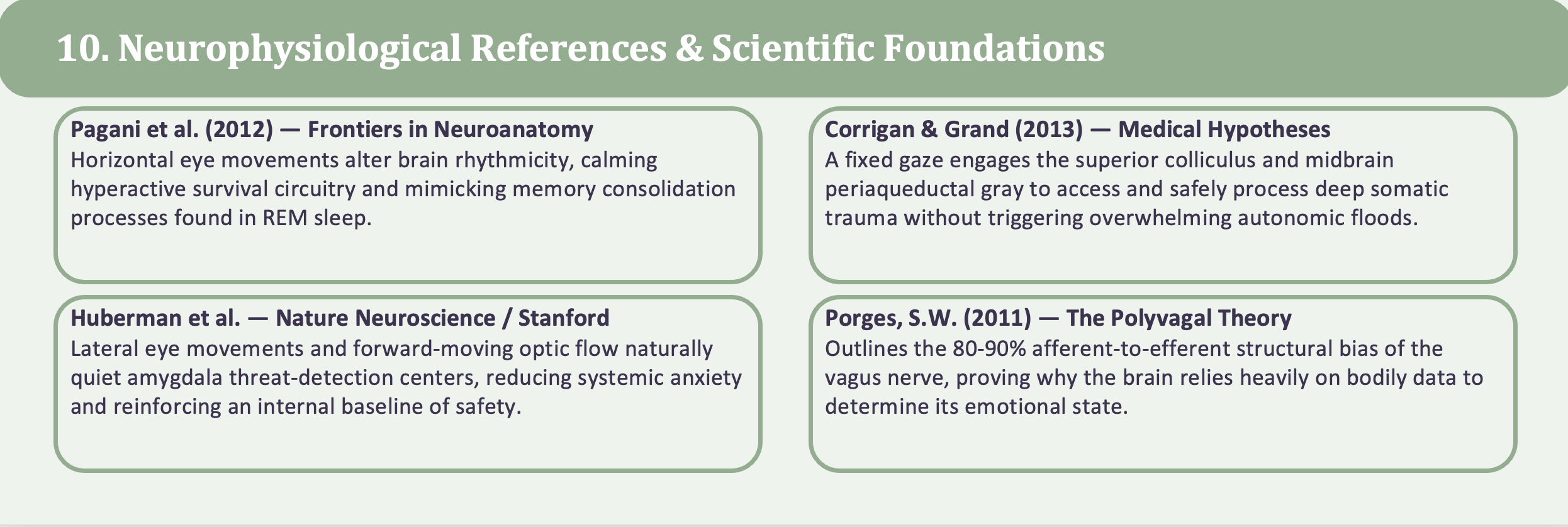
To ground these bottom-up, ocular practices in modern neurobiology, a robust body of scientific research highlights the profound connection between ocular pathways, subcortical brain structures, and autonomic states:
On Ocular Neuromodulation and Brainstem Signaling:
Pagani, M., et al. (2012)."Neurobiology of EMDR."Frontiers in Neuroanatomy.This research demonstrates how horizontal eye movements systematically alter brain rhythmicity, calming hyper-active survival circuitry and mimicking the memory consolidation processes found in REM sleep.
On the Superior Colliculus and Emotional Processing:
Corrigan, F. M., & Grand, D. (2013)." Brainspotting: Recruiting targeted attention for traumatic memory sequencing."Medical Hypotheses.This foundational paper explores how a fixed gaze engages the superior colliculus and the midbrain periaqueductal gray to access and safely process deep-seated somatic trauma without triggering overwhelming autonomic floods.
On Optic Flow and Amygdala Down-Regulation:
Huberman, A. D., et al. (Nature Neuroscience / Stanford School of Medicine).Ongoing neurobiological studies demonstrate that lateral eye movements and forward-moving optic flow (such as walking while scanning a horizon) naturally quiet the threat-detection centers of the amygdala, reducing systemic anxiety and reinforcing an internal baseline of safety.
On Afferent Vagal Signaling and Bottom-Up Domination:
Porges, S. W. (2011).The Polyvagal Theory: Neurophysiological Foundations of Emotions, Attachment, Communication, and Self-regulation.This text outlines the crucial 80% to 90% afferent-to-efferent structural bias of the vagus nerve, scientifically proving why the brain relies heavily on bodily data to determine its emotional state.
11. Final Reflections and Continuing Your Integration
Supporting your autonomic nervous system is an ongoing, relational process that involves your physical environment, your daily visual habits, and your physiological state. By intentionally incorporating these eye movement practices into your routine, you provide your system with the direct, body-based signals it requires to transition from defensive survival postures into states of connection, recovery, and rest.
If you would like to explore these bottom-up approaches further, you can access additional resources designed to support your somatic journey.
Guided Practices: Free somatic meditations and regulatory practices are available on our YouTube channel at @Dexterandalessandrina, where we explore the intersection of mindfulness and physiology.
Community and Education: You can connect with our community on Instagram @beautifulhumanhealing for regular insights on nervous system health and somatic processing.
Deepening Your Work: To learn more about working comprehensively with your nervous system, somatic integration, and your physiological pathways, you can explore our specialized programs under [Gentle Offerings].
12. Somatic & Neuroplastic Resources for Your Journey
If you're eager to deepen your understanding of the intersection between modern neuroscience, trauma integration, and somatic healing, the following texts are highly recommended pillars for your library:
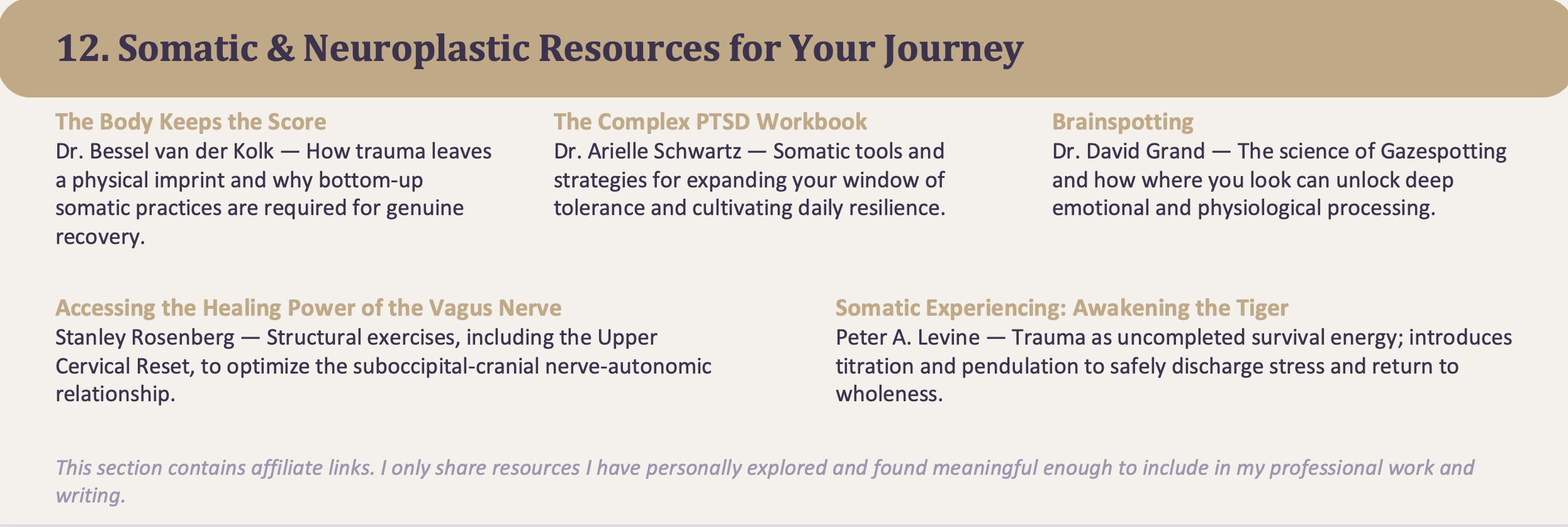
The Body Keeps the Score by Dr. Bessel van der Kolk— The definitive blueprint on how trauma leaves a physical imprint on our tissues and brain hemispheres, and why bottom-up somatic practices are required for genuine recovery. [Link]
The Complex PTSD Workbook by Dr. Arielle Schwartz— A compassionate, highly practical guide filled with somatic tools, mind-body exercises, and explicit strategies for expanding your window of tolerance and cultivating daily resilience. [Link]
Brainspotting: The Revolutionary New Therapy for Rapid and Effective Change by Dr. David Grand— An illuminating deep dive into the science of Gazespotting, revealing how discovering where you look can unlock deep emotional and physiological processing that talk therapy often misses. [Link]
Accessing the Healing Power of the Vagus Nerve by Stanley Rosenberg— A brilliant manual featuring structural exercises—including the Upper Cervical Reset—designed to optimize the relationship between your suboccipital muscles, cranial nerves, and autonomic nervous system. [Link]
Somatic Experiencing: Awakening the Tiger by Peter A. Levine— A foundational book on how trauma lives as uncompleted survival energy in the body, introducing the concepts of titration and pendulation to safely discharge stress and return to wholeness. [Link]
This section contains affiliate links, which means I receive a small commission if you choose to purchase through them. I only share products, books, and tools I've personally explored, integrated, and found deeply meaningful enough to include in my professional work and writing.
Get nervous system support: Gentle Offerings
Join the community: Instagram: @beautifulhumanhealing
Free Meditations on YouTube: @Dexterandalessandrina
