Six Somatic Nervous System Regulation Tools for Anxiety, Chronic Stress, and Greater Emotional Resilience
When anxiety or chronic stress has been present for a long time and there hasn’t been the necessary support to help reduce and metabolize some of this stress such that it can resolve over time, it can become difficult to understand why logically knowing that you’re safe doesn’t necessarily create a felt sense of safety in your body. You may understand the situation intellectually, recognize that the danger has passed, know that you get stuck in thinking loops, and even have considerable insight into the origins of your reactions, while your heart continues to beat quickly, your breathing remains shallow, your muscles stay contracted, your attention continues scanning for what might happen next, and your mind keeps returning to the same unresolved question and content. This is not a result of the thinking part of your brain having somehow failed to communicate adequately with the rest of your nervous system and body. It’s actually because your nervous system is operating through multiple interconnected systems that continuously evaluate sensory information, internal bodily signals, memories, context, and perceived demands, and those systems don’t all change state at the same speed. Your body can remain mobilized well after your conscious mind has already determined that the immediate threat has passed, particularly when stress has been prolonged, even chronic, or when your nervous system has learned to anticipate danger based on previous experiences.
This is one of the places where somatic nervous system regulation becomes particularly valuable. Your nervous system doesn’t regulate through thought alone. It’s continuously receiving information from your eyes, muscles, skin, lungs, heart, digestive tract, vestibular system, and other parts of the body, and that information contributes to the brain's ongoing assessment of what’s happening and the kind of physiological response it feels is required to meet the perceived or real threat detected. The brainstem and hypothalamus coordinate many of the rapid changes associated with autonomic activation, while networks involving the amygdala, insula, anterior cingulate cortex, and prefrontal cortex contribute to the detection and interpretation of emotionally significant information, attention, prediction, and regulation. By the time you consciously recognize that you’re anxious, your autonomic nervous system may already have changed your breathing, heart rate, muscle tone, digestion, attention, and readiness for action.
Understanding this sequence changes the way we approach regulation, and therefore our capacity to effectively attain a desired state change. When your body is already in a state of significant activation, asking yourself to reason your way into calm can require the very cognitive flexibility that stress is temporarily making less available. Under acute stress, the brain prioritizes systems involved in rapid detection, survival-related action, and mobilization of energy, while the prefrontal networks involved in complex reasoning, inhibition, perspective-taking, and flexible decision-making can become less effective. Cognitive approaches remain extremely valuable, particularly for understanding patterns, developing perspective, processing experiences, making decisions, and changing beliefs over time, but they’re not the most effective pathway available to us. Somatic interventions add another route by working through sensory and physiological information that reaches the brain continuously and often without conscious effort, giving the nervous system additional information from which it can update its assessment of the current situation.
This is what is meant by a bottom-up approach to regulation. Rather than beginning with an idea and asking the body to follow it, which is not an option when we are highly activated and flooded with mobilizing stress hormones like cortisol, adrenaline and norepinephrine, we begin with sensory information from the body and allow the brain and autonomic nervous system to incorporate that information into the larger regulatory process. This is particularly relevant because the vagus nerve, which is a major component of the parasympathetic nervous system, carries extensive sensory information from the organs toward the brainstem (80-90% of the nerve fibers are afferent) as well as carrying motor information in the opposite direction (only 10-20% of nerve fibers are efferent). The brain is therefore not simply issuing commands to a passive body; it’s continually receiving information about respiration, cardiovascular activity, gastrointestinal function, and other internal conditions and integrating those signals with information from the external environment. Somatic practices work within this continuous two-way communication between brain and body, with a particular focus on bottom-up signaling.
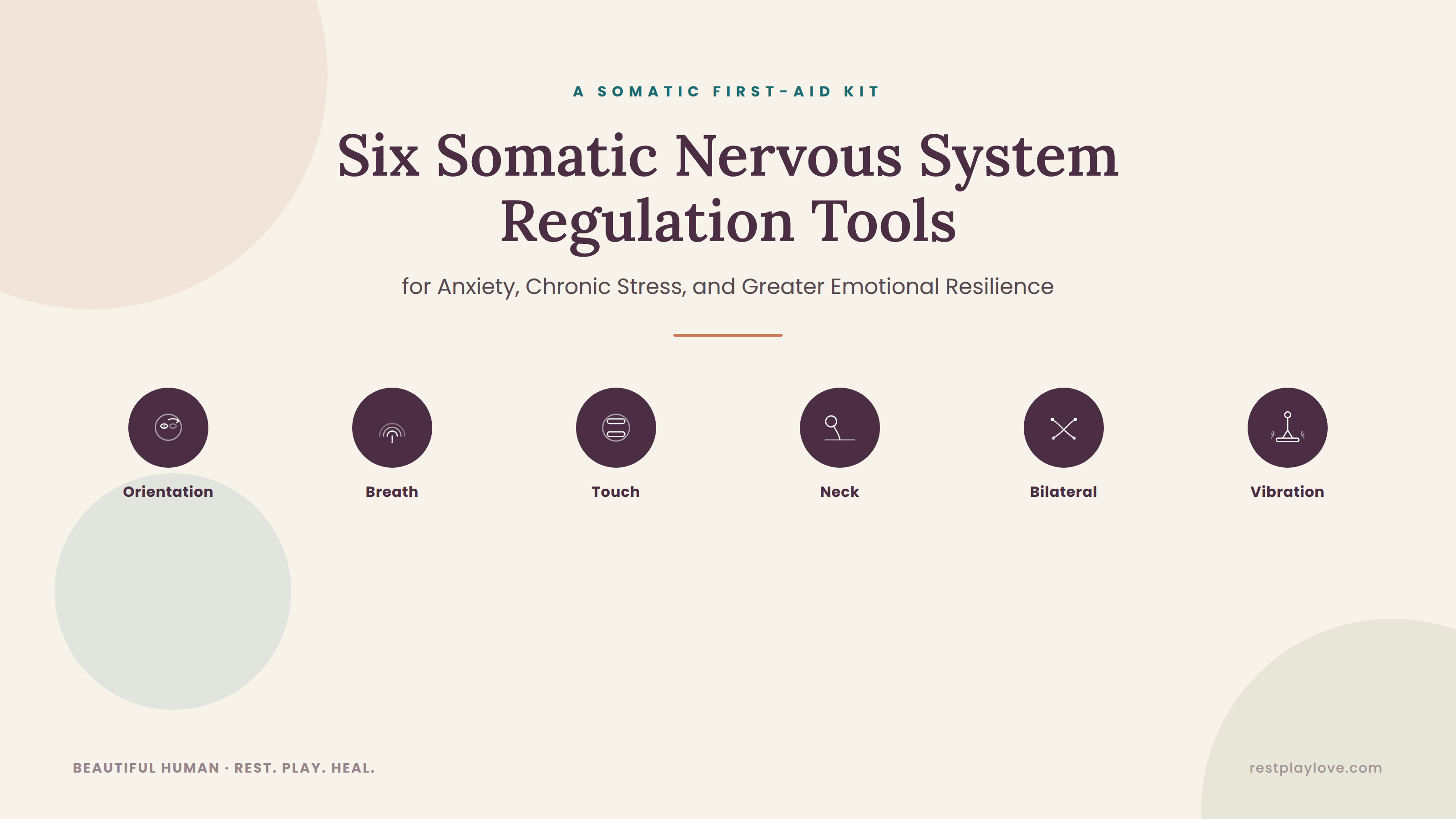
That distinction was the foundation of my recent live session, where I taught six somatic practices that enter the nervous system through very different pathways: ocular movement, respiratory physiology, gentle contact around the head and neck, cervical muscle tension, tactile and bilateral stimulation, and whole-body mechanical stimulation. The value of working with several different pathways is that each nervous system is unique and therefore responds individually to every intervention. A practice that creates a noticeable shift for one person may feel neutral or may even have a contrary effect to another, and a practice that’s useful in one physiological state may be poorly matched to another. Rather than interpreting this through a dualistic lens, as success or failure, I encourage people to become playfully curious about the patterns in their own responses because those patterns provide useful information about which forms of sensory input are most accessible to their nervous system.
The purpose of any somatic practice is therefore not to collect techniques or to rigidly perform a particular sequence correctly enough to make yourself calm and downregulate your nervous system response. It’s to develop a practical understanding of which forms of sensory input help your nervous system move toward greater stability, flexibility, and recovery, and to understand enough about your own physiology that you can choose an intervention according to the state you’re actually experiencing rather than automatically reaching for the same strategy every time.
Somatic regulation becomes considerably more effective when you stop treating anxiety, agitation, overwhelm, exhaustion, numbness, and shutdown as though they are all the same physiological experience. A person who’s restless, vigilant, mentally accelerated, and physically tense is experiencing something quite different from someone who feels emotionally flat, exhausted, disconnected, and unable to initiate action. Someone who has just received frightening news may need something different from someone whose nervous system has been carrying moderate activation for eight hours, and the intervention that helps someone return from sympathetic activation may not be the same intervention that helps someone who has moved into a state of depletion, shutdown, or burnout.
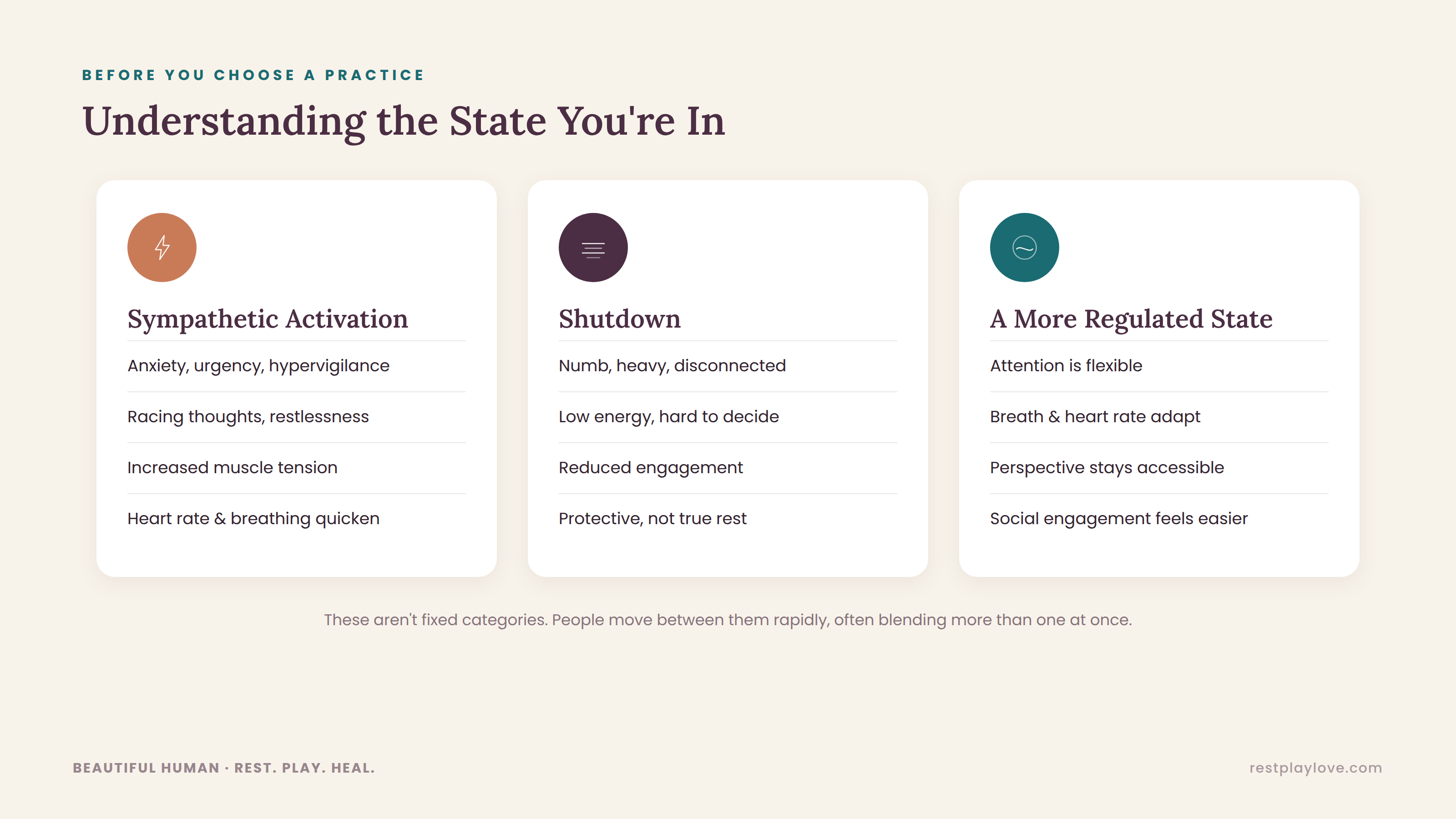
A useful working framework is to distinguish between sympathetic activation, shutdown, and a more regulated state, while remembering that these are not rigid categories and that people can move between them rapidly and that there are many hybrid states in between. Sympathetic activation can include anxiety, urgency, hypervigilance, racing thoughts, irritability, restlessness, increased muscle tension, and a strong impulse to act. At the physiological level, sympathetic activation involves coordinated changes that increase your body's readiness for action, including increases in heart rate and respiratory rate, changes in blood flow, increased muscle readiness, and changes in the release of hormones and neurotransmitters involved in mobilization, including norepinephrine, adrenalin, and cortisol. The brain becomes more attentive to information that could signal threat or require immediate action, while resources devoted to digestion, cell repair, long-term planning, and some forms of reflective cognition become less prominent. This is an appropriate physiological response when something genuinely requires immediate attention; the difficulty arises when that mobilization continues after the demand has changed or when relatively minor stimuli repeatedly trigger the same level of activation.
Shutdown can look very different. Someone may feel numb, heavy, exhausted, disconnected, emotionally distant, unable to make decisions, or unable to access the energy required to respond. In this state, we may have little access to the energetic quality that characterizes sympathetic activation, yet the experience is not necessarily one of true physiological rest. Our brain and body can move toward reduced engagement and conservation for protection of the organism when demands have exceeded perceived capacity or when someone experiences a situation as inescapable. Heart rate, blood pressure, movement, attention, and emotional engagement can all change, and the subjective experience may include heaviness, disconnection, or difficulty accessing motivation. This is also a protective nervous-system response, particularly when activation has become prolonged or overwhelming, and understanding it as a physiological and highly adaptive state rather than a personal failure or something being wrong with us or the way our nervous system is responding, can change how appropriately we respond to it.
A more regulated state is characterized by greater capacity and flexibility to be with difficulties or to quickly adapt to environmental changes rather than the absence of activation. Attention can move between the internal and external environment, breathing and heart rate can adjust appropriately to circumstances, thinking becomes more flexible, perspective is more accessible, social engagement is easier, and difficult information can be experienced without immediately becoming overwhelming. Our prefrontal cortex is more able to participate in decision-making and inhibition, our brain can integrate a broader range of information rather than prioritizing only what appears threatening, and our autonomic nervous system can move more readily between mobilization and recovery according to the demands of the moment. This is why regulation is better understood as a capacity for appropriate state change and recovery, allowing us to expand our window of tolerance (to life stresses) over time, rather than as a permanent condition of calm.
These states can and must also change rapidly in order to help us adapt to rapid changes in the environment as a survival adaptation. Someone can move from anxiety into exhaustion, from hypervigilance into numbness, or from apparent calm into sudden activation when a particular cue is encountered. This is important to fully grasp and integrate because the most appropriate somatic intervention depends partly on the state you’re trying to influence, and learning to distinguish between these patterns gives you much more useful information than simply labeling every uncomfortable physiological experience as anxiety.
With that in mind, I’m delighted to share and explore with you the six practices I taught during my last live (the link of the recording of which is available towards the end of this article.)
1. The Stanley Rosenberg Basic Exercise: Using the Eyes and Orientation System to Influence Autonomic State
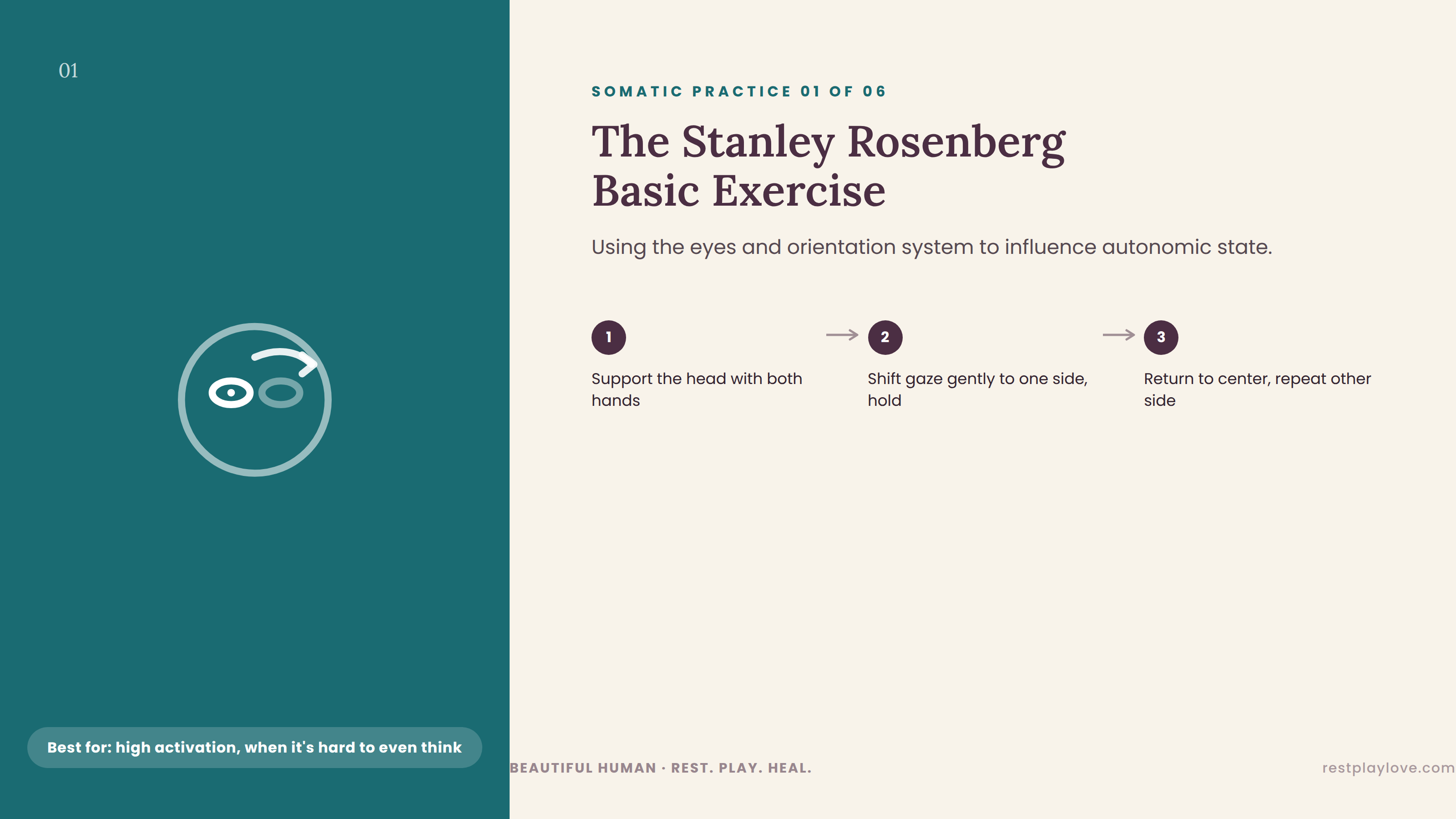
The Stanley Rosenberg Basic Exercise is a deceptively simple practice involving head support and gentle lateral eye positioning. I find it particularly useful for people who are highly activated and need a practice that doesn’t require them to sit down and analyze their emotional experience in order to participate. This simple practice begins with the hands supporting the back of the head while the head remains still. The eyes then move gently toward one side and remain there for a period of time, without forcing the gaze or creating strain. After a pause, the eyes return toward center, and the process is repeated on the opposite side. The practice is subtle enough that you can perform it without creating another demanding task for an already activated, or even overwhelmed, nervous system, which is one reason I find it useful during periods of acute stress.
The reason this practice is interesting from a neurophysiological perspective is that eye position is not an isolated visual function. Eye movement is closely integrated with the vestibular system, orientation, balance, spatial awareness, and several brainstem networks that participate in autonomic regulation. The eyes and vestibular system work together to stabilize the visual world while the head and body move, and information from these systems converges in brainstem structures that also communicate with areas involved in arousal, cardiovascular regulation, respiration, and muscle tone. When you deliberately change visual orientation while keeping the head still, you are therefore changing the sensory information being processed by systems that are involved in determining where you are in space and how the body should organize itself in relation to that environment.
This is particularly relevant during stress because the nervous system is continually performing an orientation process, whether consciously or unconsciously. When the brain detects possible danger, attention tends to become more focused, visual scanning can increase, and sensory information that might be relevant to threat becomes more salient. The amygdala and related networks contribute to the rapid detection of emotionally significant information, while the brainstem and autonomic nervous system coordinate the physical changes that prepare the body to respond. The prefrontal cortex normally helps place that information into context and determine whether a response is actually necessary, but under high levels of activation the balance can shift toward faster, more reactive processing. Changing visual orientation and allowing the eyes to remain still in a supported position may provide a different form of sensory information that can contribute to a reduction in that state of mobilization.
The Rosenberg exercise leverages this direct neuroanatomical link between ocular tracking and cervical tone. Sustained lateral gaze engages the oculomotor-suboccipital reflex arc, inducing autogenic inhibition in the dense muscle spindles of the C1–C2 suboccipital group. As this deep tension releases, mechanical pressure around the jugular foramen is relieved, decompressing the vagus nerve. This sudden reduction in upper cervical strain alters afferent signals to the brainstem (NTS), directly stimulating ventral vagal pathways to shift the body out of mobilization. This state shift is naturally marked by spontaneous sighing, swallowing, yawning, a change in breathing, deeper blinking, or a softening around the eyes.
I’ve seen the Rosenberg exercise be as particularly useful when activation is high enough that sustained cognitive attention has become difficult. It can be appropriate before a difficult conversation, after receiving upsetting information, before public speaking, during acute anxiety, or whenever the mind is moving so quickly that another cognitive exercise feels like one more demand. It’s also useful for people who are already at capacity (close to the edge of their window of tolerance) and become frustrated by practices that require them to concentrate intensely on their internal experience because the exercise gives the nervous system a concrete sensory task, which can make it easier to interrupt escalating activation without requiring you to first become mentally quiet.
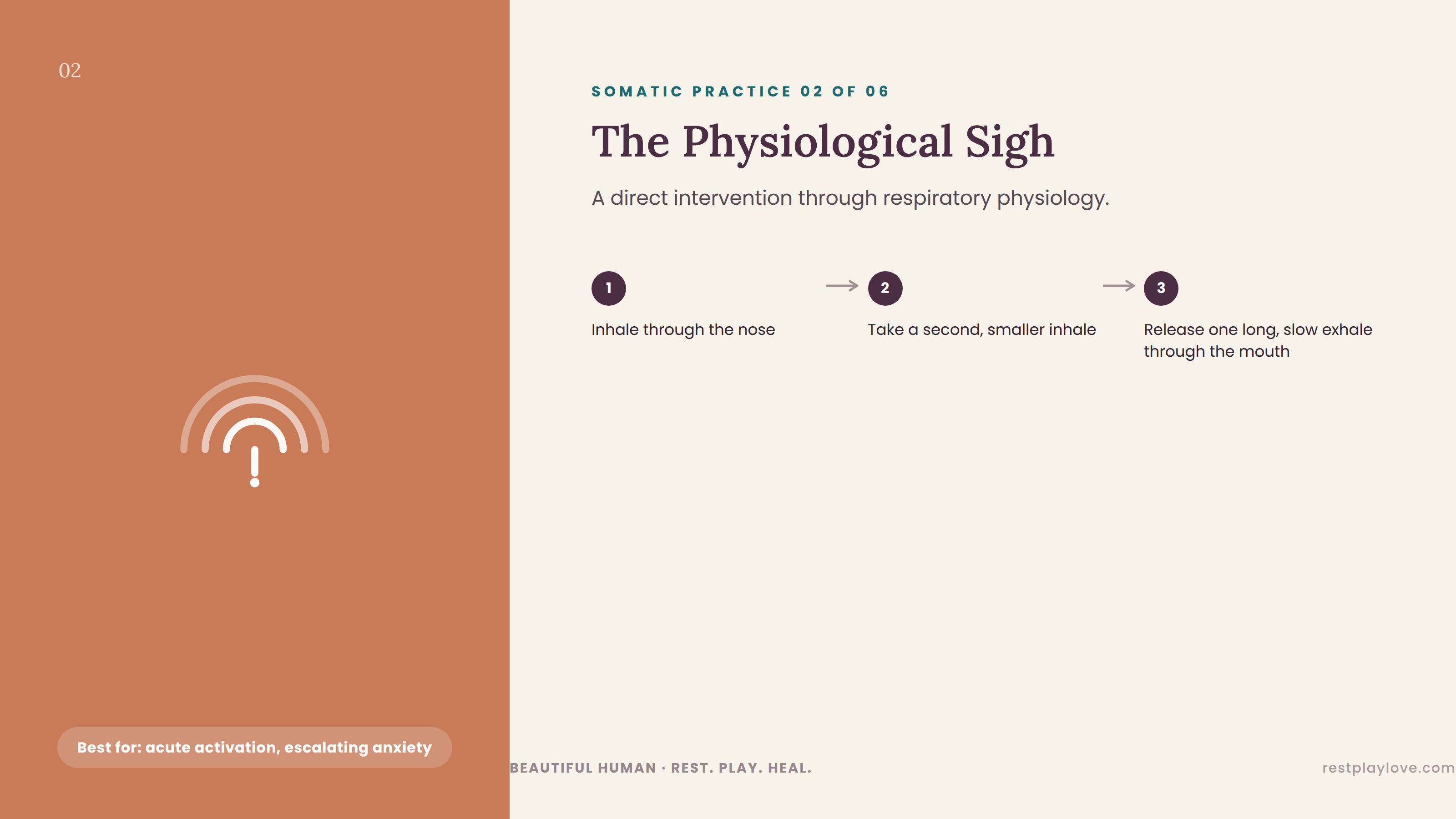
2. The Physiological Sigh: A Direct Intervention Through Respiratory Physiology
Breathing is one of the most accessible pathways into autonomic regulation because it’s both automatic and voluntarily modifiable. The brainstem contains respiratory centers that continuously regulate breathing without requiring conscious attention, while higher brain regions can deliberately alter respiratory rate, depth, and rhythm. Breathing also has a direct relationship with cardiovascular regulation because each respiratory cycle influences heart rate, blood pressure, venous return, and the activity of the autonomic nervous system. This means that changing the way you breathe can change physiological information being sent back to the brain, which is one reason respiratory interventions have such an important place in nervous-system regulation.
The physiological sigh is particularly useful during acute stress because it uses a very simple respiratory pattern that has a measurable physiological rationale. Take a normal inhale through the nose, follow it with a second, smaller inhale, and then release a long, slow exhale through the mouth. The second inhale can help reinflate portions of the lungs that may have become less fully expanded during shallow breathing, while the prolonged exhalation alters the respiratory and cardiovascular conditions associated with heightened arousal. The small second inhalation is particularly interesting because it increases the amount of air reaching the alveoli, the tiny air sacs where oxygen and carbon dioxide exchange occurs, while the longer exhalation gives the body more time to release carbon dioxide and shifts the respiratory pattern away from the rapid, shallow breathing that commonly accompanies acute stress.
One of the important pieces of the physiology involves carbon dioxide. When we breathe, we’re continually exchanging oxygen and carbon dioxide, and carbon dioxide is not simply a waste product that the body wants to eliminate as quickly as possible. It is one of the primary chemical signals used by the brainstem to regulate respiration. Specialized receptors detect changes in carbon dioxide and acidity in the blood and cerebrospinal fluid and adjust respiratory drive accordingly. During stress, breathing can become rapid and shallow, and changes in respiratory pattern alter carbon dioxide levels in the bloodstream. These changes can themselves influence sensations such as air hunger, dizziness, tingling, or the feeling that you cannot get a satisfying breath, which can then be interpreted by the brain as evidence of further danger and contribute to a feedback loop of escalating anxiety.
A physiological sigh provides a rapid change in respiratory mechanics and is followed by an extended exhalation. Research on cyclic sighing and other slow breathing practices has found reductions in respiratory rate and improvements in measures associated with stress regulation and emotional state. The longer exhalation is also relevant to the relationship between respiration and the cardiovascular system because our heart rate normally changes slightly across the respiratory cycle, with our heart rate tending to increase during inhalation and decrease during exhalation. This respiratory pattern is one expression of the ongoing interaction between the respiratory system and autonomic regulation, and slower breathing can increase the degree to which parasympathetic influences are reflected in heart-rate variability.
This is one reason the physiological sigh can be so useful in an acute moment. It doesn’t require you to understand why you’re anxious before you use it. If you notice that your breathing has become shallow while reading an upsetting email, waiting for a difficult phone call, preparing to walk into a meeting, or sitting in traffic after an emotionally charged interaction, you can use a single physiological sigh without having to stop and perform an elaborate exercise. You can then return to your normal breathing and observe what changed, rather than continuing to manipulate your breath indefinitely.
That last step is really important because the purpose of these somatic interventions is not to turn breathing into another thing you have to think about and control. The practice introduces a physiological shift and then allows your respiratory system to resume its natural rhythm. The physiological sigh is particularly appropriate when you notice sudden escalation, breath holding, rapid breathing, physical agitation, a racing heart, or the sensation that you’re becoming increasingly urgent or reactive, and it’s also an excellent starting point when you’re too activated to remember a more involved practice. In an acute moment, a simple intervention can be more accessible to the nervous system than a complicated sequence requiring sustained attention and multiple instructions because your Prefrontal Cortex is often not available in those moments.
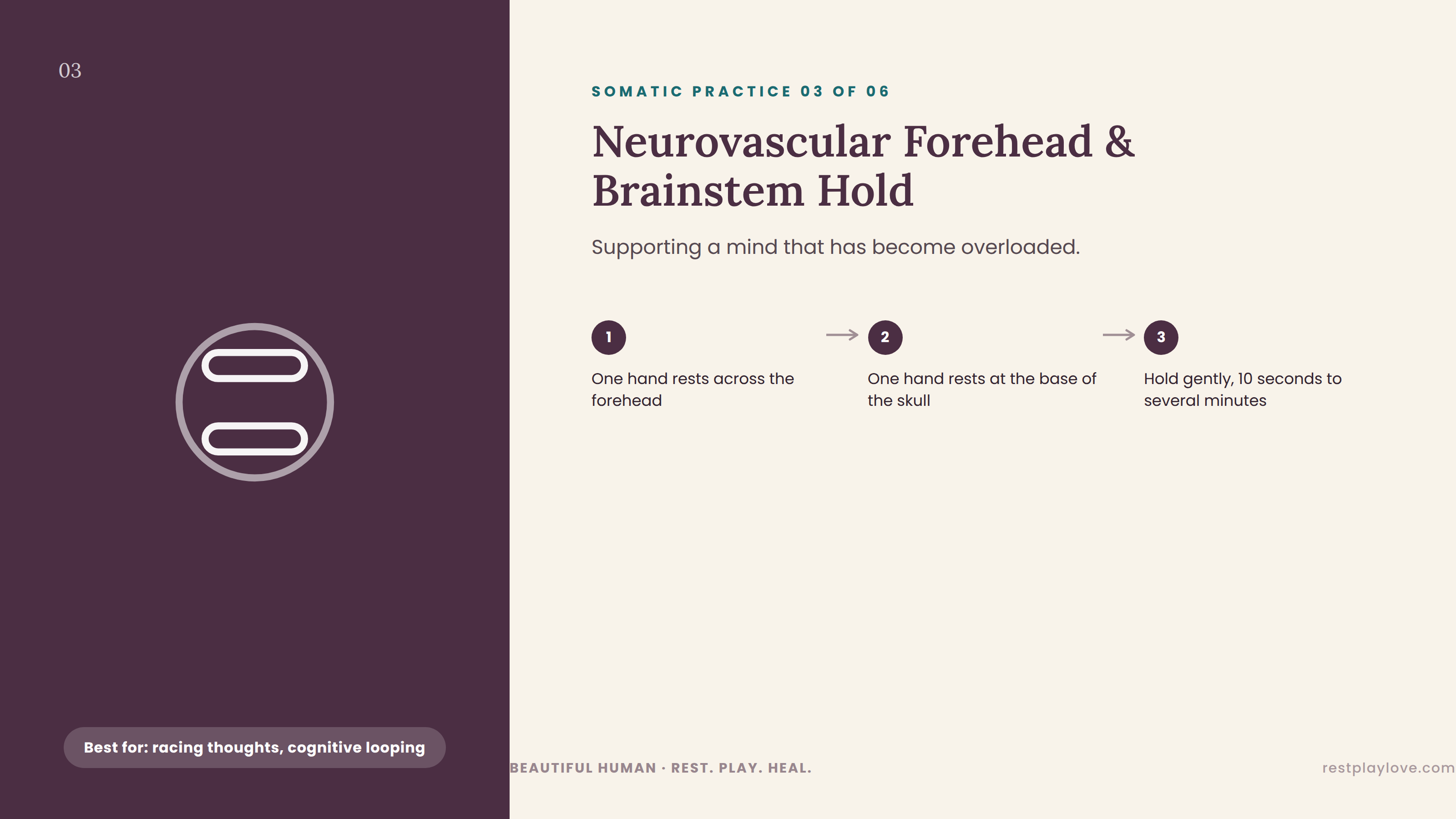
3. The Neurovascular Forehead and Brainstem Hold: Supporting a Mind That Has Become Overloaded
There’s a particular form of stress that’s characterized less by obvious panic and more by relentless mental activity and looping. You reread the same message, keep replaying a conversation, generate one possible outcome after another, try to decide what you should do and then reconsider the decision, and attempt to solve a problem from every possible angle while simultaneously becoming less capable of seeing the bigger picture. This experience reflects more than what we often generically label as “thinking too much.” Sustained stress changes the relationship between attention, arousal, working memory, and executive control, and when our nervous system is highly activated, the brain can become increasingly biased toward information that appears immediately relevant to threat or problem-solving.
The neurovascular forehead and brainstem hold can be useful in this state because it provides steady tactile input while reducing the amount of active sensory and motor demand placed on the recipient of the hold. The practice involves placing one hand gently across your forehead and the other at the base of your skull, allowing your hands to remain there without pressing firmly or attempting to manipulate the tissues. The position is held quietly for at least ten seconds up to several minutes while you allow your mind to do whatever it’s going to do. Rather than attempting to suppress your thoughts, this practice gives your body a consistent sensory experience of contact and stillness while you remain aware of what’s happening internally.
The practice comes from a broader somatic tradition in which gentle contact is used to influence autonomic state and support a reduction in cognitive and physiological arousal. The forehead itself is highly represented in the sensory cortex, and gentle tactile stimulation provides the brain with predictable information that competes with some of the internally generated threat-related attention that can dominate during rumination. The back of the head and upper neck also contain dense sensory information related to head position and movement, and these signals are integrated with visual and vestibular information in brainstem and cortical networks involved in orientation. Although this doesn’t mean that touching these locations directly switches a particular brain region into a state of calm, it does mean that the practice is providing organized sensory information to a nervous system that may currently be dominated by internally generated cognitive activity.
Stress affects cerebral blood flow and the function of prefrontal networks involved in executive regulation, and physiological changes associated with stress can make flexible reasoning more difficult. Gentle touch, warmth, stillness, and reduced sensory demand contribute to a shift toward a less activated state. This practice combines steady tactile stimulation, physical support, reduced movement, and sustained attention to present-moment sensory information, all of which influence the balance between internally generated cognitive activity and immediate sensory processing.
One of the strengths of this practice is that it doesn’t require you to stop thinking. You can have thoughts while your hands remain still, notice the urge to solve something without following every thought, and allow the forehead and jaw to soften without demanding that your mind become silent. For anyone who spends a great deal of time using cognition to manage stress, this can provide a meaningful change in the relationship between thinking and physiological effort. This practice is particularly fitting when you get caught in repetitive thought, mental overwork, decision fatigue, anticipatory anxiety, or the kind of cognitive looping that continues long after you’ve already extracted all of the useful information from a situation. It can also be useful at the end of a demanding workday when the external demands have stopped but your mind has not yet recognized that it’s allowed to stop working.
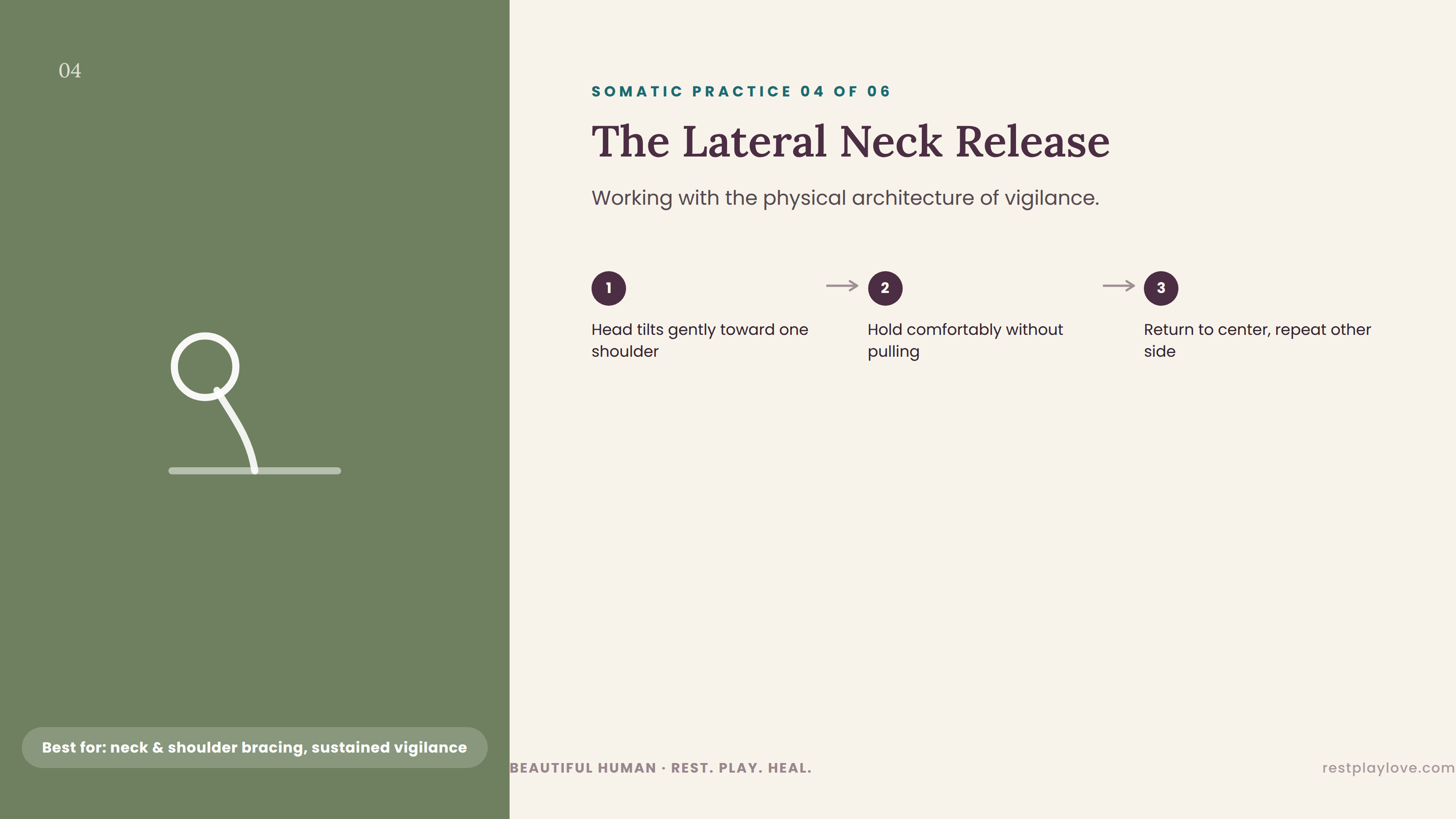
4. The Lateral Vagus and Neck Release: Working With the Physical Architecture of Vigilance
Stress is often visible in our musculature long before we consciously recognize how activated we are. Our shoulders rise toward our ears, our neck becomes rigid, the muscles around the base of our skull tighten, our jaw begins clenching, and our body adopts a subtle posture of readiness that may remain long after the original stressor has passed. This pattern isn’t simply a psychological expression of anxiety. Muscle tension itself provides sensory information to the nervous system through proprioceptors and other mechanoreceptors that detect changes in muscle length, tension, joint position, and movement. The brain uses this information to maintain an ongoing representation of the body's position and to coordinate movement, posture, balance, and orientation.
The lateral neck release works with one part of that pattern through a gentle side-bending stretch. The head slowly moves toward one shoulder without being pulled downward, remains there comfortably for a short period, and then returns gradually to center before practicing on the opposite side. The intention is not to aggressively stretch the neck or force a particular physiological response. Instead, the practice changes the amount and quality of sensory information coming from the muscles and joints of the cervical region, particularly from tissues that have often been maintaining a degree of contraction during prolonged vigilance.
The upper neck and shoulder region is particularly important because you head position is closely connected with visual orientation and balance. Information from the cervical muscles, vestibular system, and eyes is continuously integrated in the brainstem and higher cortical networks so that the brain can maintain an accurate representation of where the head is in relation to the environment. During stress, increased muscle tension can become part of a larger state of readiness in which the body is preparing for rapid movement and the sensory systems are prioritizing information that may require a response. When the muscles are allowed to release, the sensory information entering the nervous system changes, and that change can contribute to a broader reduction in the physiological cues associated with vigilance.
An additional phenomenon worth noticing after practicing the neck release is the fact that, when sympathetic activation is high, visual attention can become narrower because the brain prioritizes information that appears most relevant to immediate action. This is useful when your body needs to identify and respond to a genuine threat, but it can become restrictive when the same attentional pattern persists in situations that no longer require it. As your nervous system becomes more regulated, attention can broaden again and peripheral information can become easier to register. This doesn’t mean that widening your visual field is itself proof of vagal activation, but it can be an interesting subjective indicator that your attentional state is changing.
The common description that a neck stretch directly “stretches the vagus nerve” is anatomically oversimplified. The vagus nerve doesn’t function like a muscle that can simply be lengthened through a side stretch, and the nerve is not positioned in a way that makes this explanation anatomically adequate. A more scientifically grounded explanation is that changing cervical muscle tension and head position changes proprioceptive and sensory input to brainstem systems involved in orientation and autonomic regulation. This practice can therefore be particularly helpful after prolonged computer use, driving, public speaking, difficult conversations, sustained concentration, or any period in which you notice that your shoulders and neck have been maintaining a defensive posture. It’s also useful because it requires no equipment and very little privacy, allowing it to be incorporated into ordinary transitions between activities rather than requiring a special setting.
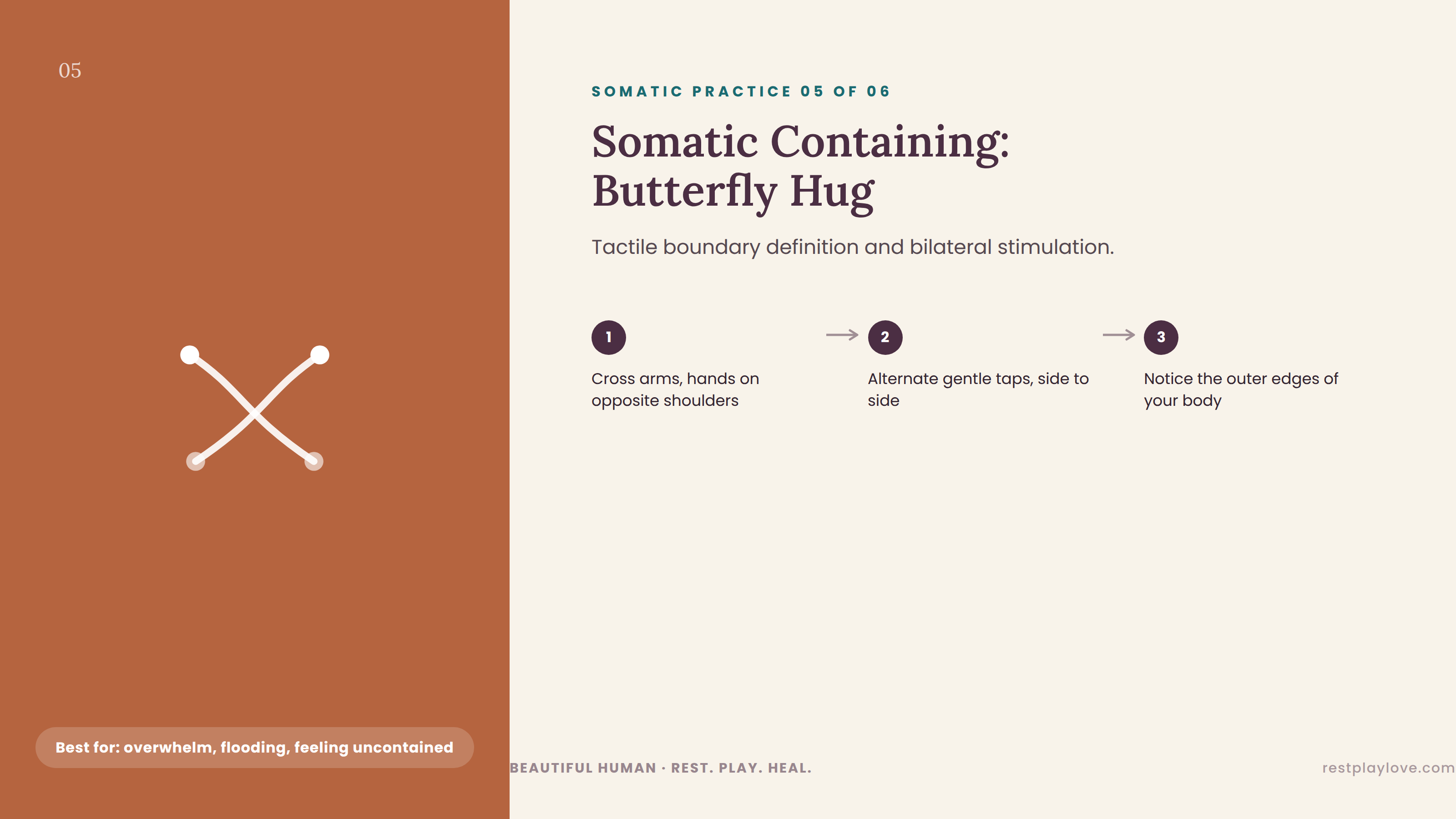
5. Somatic Containing: Butterfly Hug and Body Boundaries
Some forms of nervous-system activation feel expansive rather than contracted. Instead of feeling tightly wound, you may feel as though your attention is everywhere at once, your emotions may feel too large to organize, you may feel ungrounded or flooded, or you may have difficulty locating a stable physical sense of yourself in relation to the environment. This experience can occur during intense emotional activation, but it can also occur during dissociation or states in which your nervous system has moved toward reduced engagement after prolonged stress. In these circumstances, a practice that provides clear tactile information about the body can be more useful than one that asks you to focus primarily on thoughts or breathing.
Somatic containing addresses this experience through two forms of sensory input: tactile boundary definition and alternating bilateral stimulation. Begin by crossing your arms over your chest and placing each hand on the opposite upper arm or shoulder. Then alternate gentle taps from one side to the other, maintaining a comfortable rhythm. While doing this, bring your attention to the physical boundaries of your body, including the outer edges of your shoulders, arms, torso, hips, legs, and feet. This practice gives your brain continuous tactile information about where your body is located in space and provides a predictable rhythmic sensory input that can help organize your attention.
This is relevant because the brain maintains an internal representation of the body, sometimes described as the body schema, that’s continuously updated through touch, proprioception, vision, movement, and information from internal organs. The somatosensory cortex processes tactile and proprioceptive information, while regions such as the insula contribute to the representation of internal bodily states. During intense stress, dissociation, or overwhelming emotional states, the experience of the body can change considerably. You may feel distant from physical sensations, unusually diffuse, disconnected from specific body regions, or as though the emotional experience is much larger than the physical self. Tactile contact provides concrete sensory information that can help re-establish a clearer relationship between your body and the surrounding environment.
The bilateral component introduces another form of rhythmic sensory input. Alternating stimulation is used extensively within EMDR, and research into bilateral stimulation has examined several possible mechanisms involving attention, working memory, orienting responses, and the processing of emotionally distressing material. It’s important, however, to distinguish the butterfly hug from EMDR psychotherapy itself. The butterfly hug is a self-administered regulation practice derived from the broader use of bilateral stimulation; practicing it independently doesn’t constitute EMDR treatment and should not be presented as equivalent to trauma processing with a trained clinician. For the purposes of nervous-system regulation, the simpler explanation is that alternating touch provides organized sensory information while the physical contact provides a strong reference point for the physical boundaries of the body.
This can be particularly supportive after a difficult conversation, during emotional flooding, when waking at night with anxiety, during periods of overwhelm, or whenever you have the experience of feeling diffuse, uncontained, or disconnected from the physical boundaries of your body. It’s also important to respect the possibility that self-touch may initially increase activation for some people, particularly those with a history of trauma involving physical contact or boundary violations. If this practice creates more distress, do not force it. A different sensory pathway may be more appropriate at that moment, which is part of the larger principle underlying all six practices: regulation is individualized, and the usefulness of a technique depends on the interaction between the intervention, the person's current physiological state, and their individual history.
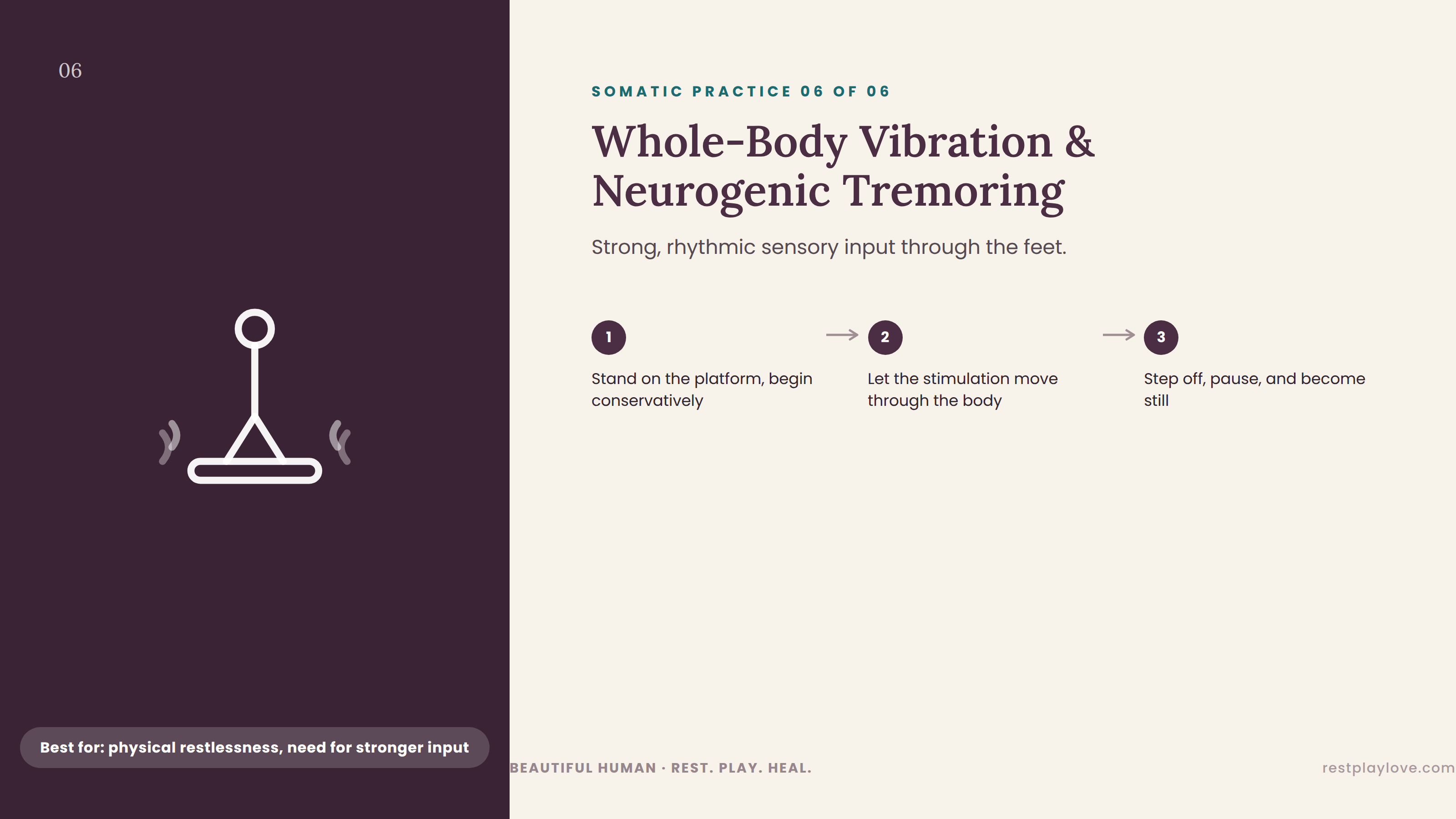
6. Whole-Body Vibration and Neurogenic Tremoring
The sixth practice was a surprise addition to the live session because I wanted to demonstrate another way of working with the nervous system through strong, rhythmic sensory input. Whole-body vibration introduces rapid mechanical stimulation through the feet and into the body, and when you stand on a properly calibrated vibration platform, the mechanical oscillation creates small, involuntary muscle contractions through what is commonly called the tonic vibration reflex. The experience is very different from deliberately performing a movement because you’re receiving mechanical stimulation from the outside rather than generating a movement sequence through conscious effort. That distinction can be particularly useful for people who feel physically restless, braced, or stuck after prolonged stress but don’t have the capacity or desire to perform an extended movement practice.
The physiological response to vibration involves multiple systems simultaneously. Mechanical stimulation is detected by sensory receptors in the skin, muscles, joints, and connective tissues, and proprioceptive information travels through peripheral nerves into the spinal cord and brain. The vibration also produces repeated small changes in muscle length and tension, which can activate spinal reflex circuits and cause involuntary muscle contractions. From there, sensory information is integrated at multiple levels of the nervous system, including the spinal cord, brainstem, cerebellum, and cerebral cortex. The result is a substantial increase in sensory input without requiring you to consciously generate a complicated movement pattern, which can be particularly useful when your body feels underactive, restless, or difficult to access through subtle interoceptive practices.
There is a larger somatic tradition around neurogenic tremoring that describes involuntary shaking as one of the body's natural responses following intense survival activation. Animals frequently shake after escaping a threat, and involuntary tremor is also a familiar human physiological phenomenon following intense exertion, fear, cold exposure, or other forms of activation. The body can produce involuntary movement after intense activation, and those movements involve the autonomic nervous system, motor system, and sensory feedback.
Vibration provides strong proprioceptive and mechanical stimulation, changes muscle activation, influences sensory processing, and has been investigated for potential effects on autonomic function and cardiovascular regulation. Some research has reported changes in heart-rate variability and other physiological measures following whole-body vibration, although the findings vary according to the equipment, frequency, intensity, duration, posture, and characteristics of the people participating in the studies. Whole-body vibration changes neuromuscular and sensory input and provides a useful trauma-release mechanism and framework.
If you use a vibration platform, begin conservatively and follow the equipment manufacturer's recommendations rather than assuming that more intensity or more time will produce greater regulation. A short exposure may be enough to create a perceptible shift, particularly because the sensory input is relatively strong compared with practices such as gentle touch or slow breathing. Then step off the platform and allow yourself to become still. This transition is important because it gives your nervous system an opportunity to register the difference between stimulation and recovery rather than immediately replacing one sensory demand with another. Whole-body vibration may be particularly useful when you feel physically restless after prolonged sitting, chronically braced, activated after an intense experience, or as though your body needs some form of movement but you don't have the energy for a conventional exercise session. It can also be useful for people who have difficulty accessing subtle internal sensations because the external mechanical input provides a strong sensory reference point. For a more complete dive into Whole Body Vibration, feel free to visit my last blog post here.
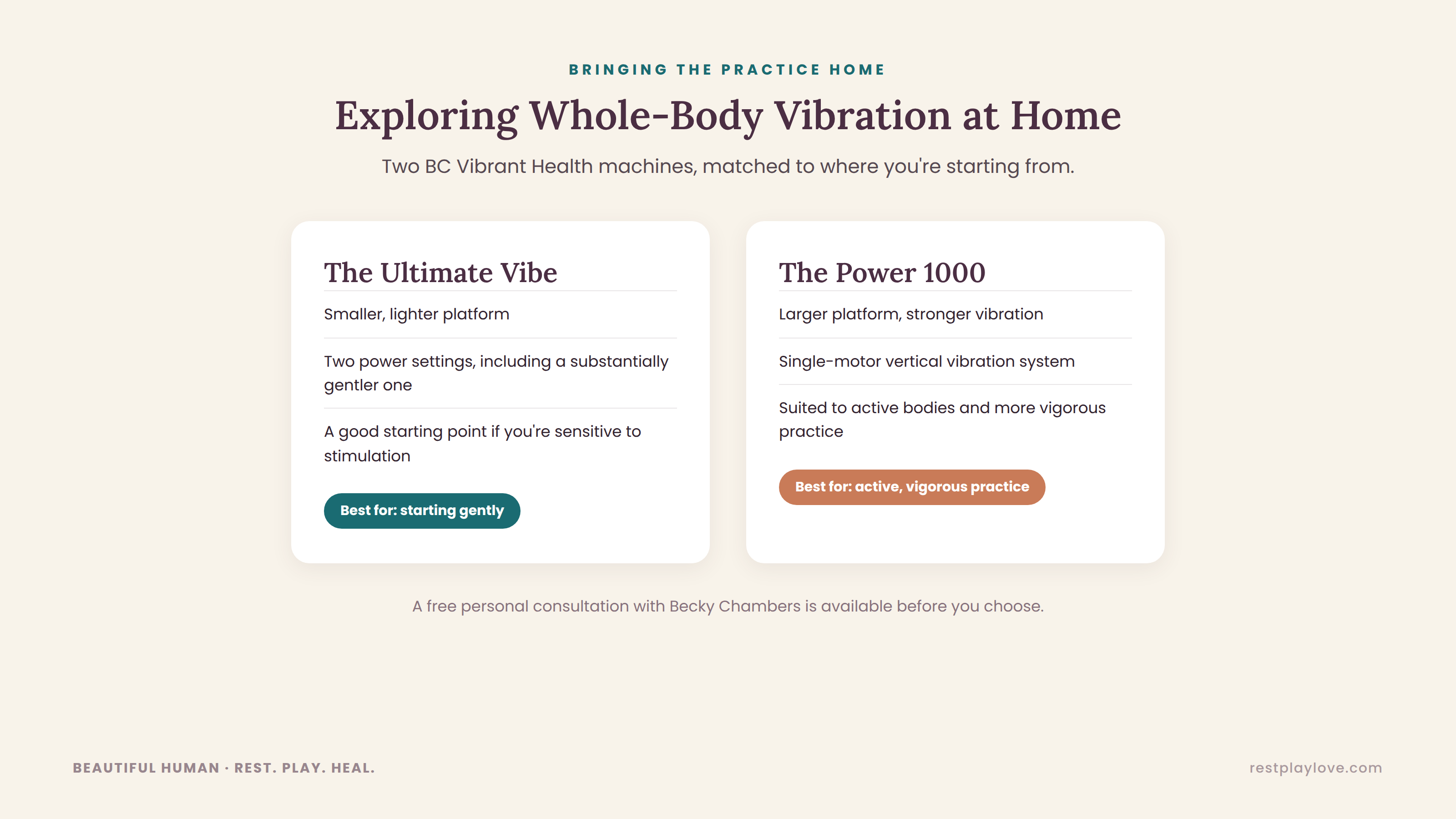
Exploring Whole-Body Vibration at Home
If you would like to explore whole-body vibration as part of your own nervous-system and whole-body wellness practice, I recommend looking at the machines developed by Becky Chambers of BC Vibrant Health, whose work with whole-body vibration - spanning over the last 25 years - has focused on using appropriately dosed vertical vibration for both general wellness and people who may need a gentler approach.
Two machines I particularly recommend considering are the Ultimate Vibe and the Vibrant Health Power 1000 (apply discount alessad10 at checkout to receive 10% off.) The Ultimate Vibe is the smaller, lighter option and has two power settings, including a substantially gentler setting that can be a good starting point for people who are more sensitive to stimulation, are dealing with chronic health concerns, or want the ability to begin gently and gradually increase intensity as their body becomes accustomed to vibration. The Power 1000 is larger and provides a stronger vibration experience, making it a better option for people who are relatively healthy and active and want to incorporate more vigorous whole-body vibration into exercise, muscle and bone-strengthening work, stretching, and other movement practices. Both machines use a single-motor vertical vibration system, but the difference in size and available intensity makes the Ultimate Vibe the more versatile choice when you want a gentler starting point, while the Power 1000 may be preferable when you want a larger platform and greater intensity.
Affiliate Disclosure:To support our ongoing educational work and community resources, some of the links included in this article are affiliate links. If you choose to explore the specialized systems engineered by Becky Chambers using these links or the community support code AlessaD10, we may receive a minimal commission at no additional cost to you (the discount is taken from the purchase price and the commission is paid by the company.) We only recommend modalities and technologies that meet strict standards of structural safety, scientific validity, and somatic integrity
If you are unsure which machine is best suited to your particular needs, I strongly recommend taking advantage of Becky Chambers’ free personal consultation before purchasing. Becky is available to help you think through your health considerations, experience level, and goals and determine which machine and level of vibration may be the most appropriate place for you to begin. You can reach Becky directly at 877-422-8423 or 781-879-9857.
Explore the BC Vibrant Health vibration machines
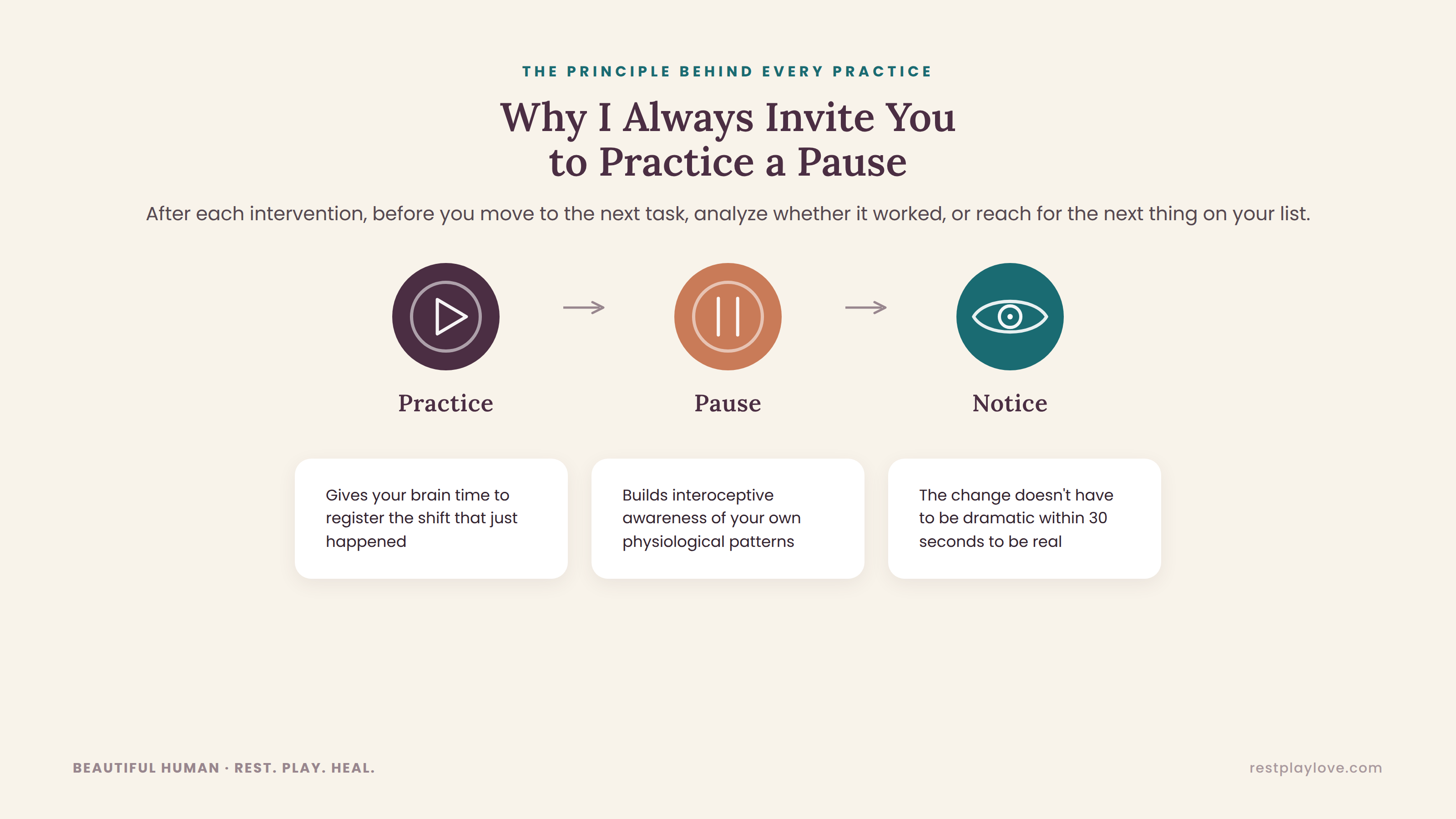
Why I Always Invite You to Practice a Pause After Each Practice
There’s an element of somatic practice that receives considerably less attention than the technique itself so much so that it’s often completely missed by practitioners helping clients. I personally consider it essential: the pause after the intervention. After you complete any practice, take a moment to pause, rest, and notice rather than immediately moving on to the next task on your list, analyzing whether the practice worked, or deciding whether you performed it correctly. Give yourself a few moments to pause, rest there, and notice what’s happening internally. This pause provides an opportunity for your brain to process the sensory information that has just changed and for you to become aware of the difference between the state you were in before the practice and the state you're experiencing afterward. Over time, this will make the sensory information more salient to the brain and it will look for that experience and motivate you to repeat the practice because you will start to connect the dots between the benefits it provides and the practice itself.
You might observe a change in your breathing, muscle tension, temperature, heart rate, visual field, energy, emotional intensity, or mental speed. You may notice a sensation that was previously difficult to detect, or you may experience nothing particularly obvious. Interoception is more than the ability to notice more sensations. It involves the brain's capacity to detect, interpret, and integrate information arising from inside your body, and that process is influenced by attention, previous experience, emotional state, and expectations. The insula, somatosensory cortex, anterior cingulate cortex, brainstem, and other interconnected regions participate in the representation and interpretation of bodily signals, which means that becoming more aware of your body isn’t simply a matter of “turning up” a single internal awareness system.
This is one of the reasons why I encourage people to not judge a practice based entirely on whether they experienced a dramatic sensation within thirty seconds or not. Sometimes the change is subtle, sometimes it becomes apparent only after several repetitions, and sometimes you notice later that you responded differently to something that normally would have activated you. The practice of pausing, resting, and noticing (PRN) gives your brain an opportunity to register those changes instead of immediately replacing them with another demand, and it also helps build a capacity that's undeniably even more valuable than the ability to perform any individual technique: familiarity with your own physiological patterns.
As that familiarity develops, you may begin to recognize the physical signs that precede escalation, distinguish ordinary fatigue from the exhaustion that follows prolonged vigilance, and recognize the subtle changes that accompany settling. You may notice that your breathing changes before you consciously realize you’re becoming anxious, or that your jaw begins to tighten when you’re moving toward a familiar pattern of hypervigilance. This information becomes increasingly useful in everyday life because regulation can begin earlier, when less intervention is required and before your nervous system has moved far outside the range of your unique window of tolerance in which you can think flexibly and make deliberate choices.
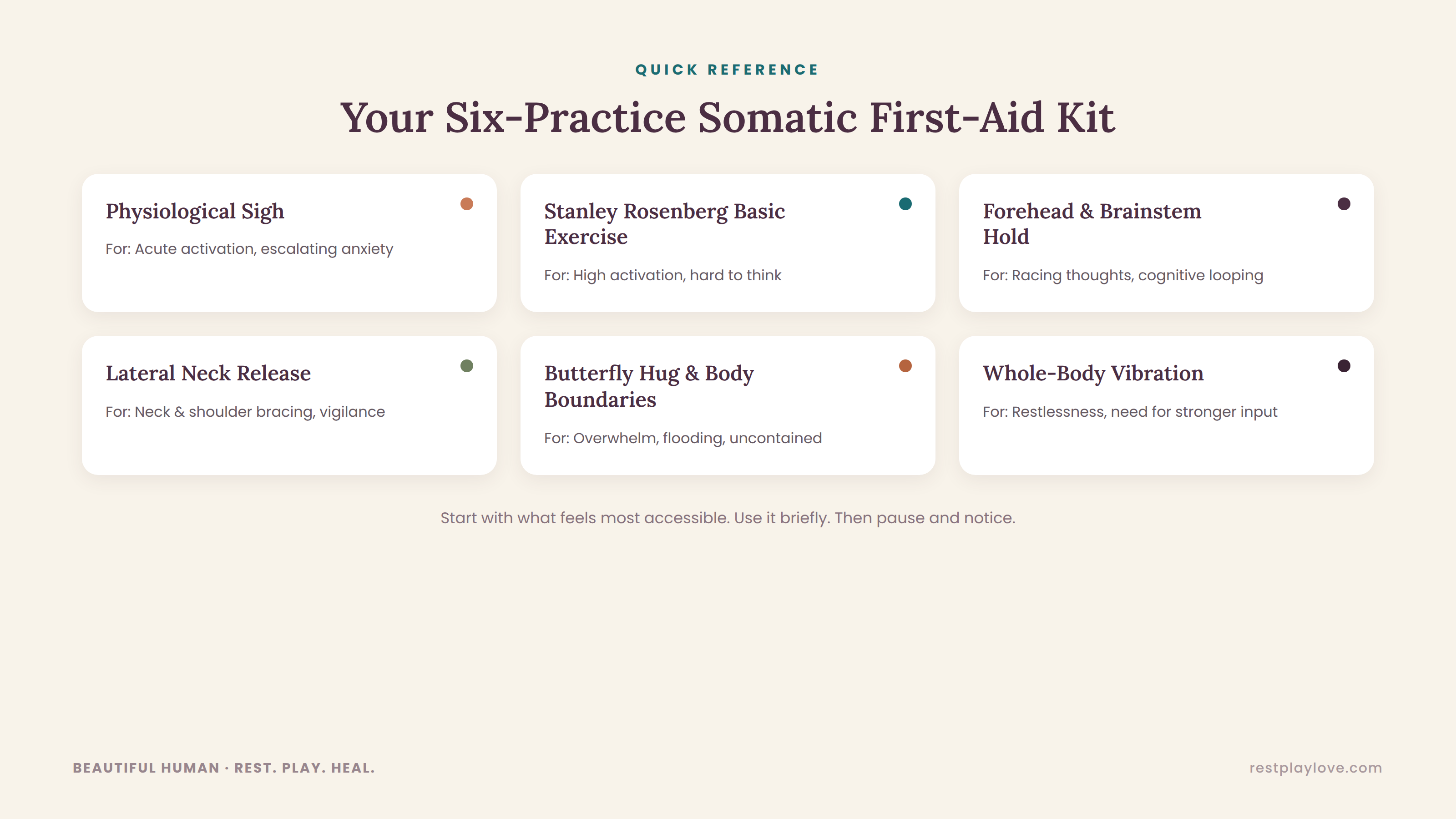
How to Build a Somatic First-Aid Kit That You Can Easily Integrate Into Your Daily Life
A wonderful approach to easily integrating these practices into your daily life is to experiment with them and identify one or two interventions that your nervous system seems to respond to most readily, while also learning which practices are useful in different states. For acute anxiety or rapidly escalating activation, begin with the physiological sigh, because it requires almost no setup and can easily be used in the middle of ordinary life. For a highly activated state in which it’s become difficult to even think, the Rosenberg Basic Exercise can provide a relatively simple sensory entry point that doesn’t require prolonged cognitive concentration. For repetitive thought, mental overwork, and cognitive looping, experiment with the neurovascular forehead and brainstem hold. For the physical bracing that accompanies prolonged vigilance, computer work, driving, or difficult conversations, the lateral neck release may be a useful intervention. For emotional flooding, overwhelm, or difficulty feeling or staying physically contained, experiment with the butterfly hug and body-boundary practice, while remaining attentive to whether self-touch feels regulating for you. For physical restlessness, bracing, or a desire for stronger sensory input with minimum physical effort on your part, whole-body vibration provides a substantially more intense proprioceptive experience.
You may discover that one or two of these practices create an immediate perceptible change while others seem to hardly register. That doesn’t mean that the other practices are ineffective in some universal sense, and it doesn’t mean that you’re doing them incorrectly either. Nervous systems have different histories, sensory preferences, levels of interoceptive awareness, and patterns of activation. Someone who has spent years in a highly vigilant state may respond very differently to an intervention involving visual orientation than someone whose primary difficulty is shutdown and disconnection. Someone who experiences touch as soothing may find the butterfly hug deeply grounding, while another person may experience the same contact as uncomfortable or activating. Pay close attention to this contrast, because it reveals the dynamic relationship between the sensory information you take in and your physical state, establishing an ongoing, reciprocal connection with your environment that instantly shifts your internal baseline in response to external cues.
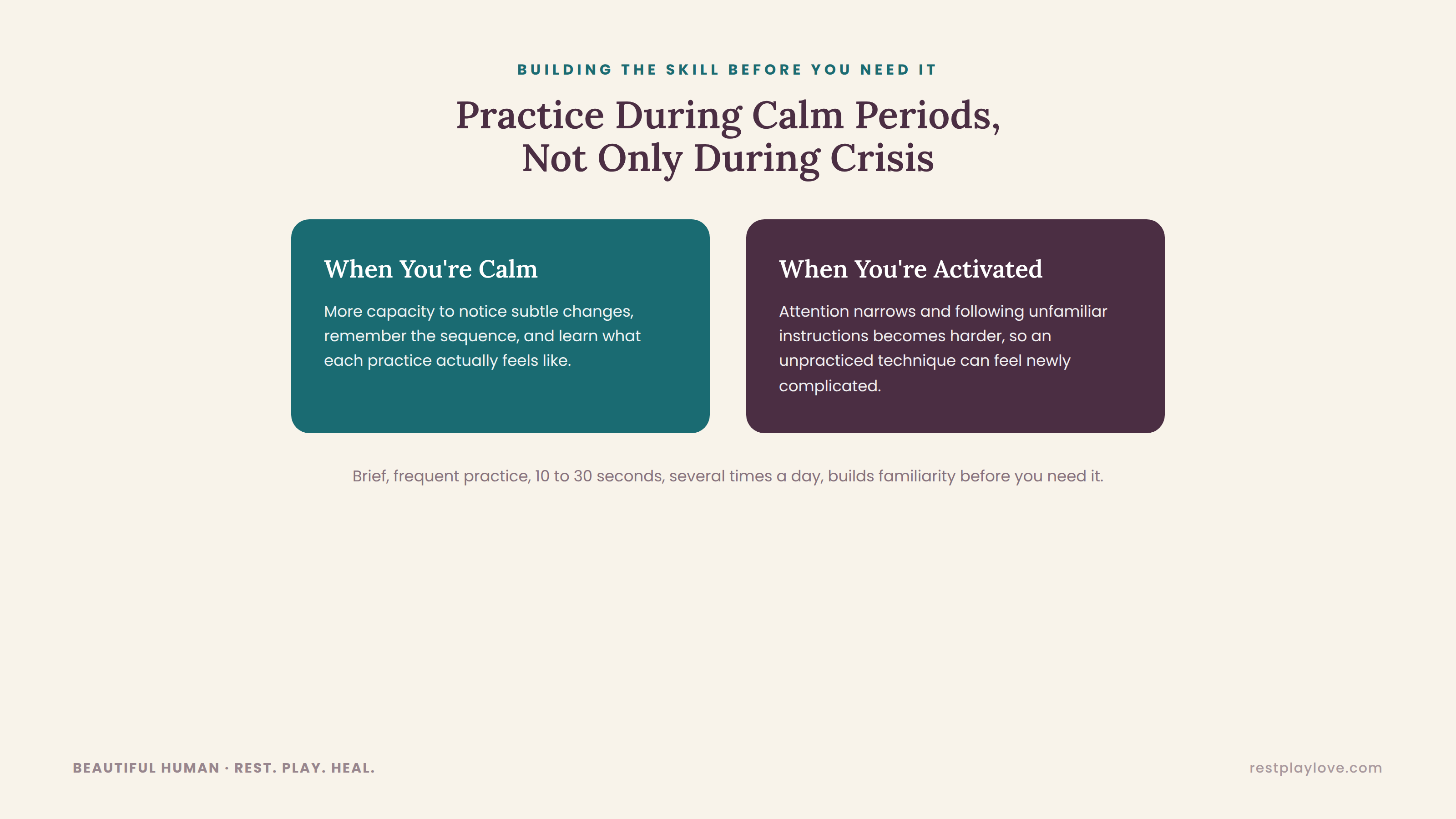
Practice During Calm Periods, Not Only During Crisis
In order to develop the ability to implement any somatic or nervous system interventions, you need to practice these tools when you’re relatively settled rather than waiting until your nervous system is already overwhelmed and you're outside of your window of tolerance where you can effectively apply them. When you’re calm, you have more capacity to notice subtle changes, remember the sequence, experiment with different approaches, and learn what each practice feels like. When you’re highly activated, your available attention is narrower and your ability to follow complicated instructions may be reduced, particularly if the intervention itself is unfamiliar. This is why a practice that feels easy and obvious during a calm afternoon can suddenly feel strangely complicated when you’re in the middle of an intense stress response.
I therefore recommend brief, frequent practice rather than treating nervous-system regulation as another lengthy task that has to be completed perfectly. You might practice one technique for 10 to 30 seconds several times throughout the day, use the physiological sigh before opening your inbox, practice the neck release after an hour at the computer, or take thirty seconds to feel the physical boundaries of your body before transitioning from work into the evening. While seemingly small, these repeated experiences are one of the ways your window of tolerance expands and your nervous system becomes familiar with particular patterns of sensory input and recovery. That's one way you learn that you can get activated and return to baseline.
This is one of the most practical applications of neuroplasticity in nervous-system regulation. The brain changes in response to repeated experience, and regulation is no exception. Repeatedly moving through a sequence in which you notice activation, introduce an appropriate sensory intervention, your physiological state changes, and you experience the relief that comes with recovery gives your nervous system repeated experiences of responding and returning. That doesn’t mean that just a few repetitions will permanently rewire your brain or guarantee that the same practice will be effective under every circumstance. Neuroplasticity is more nuanced than that. What repeated practice does is increase familiarity, strengthen learned associations, and make a particular regulatory response more accessible over time as your window of tolerance expands.
The intention is to increase your capacity to move through it with minimal activation and return to your baseline as to expand your window of tolerance, rather than trying to eliminate activation.
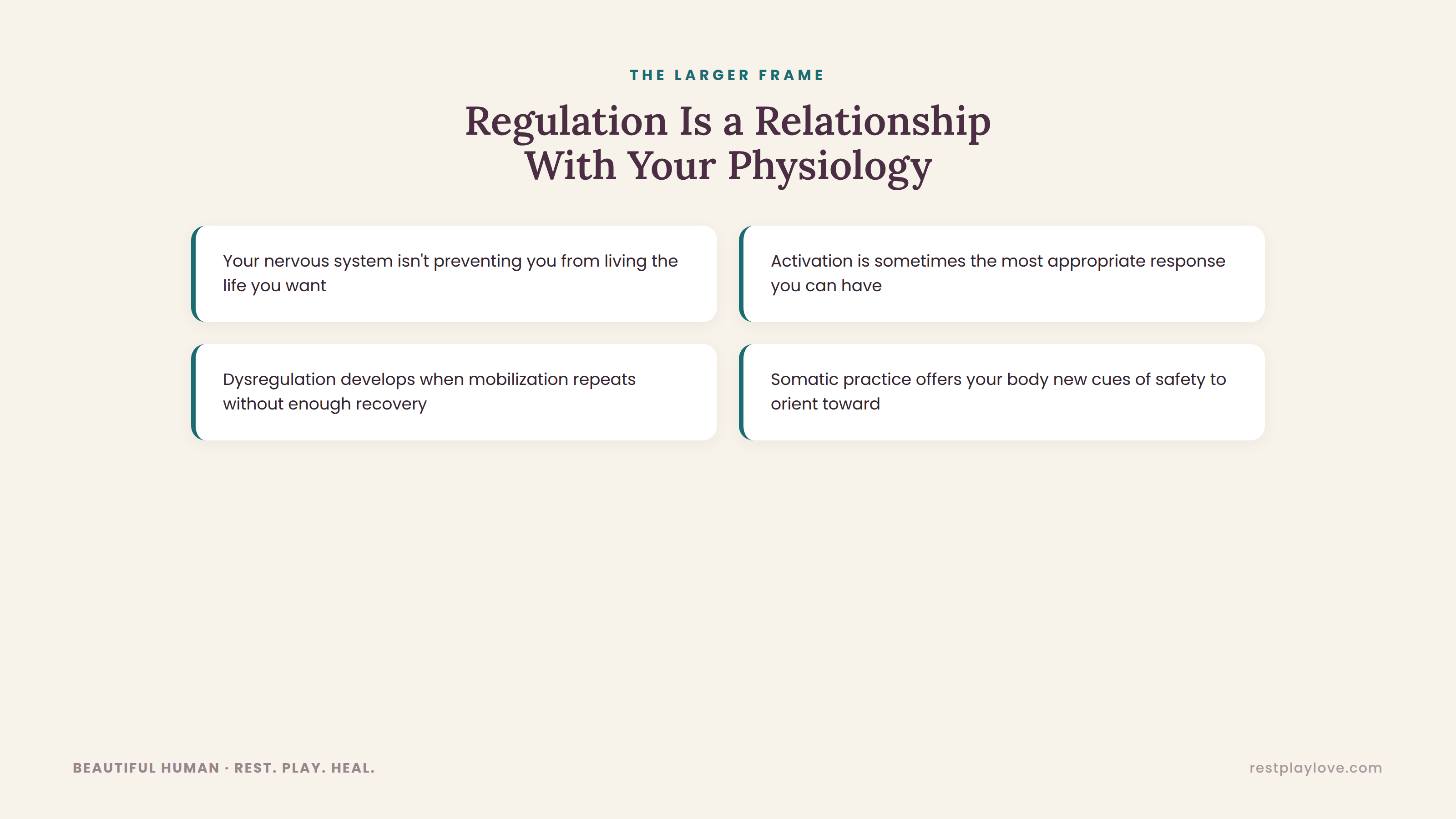
Understanding Regulation As A Relationship With Your Physiology
When you realize that regulation is fundamentally a process of developing a relationship with your own nervous system and physiology, the somatic approaches you choose to apply to dysregulates states goes way beyond a collection of techniques for calming down. You begin to understand that your nervous system and the different states you go into aren’t preventing you from living the life you want to live. And you begin to appreciate that your nervous system and its role are part of the intelligent biological system through which you experience your life. It responds continuously to what you encounter, what you anticipate, what you remember, what your ancestors encountered and made relevant through your genetic and epigenetic material, what you perceive through your senses, how you breathe, how you move, whether your muscles are braced, how much rest you’ve had, whether you feel connected to other people, and whether your environment is asking more of you than you currently have the capacity to give.
There will be times when activation is the most appropriate response. That’s because mobilization gives you the energy to act, speak, leave, protect yourself, solve a problem, or respond to something that genuinely requires your attention. The sympathetic nervous system is an essential component of a fully functioning human nervous system, and when understood and accessed deliberately it can support our greatest wellbeing. Nervous system dysregulation only develops when the physiological response is repeatedly activated in circumstances that don’t require that degree and intensity of mobilization, when your body doesn’t have sufficient opportunities for recovery, or when previous experiences have made certain cues disproportionately powerful triggers for the same response.
There will also be times when the original demand that required mobilization has passed and your physiology hasn’t yet received enough information and cues of safety to recognize that it can down-regulate the stress response and begin recovering. This is where somatic regulation gives you practical ways to participate in that recovery. By using bottom-up approaches that change your breathing pattern, muscle tension, visual orientation, tactile input, or whole-body sensory stimulation, you’re changing some of the information being received by the brain and autonomic nervous system so that they can orient to those cues of safety. That information becomes part of the larger process through which the brain evaluates the current state of your body and environment and determines what physiological response remains necessary, if any.
The more familiar you become with your own physiological and nervous system patterns, the earlier you can recognize what’s happening within and the more precisely you can choose an intervention that will support your nervous system and brain down-regulating the threat response. That level of nuance and precision is key because someone who’s feeling restless and hypervigilant may need a different entry point than someone who’s feeling exhausted, disconnected, or even shut down. Someone whose mind is looping may need a different approach from someone whose body is carrying intense muscular tension and mobilization. Someone experiencing emotional flooding may benefit from containment as an entry point to work with what’s gotten activated and creating the flooding, while someone who’s already beginning to shut down may need a different form of sensory engagement to gently come back online. Treating every uncomfortable or dysregulated state as though it requires the same calming intervention misses the complexity of the autonomic nervous system and can sometimes make a person feel as though they’re failing and further activates them when what’s truly going on is that the intervention applied to their current state simply doesn’t match the state they’re in.
There’s no single practice or intervention that every nervous system needs at every moment. There are virtually endless pathways into regulation, and becoming familiar with those pathways gives you more choices on how to respond to your own, unique physiology. Therefore, I encourage you to experiment with these six practices and to be curious and interested in what you uncover through your exploration while staying away from expectations of any kinds about what you think is the right way to develop and strengthen your nervous capacities so that this doesn’t turn into perfectionism or performance that further triggers sympathetic activation and undermine the results you’re looking to achieve. Notice what changes, notice what doesn’t, notice which practices feel most accessible to you when you’re calm and which remain available when you’re activated, and notice whether the desired changes occur immediately or become more effective and lasting with repetition. This kind of exploration allows you to gather information about your own nervous system rather than attempt to achieve a predetermined physiological outcome that could further dysregulate you through self-pressurization.
And most importantly, notice what happens when you stop trying to force regulation and begin responding to your physiology with greater precision and respect for the wisdom it carries. Somatic nervous system approaches are not limited to producing a temporary sensation of calm. They’re intended to help you become sensitized to interoceptive cues of safety and danger from within and to help you develop the capacity to recognize your physiological state, understand the specific brain and body processes contributing to any state that you experience, respond appropriately to what your nervous system is communicating to you, move through activation without becoming stuck in it or overwhelmed by it, and return toward a more desirable state in which you have greater access to choice, connection, perspective, and yourself.
That capacity is one of the foundations of resilience and can be developed through repeated experience and attention to the nuances of each experience and how it changes your default state.
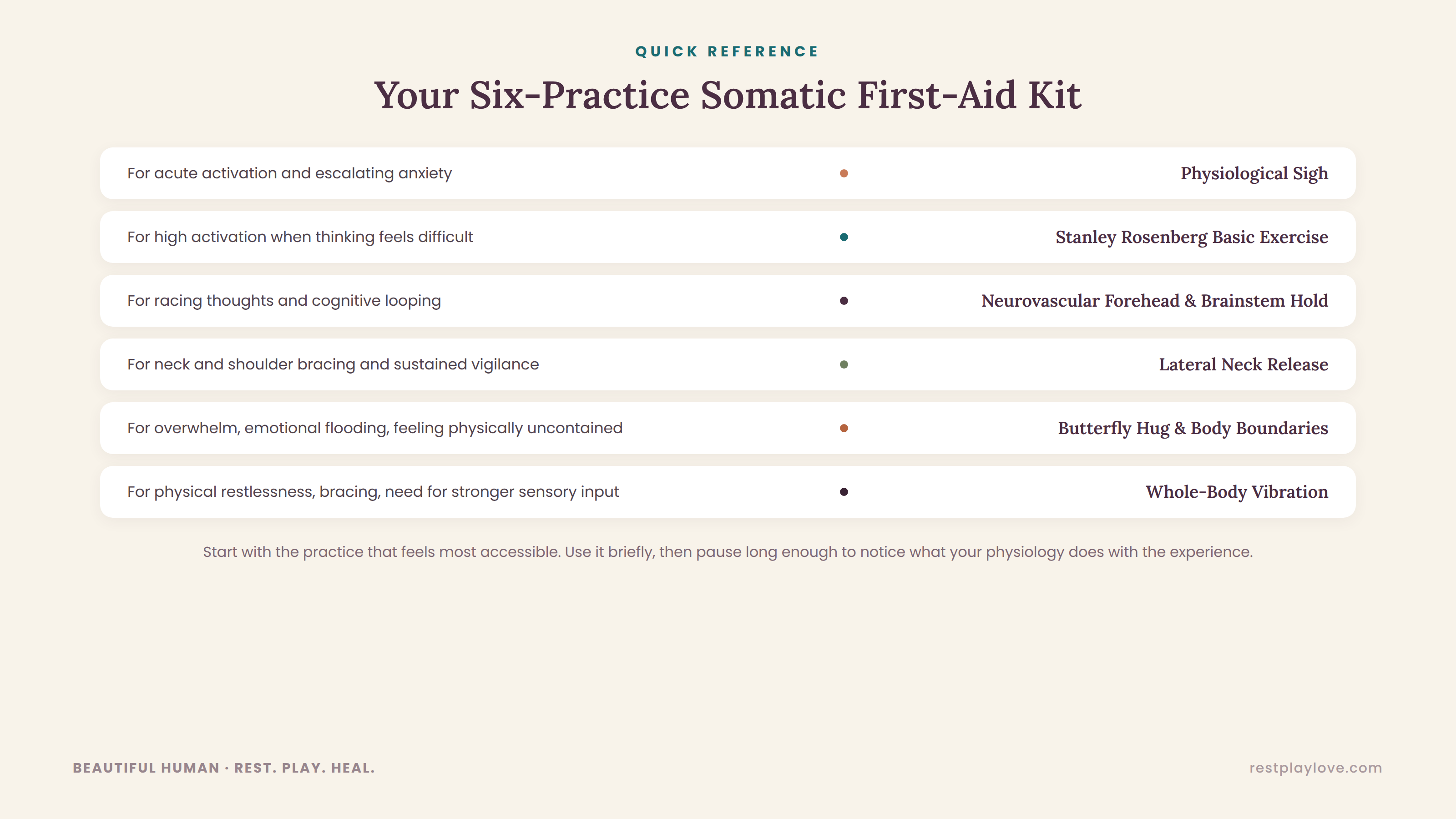
Your Six-Practice Somatic First-Aid Kit
For acute activation and escalating anxiety → Physiological Sigh
For high activation when it's hard to even think → Stanley Rosenberg Basic Exercise
For racing thoughts and cognitive looping → Neurovascular Forehead and Brainstem Hold
For neck and shoulder bracing and sustained vigilance → Lateral Neck Release
For overwhelm, emotional flooding, and feeling physically uncontained → Butterfly Hug and Body Boundaries
For physical restlessness, bracing, and a need for stronger sensory input → Whole-Body Vibration
Start with the practice that feels most accessible to you, use it briefly, maybe for 10-30 seconds at a time, and then pause long enough to notice what changes in your physiology and body. Over time, this process of pausing after each practice to notice what has changed or what you feel can help you become more familiar with the relationship between sensory input, brain function, autonomic state, and your subjective experience, allowing somatic regulation to become an embodied capacity that's available in ordinary life rather than something you remember only after you've already become overwhelmed.
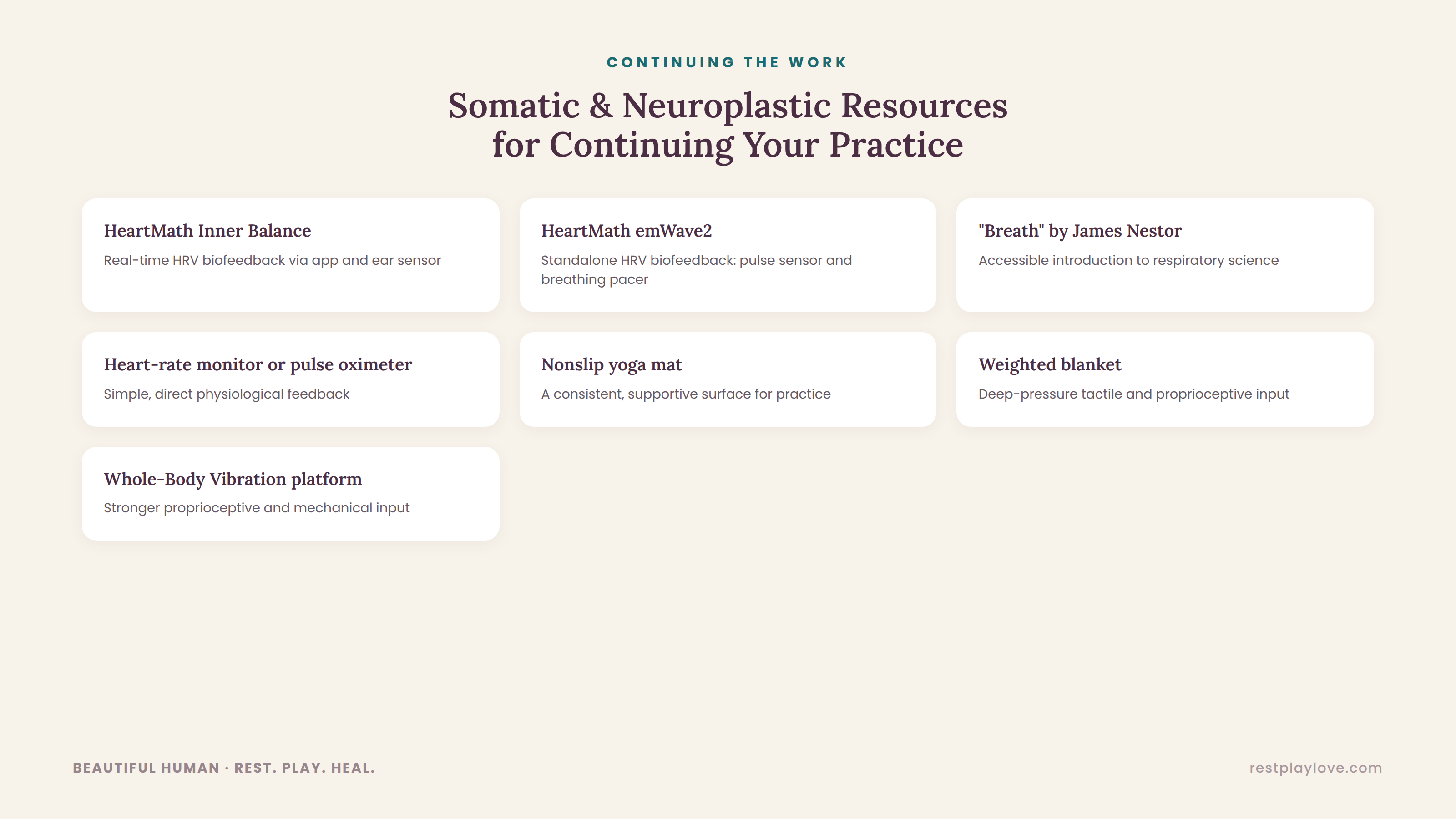
Somatic and Neuroplastic Resources for Continuing Your Practice
If this exploration has piqued your interest in the relationship between the nervous system, the body, trauma, attachment, and the capacity to recover from stress, here are some book recommendations that can support you diving deeper into this topic. Each book approaches nervous system regulation and somatic interventions from a different perspective, and together they offer a broader context for understanding why nervous system regulation involves much more than changing your thoughts or your belief system.
Accessing the Healing Power of the Vagus Nerve by Stanley Rosenberg. For a direct introduction to the practice that opens this post, Accessing the Healing Power of the Vagus Nerve by Stanley Rosenberg lays out the Basic Exercise and several related techniques for working with the vagus nerve, cranial nerves, and autonomic state through gentle positioning and movement. The somatic exercises featured in this book effectively stimulate the vagus nerve and down-regulate the nervous system through biomechanical pathways like the phrenic nerve, cervical fascia, and deep neck muscles, making complex neurobiology accessible for daily self-regulation. I recommend it as a set of practices you can start using immediately, turning a complex physiological system into a small set of exercises anyone can learn without equipment or a practitioner.
The Body Keeps the Score by Bessel van der Kolk. For a broader account of how trauma registers in the body, The Body Keeps the Score by Bessel van der Kolk traces how traumatic experience affects brain function, physiology, and the body itself, and surveys treatment approaches ranging from EMDR to yoga to neurofeedback.I recommend it as a genuinely useful map of why trauma cannot be resolved through talk therapy alone, offering a grounded and comprehensive look at how healing happens across both mind and physical form. Its greatest value is in demonstrating, across dozens of clinical cases, that the body's role in trauma and recovery is not a metaphor, but a tangible physiological reality that opens the door to somatic and experiential pathways of recovery.
Waking the Tiger by Peter Levine. For the physiological reasoning behind the neurogenic tremoring discussed in Practice 6, Waking the Tiger by Peter Levine introduces Somatic Experiencing and the observation that animals discharge the activation of a survival response through involuntary shaking, while humans often override or suppress that same response. It serves as a foundational text for understanding why the body needs to complete a stress response, offering a deeply practical roadmap for restoring natural regulation. Its greatest value is in reframing trauma symptoms as an incomplete physiological process rather than a psychological flaw, opening up powerful, body-based pathways for release and recovery.
Breath: The New Science of a Lost Art by James Nestor. For a deeper exploration of breathing itself, Breath: The New Science of a Lost Art by James Nestor offers an accessible introduction to the ways respiration interacts with sleep, exercise, stress, and overall physiology. It serves as an engaging starting point for cultivating a deeper awareness of breath and its profound impact on daily vitality. Its greatest value is that it encourages a closer examination of a process we do thousands of times every day and rarely think about until something goes wrong, illuminating practical, science-backed ways to optimize health through better breathing habits.
Additional Tools for Continuing Your Somatic Practice
If you want to explore these practices more deeply, in addition to books, there are several resources that can help you move from understanding your nervous system intellectually into developing a more direct relationship with your own physiology. I particularly like resources that give you an opportunity to observe, practice, or experience what we're discussing rather than simply collecting more information about it.
HeartMath Inner Balance is a great option for people who are interested in learning more about the relationship between breathing, heart rhythm, and autonomic regulation through real-time feedback. Heart-rate variability (HRV) reflects the naturally occurring variation in the time between heartbeats, and that variation is influenced by breathing, autonomic activity, physical condition, stress, sleep, and many other factors. HRV is not a direct measurement of whether you're emotionally regulated, but watching how your heart rhythm responds while you practice paced breathing can make an otherwise invisible physiological process easier to observe. Inner Balance uses an ear sensor and app to provide feedback while you practice, which can be particularly useful if you learn through visual information and appreciate being able to see changes occurring in your body as you experiment with different breathing patterns. Explore HeartMath Inner Balance. (get 10% off using my affiliate link.)
If you prefer a standalone device rather than an app-based experience, HeartMath emWavePro offers another approach to HRV biofeedback through a pulse sensor, breathing pacer, and visual and auditory feedback. I particularly like the idea of using biofeedback as a learning tool rather than as a scorecard. Your nervous system is not a machine that needs to produce a particular number in order for you to be doing regulation correctly, and HRV naturally varies with age, health, fitness, respiration, sleep, medication, and many other physiological factors. The value is in becoming more curious about the relationship between your breathing, attention, physiological state, and recovery. Explore HeartMath emWavePro (get 10% off using my affiliate link.)
A simple heart-rate monitor or pulse oximeter can also be useful for people who enjoy observing physiological changes directly. I wouldn't recommend using a single heart-rate reading, oxygen saturation number, or other measurement as a definitive assessment of your nervous-system state, because these measurements are influenced by many variables and do not tell the complete story of emotional regulation. They can, however, provide another opportunity to become curious about what happens to your physiology when you slow your breathing, rest after movement, walk, become stressed, or transition from activation into recovery. For someone who learns through concrete feedback, having an observable physiological marker can make the connection between subjective experience and body function more tangible.
A comfortable, organic, non-toxic, nonslip yoga mat is another simple resource that can make these practices easier to integrate into everyday life. Several of the interventions described here involve lying down, gentle movement, body awareness, or pausing after an exercise, and having a consistent physical environment in which to practice can make it easier to establish a regular relationship with these techniques. You don't need specialized or complicated equipment to regulate your nervous system and this choice of a comfortable, supportive surface to work with is my way of reinforcing that point. Sometimes the most useful input you can provide your body is enough physical support and stability to allow you to 'stop doing' and begin noticing.
For people who find steady, distributed pressure regulating, a 100% cotton weighted blanket can be another sensory rich resource worth exploring. Deep-pressure stimulation provides tactile and proprioceptive information across a relatively large area of the body, and some people experience that sustained pressure as calming, grounding, or organizing, particularly when they feel physically restless or emotionally uncontained. The research on weighted blankets and autonomic regulation shows its usefulness for helping with containment and developing a sense of safety through containment. Those effects are highly individualized: if your body responds positively to steady pressure, it may provide a simple sensory cue of containment and physical support that can complement the kinds of body-boundary practices described earlier in this article, such as the butterfly hug/.tap.
For those who want to explore stronger proprioceptive and mechanical sensory input, whole-body vibration is another option. As I described earlier, vibration provides a very different sensory experience from breathing, gentle touch, or subtle movement because it creates repeated mechanical stimulation and involuntary muscle activity while giving the nervous system substantial information through the muscles, joints, skin, and balance systems. As mentioned earlier in this post, if you're interested in exploring this approach at home, my two favorite options are the Ultimate Vibe and Vibrant Health Power 1000 from BC Vibrant Health. The Ultimate Vibe offers a gentler starting point and greater flexibility for people who are more sensitive to stimulation or want to begin conservatively, while the Power 1000 provides a larger platform and stronger vibration that may be better suited to someone who is relatively active and wants to incorporate vibration into exercise and more vigorous movement practices. Both vibration plates are offered with 0% financing available through Klama.
All of that said, while it can and will certainly help, you don't need any equipment to begin your journey into the wonderful world of somatic and nervous system regulation. Your breath, your eyes, your movement, your hands, your attention, and your capacity to pause, rest, and notice what's happening inside your body are already providing you with multiple pathways into greater physiological awareness. These resources simply offer additional education, sensory input, or physiological feedback for those who want to explore further or who need the extra support because of having lived in a chronic state of stress, anxiety, overwhelm, or shutdown for a long time.
This section contains affiliate links. I only share books, protocols, and tools that I've personally integrated and found meaningful enough to include in my personal and professional work and writing. If you choose to purchase through one of my affiliate links, I may receive a small commission at no additional cost to you.
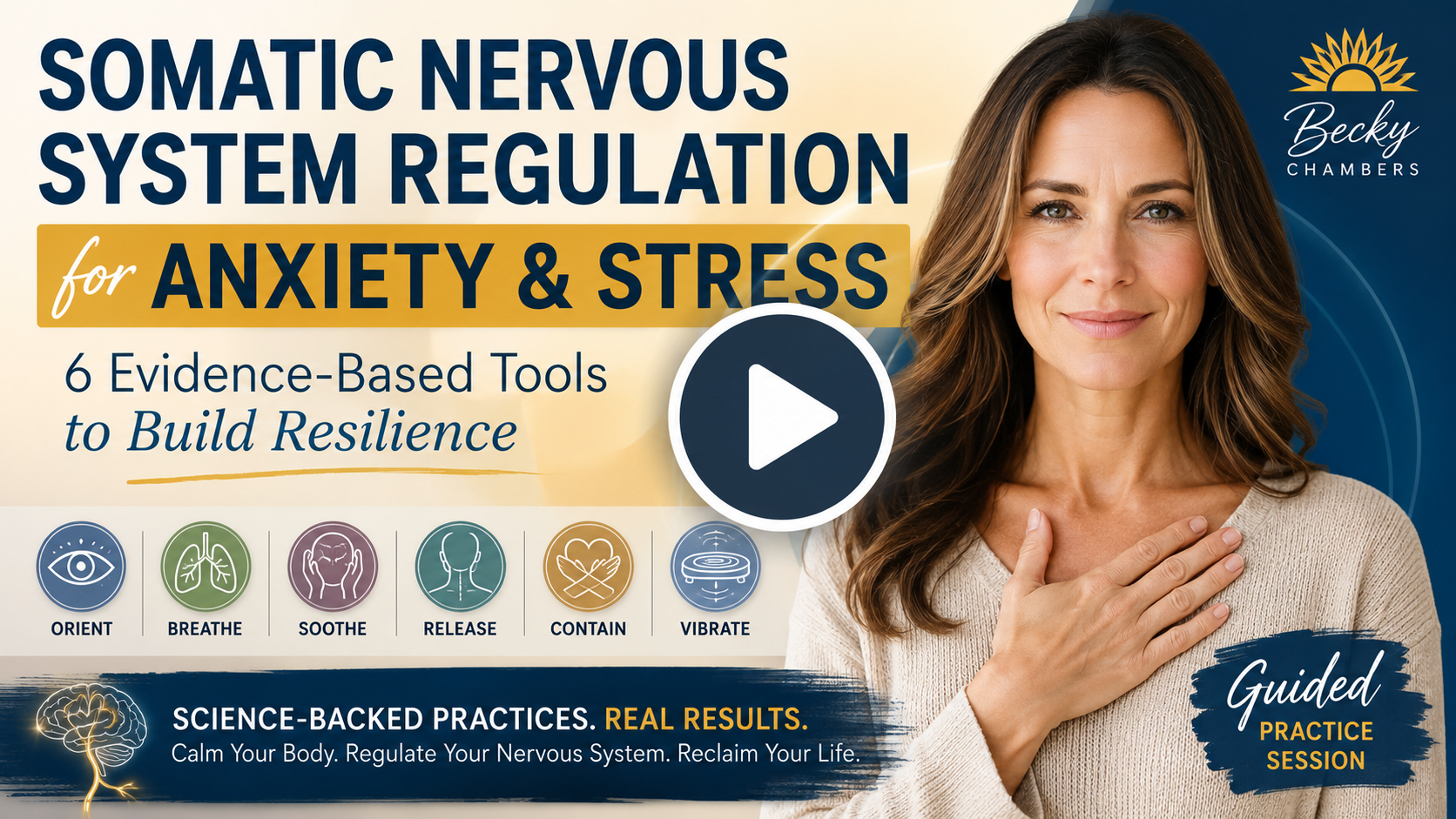
Guided Practice Video Demonstration: Practice Alongside With Me
Reading about nervous-system regulation can give you an intellectual understanding of what's happening in your brain and body, which allows you to understand the ultility of this approach. That said, it's not a replacement for experiential practices. If you tend to process information more effectively through visual demonstration, auditory guidance, or learning through your own physical experience, I encourage you to watch the recording from my live session as a companion - or replacement - to this article rather than relying on the written instructions alone.
In this video, I guide you through the somatic practices described throughout this post while explaining what's happening physiologically and why I am choosing each intervention. Being able to watch the movement, hear the pacing and verbal guidance, and practice along with me gives you an opportunity to experience the principles described here through your own nervous system. You can pause the recording, repeat a practice, give yourself time to notice what changes and what you're sensing, and return to the sections that feel most useful to you.
Watch the complete recorded session here or click on the image above.
I encourage you to use this recorded guided practice session as an opportunity for personal experimentation rather than performance. You don't need to experience a dramatic shift for a practice to be useful, and you don't need to complete every practice in a single sitting. Pay particular attention to the interventions that feel accessible to your body, the ones that seem to change your breathing or muscle tension, the ones that help your attention become more flexible, as well as the ones that feel less helpful for you at a particular moment. Becoming sensitive to this feedback from your own physiology is useful information and a big part of the practice. Learning to recognize how your own nervous system responds is one of the ways you develop greater self-awareness, increased interoception, and regulatory choice.
What Are You Taking With You From This Exploration?
My hope is that this exploration provides you with more than a collection of techniques to use when you feel anxious. My intention is for you to gain a deeper understanding of the relationship between your brain, body, environment, and nervous system, so that you can begin recognizing your physiological state earlier and responding to it with greater precision. Regulation becomes much more useful when you can weave it into ordinary moments of your life rather than being limited to stressful times, events, and situations after stress has already accumulated beyond your capacity and you're outside of your window of tolerance.
What are you taking with you from this somatic exploration today? Which practice are you curious to experience for yourself, and what are you noticing about the ways your own body communicates with you while doing the practices?
Feel free to connect and share your reflections in the comments below.
Get Individualized Support With Nervous-System Regulation
If you're experiencing chronic anxiety or stress and would like more individualized support building somatic regulation practices, developing emotional resilience, and increasing your capacity to recover from activation, freeze, or shutdown, you can explore my Gentle Offerings here.
Free Practices and Ongoing Support
Instagram: @beautifulhumanhealing
Free Meditations on YouTube: @Dexterandalessandrina
