The Structural and Somatic Case for Toe Spacing: A Guide to Plantar Proprioception, Foot Architecture, and Nervous System Grounding With SOLE FLOSS
A Somatic Guide to Plantar Proprioception, Foot Architecture, and Nervous System Grounding With SOLE FLOSS
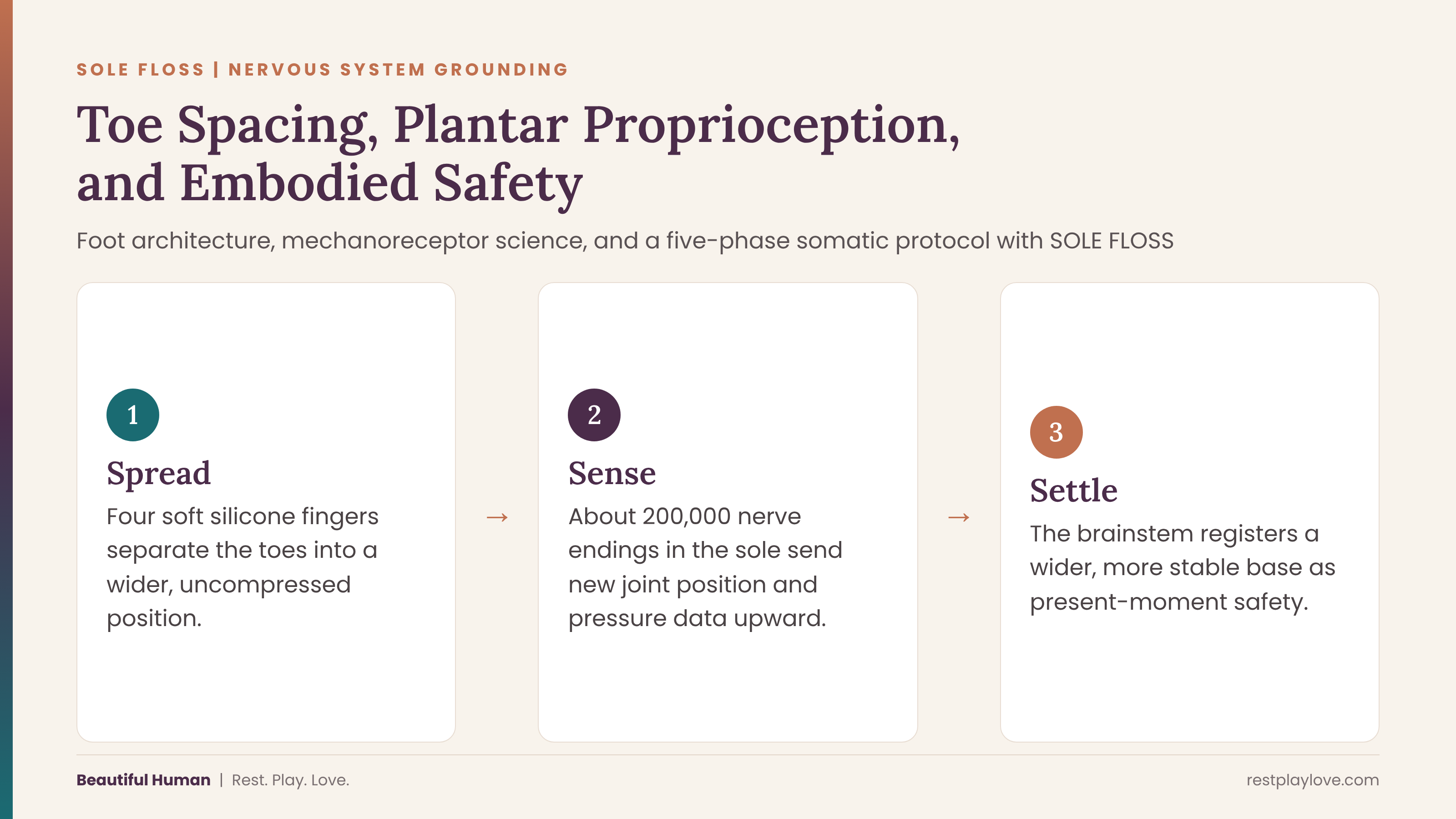
The human sole carries an estimated 200,000 nerve endings, one of the densest concentrations of sensory receptors anywhere on the body. Mechanoreceptors embedded beneath the toes and the ball of the foot send continuous positional data through the tibial nerve to the spinal cord, brainstem, and cerebellum, shaping balance, gait, and postural control before any of that information reaches conscious awareness. When footwear compresses the forefoot for years, that sensory surface changes along with the bone structure beneath it, and the signal it sends up the nervous system changes with it.
SOLE FLOSS is a therapeutic toe spacing and foot fascial release device created by my friend Beri Golding, founder of Sole2Soul Healing, an E-RYT yoga teacher, expert body therapist, and trauma healing specialist whose own healing journey began with her feet, toes, and soles. This post walks through the foot anatomy, mechanoreceptor research, and nervous system science behind toe spacing, includes Beri's own SOLE FLOSS tutorial, and offers a five-phase somatic protocol for using SOLE FLOSS as a grounding tool, which I also introduced during my live Qi Gong sessions on Insight Timer.
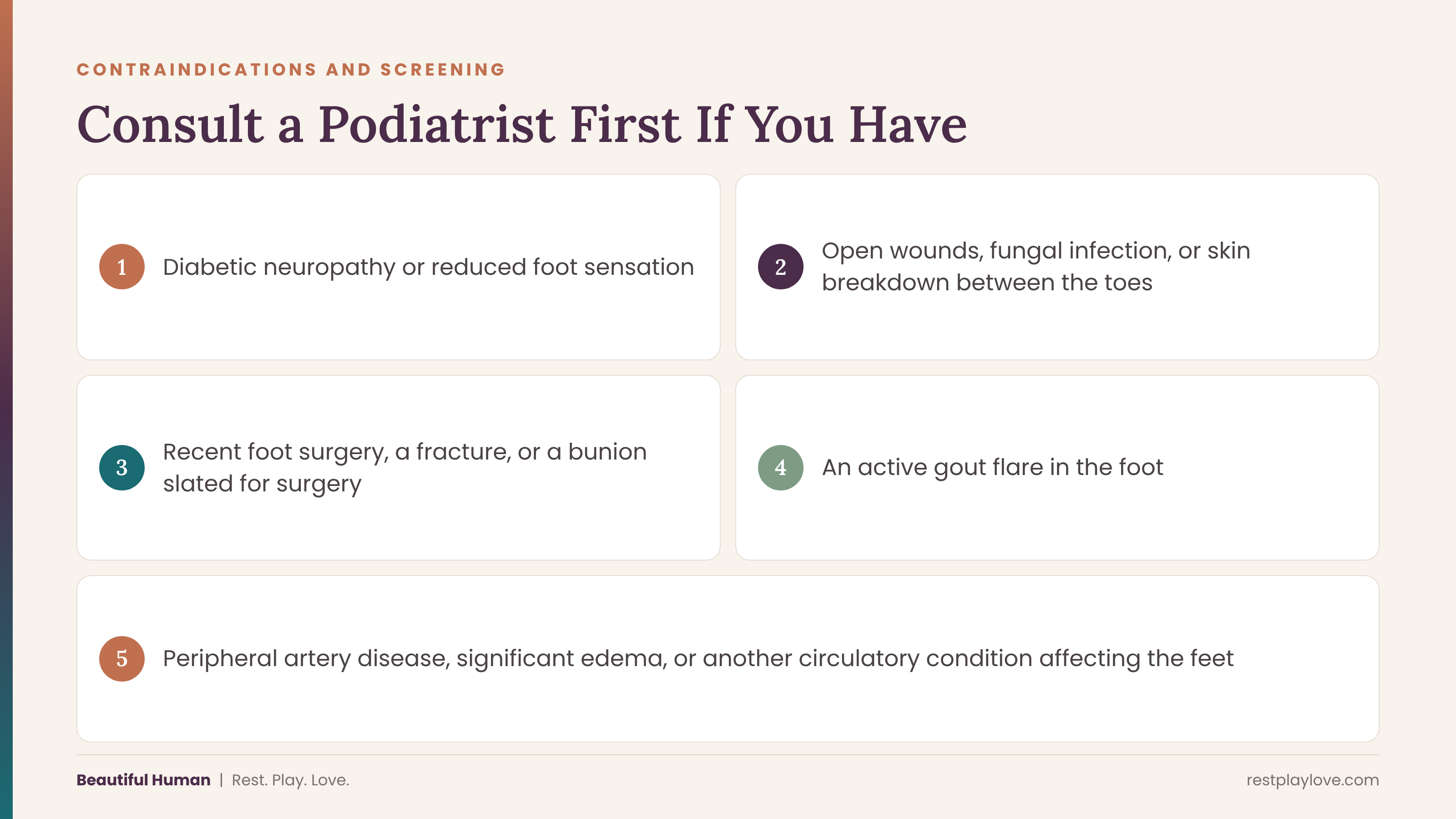
Educational Notice: The following material integrates podiatric research, mechanoreceptor science, and polyvagal-informed nervous system principles for educational purposes. It does not replace personalized medical diagnosis, advice, or treatment. If you have diabetic neuropathy, a recent foot injury or surgery, active gout, severe bunions requiring surgical correction, or complex trauma symptoms, consult a podiatrist or a trauma-informed healthcare provider before beginning a toe spacing practice.
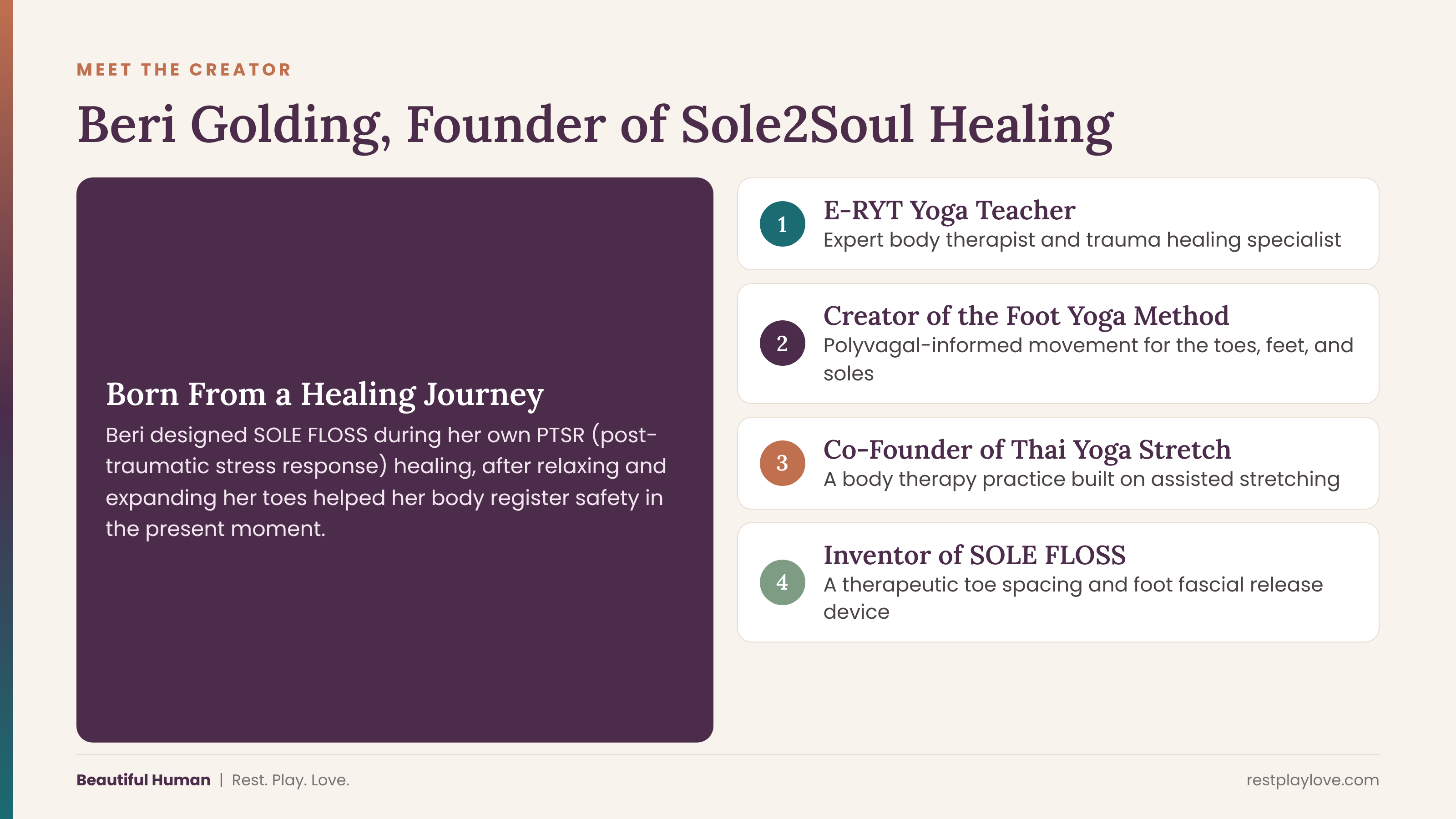
Meet Beri Golding, Creator of SOLE FLOSS and Founder of Sole2Soul Healing
Beri Golding is a polyvagal-informed yoga teacher, body therapist, and trauma healing specialist, the creator of the Foot Yoga Method, the co-founder of Thai Yoga Stretch Body Therapy, and the founder of Sole2Soul Healing, her model for whole-body holistic healing that addresses physical pain and emotional and psychological stress through bottom-up, trauma-informed work.
Beri designed SOLE FLOSS during her own PTSR (post-traumatic stress response) healing journey, after discovering that relaxing and expanding her toes helped her body register safety in the present moment, so that she could know she was safe in her mind and feel safe in her body at the same time. She describes SOLE FLOSS as a hug for the toes, built to replicate the felt sense of hugging your toes and stimulate the relaxation response in one of the most stressed and most neglected parts of the body.
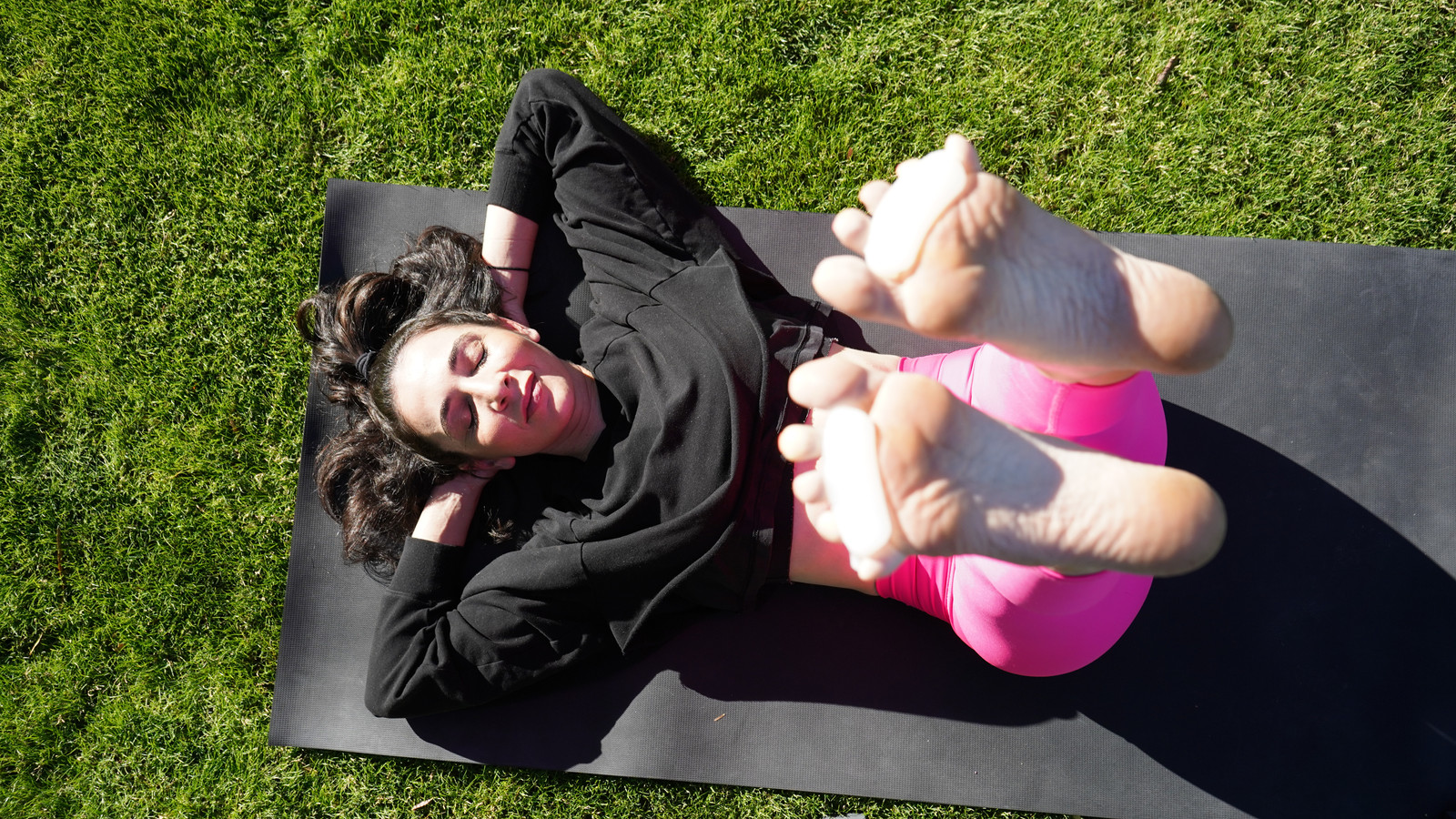
Watch Beri's SOLE FLOSS Tutorial
In this tutorial, Beri demonstrates how to place SOLE FLOSS between the toes, how to adjust each silicone finger for comfort, and how to use the device seated and during gentle movement.
You can find SOLE FLOSS, along with Beri's Foot Yoga Method and body therapy offerings, on the Sole2Soul Healing website.
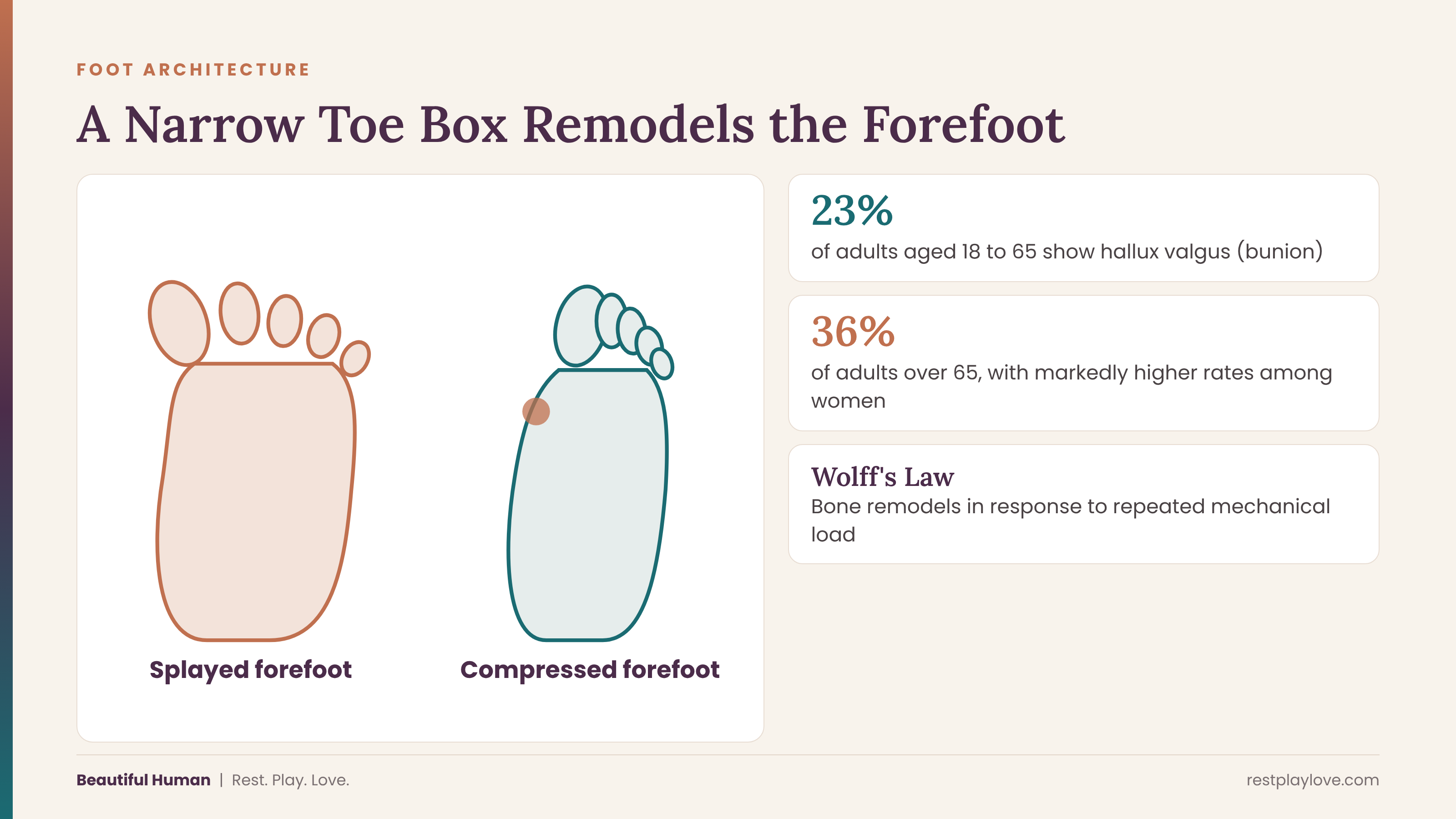
Foot Architecture and the Cost of a Compressed Toe Box
Bone remodels in response to mechanical load, a principle formalized as Wolff's Law, and the forefoot follows the same rule. The metatarsal bones and phalanges sit in a splayed, fan-like arrangement when unshod, distributing body weight across a wide base of contact. A narrow, tapered toe box compresses that fan medially, pushing the big toe (the hallux) toward the second toe and loading the first metatarsophalangeal joint asymmetrically. Repeated over years, that mechanical load remodels the joint itself, producing the bony prominence known as hallux valgus, or a bunion.
Comparative research on shod and unshod populations supports this mechanical account. Studies comparing habitually barefoot and habitually shod groups have documented higher rates of hallux valgus, forefoot narrowing, and toe deformity among people who wear enclosed, tapered footwear from childhood, while age-matched barefoot populations retain wider forefeet and straighter toe alignment. A systematic review and meta-analysis of hallux valgus prevalence found the deformity in roughly 23 percent of adults aged 18 to 65, rising to close to 36 percent in adults over 65, with markedly higher rates among women, a pattern consistent with narrower, more tapered footwear styles.
The width of your forefoot sets the size of your base of support during standing and gait. A narrowed forefoot reduces that base and requires more active muscular correction to maintain balance, particularly on uneven or unstable ground.
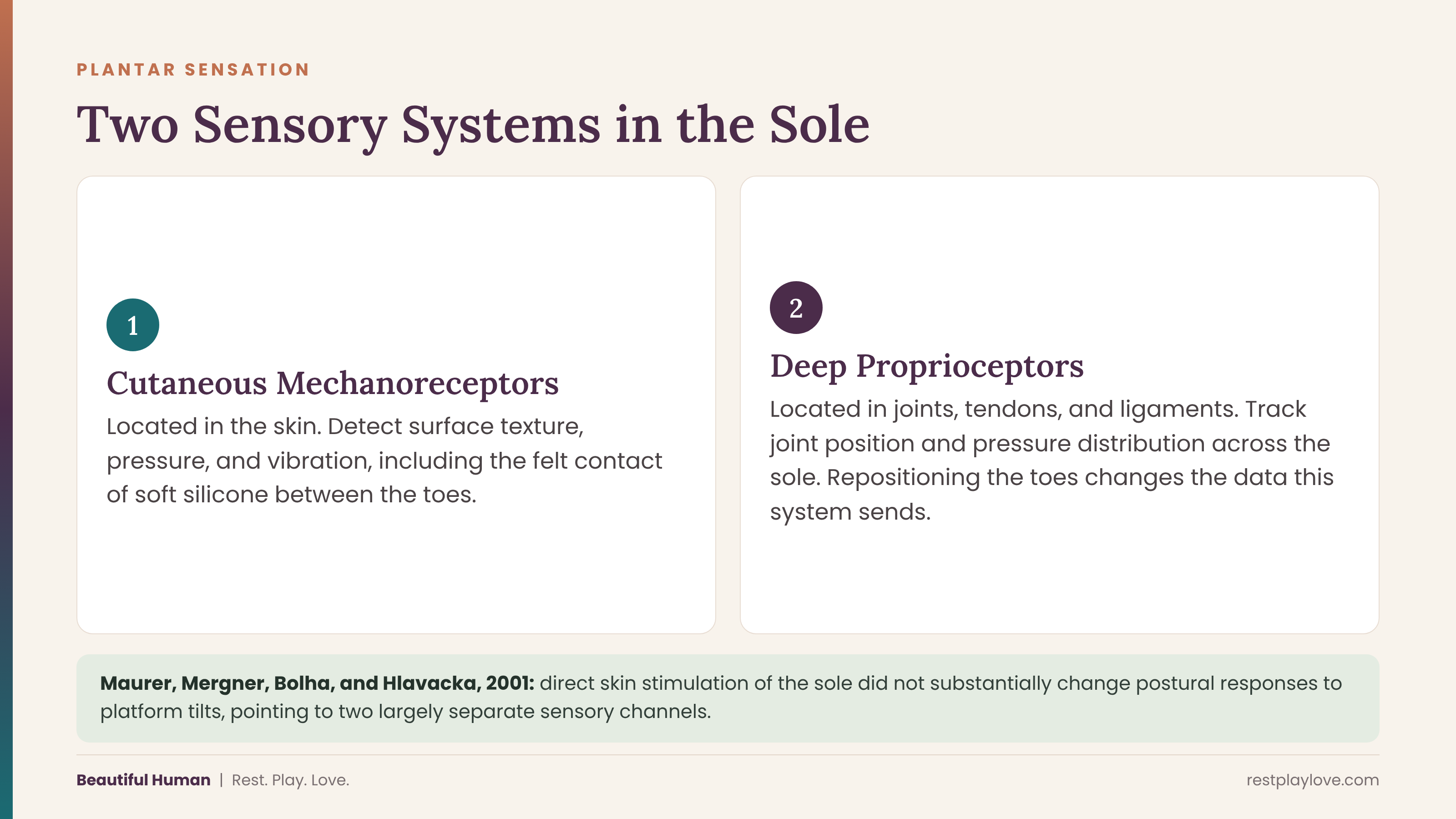
Two Systems of Foot Sensation: Cutaneous Mechanoreceptors and Deep Proprioceptors
The sole is served by two functionally distinct sensory systems: cutaneous mechanoreceptors in the skin, which detect surface texture, pressure, and vibration, and deeper proprioceptors in the joints, tendons, and ligaments of the foot, which track joint position and the distribution of pressure across the plantar surface. Research published in Neuroscience Letters by Maurer, Mergner, Bolha, and Hlavacka (2001) found that direct cutaneous stimulation of the plantar sole did not substantially change postural responses to platform tilts in either healthy subjects or patients with vestibular loss, which points to these two systems operating largely as separate channels.
This distinction matters for toe spacing specifically. Sliding SOLE FLOSS between the toes provides direct cutaneous input, the felt sensation of soft silicone against the skin, and its larger effect runs through the deeper system. By physically repositioning the phalanges into a splayed, uncompressed alignment, a toe spacer changes the joint position data reaching the proprioceptive receptors in the metatarsophalangeal joints, and that repositioned data reaches the central nervous system as new information about the width, shape, and pressure distribution of your own foot.
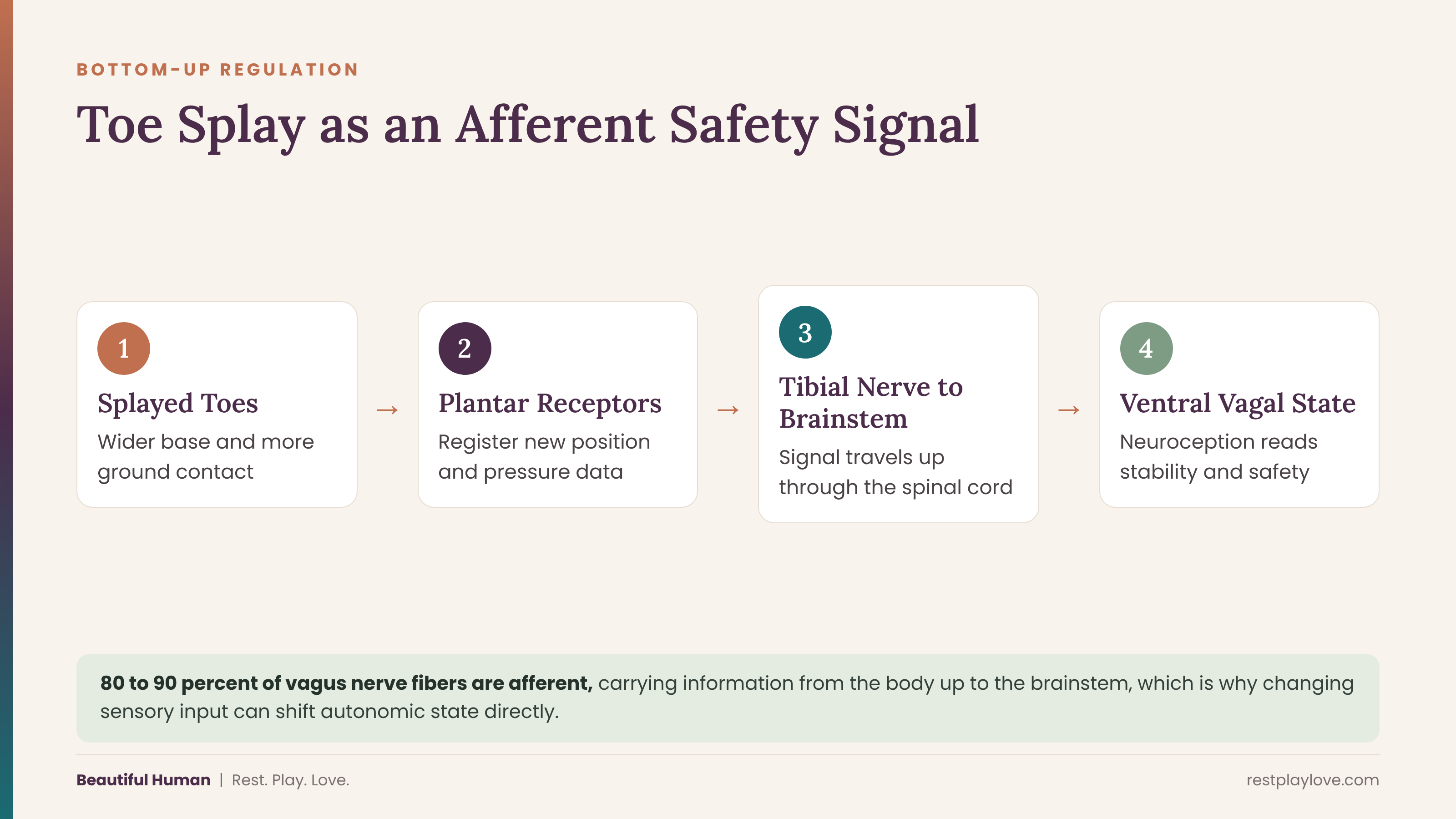
Toe Splay as an Afferent Safety Signal to the Brainstem
Roughly 80 to 90 percent of the fibers in the vagus nerve are afferent, carrying information from the body up to the brainstem. The same asymmetry holds across the somatosensory system more broadly, with far more neural architecture devoted to sensing the body's position and state than to consciously directing it. This is the physiological basis for bottom-up nervous system work, the principle that changing physical sensory input can alter autonomic state directly, without requiring cognitive reframing first.
Dr. Peter Levine's Somatic Experiencing model and Dr. Stephen Porges's Polyvagal Theory both describe grounding, defined as stable, felt contact with a supportive surface, as one of the most direct routes to engaging the ventral vagal system, the branch of the autonomic nervous system associated with safety and social engagement. Contact through the feet offers a particularly direct route into this system, since the soles carry more sensory receptors per square inch than almost any other weight-bearing surface of the body.
A compressed, tightly bound forefoot sends a proprioceptive signal of restriction, reduced surface area, and reduced contact with the ground. Splaying the toes and increasing the surface area of ground contact sends a signal of expansion, a wider base, and more stable footing. For a nervous system organized around threat detection, and for a trauma survivor specifically, the brainstem registers that shift as new data about the safety of the present moment, which is the physiological logic behind Beri's own discovery that relaxing the feet speaks directly to the nervous system's flight response and to self-protective tension patterns held in the body.
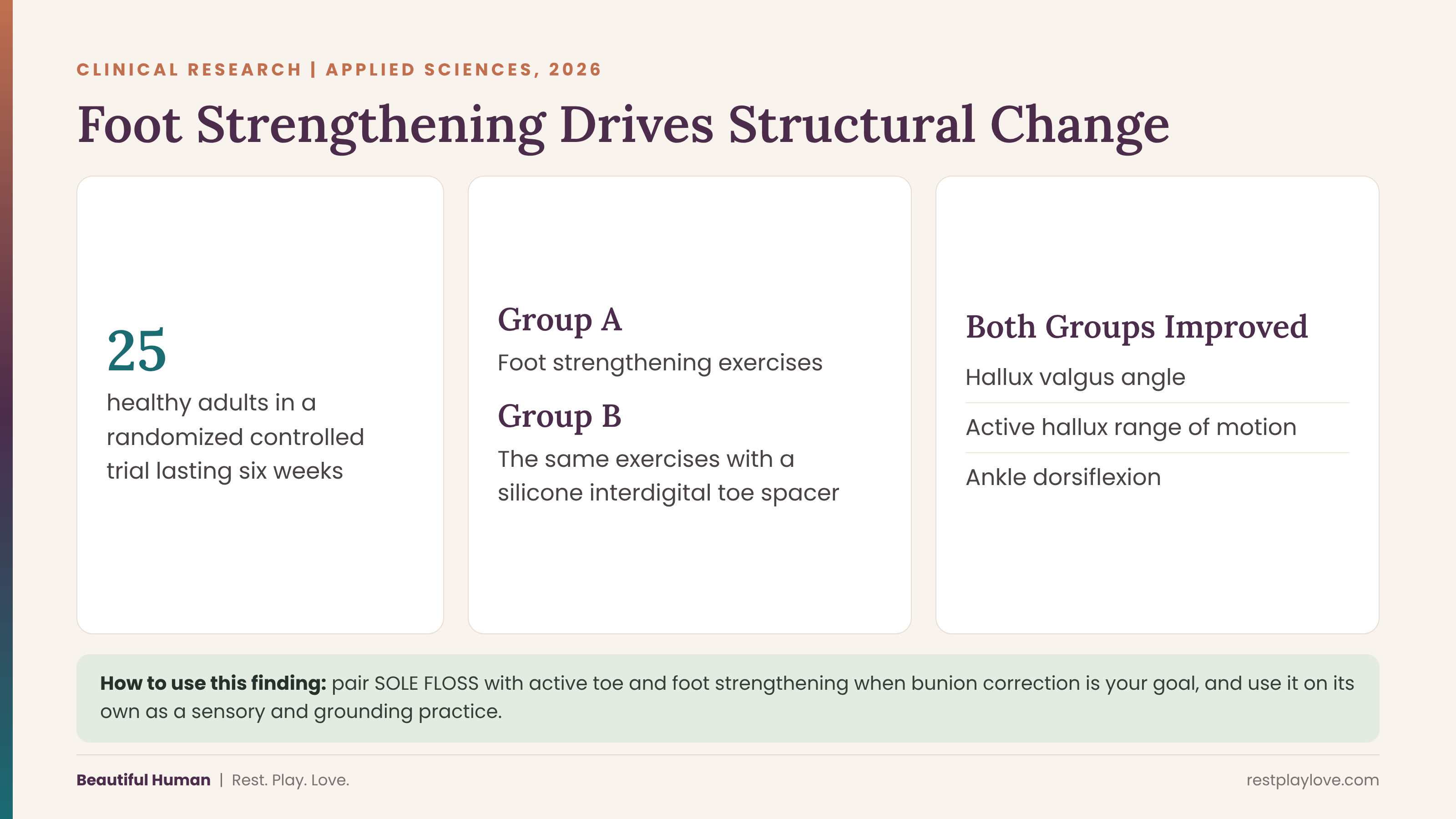
Toe Spacer Research: Foot Strengthening Drives Structural Change
A randomized controlled trial published in Applied Sciences (2026) assigned 25 healthy adults to six weeks of foot strengthening exercises, either alone or combined with a silicone interdigital toe spacer worn during the exercises. Both groups showed significant improvement in hallux valgus angle, active hallux range of motion, and ankle dorsiflexion. The toe spacer group showed no additional improvement over the exercise-only group on the primary outcome, and postural stability during single-leg stance did not change significantly in either group, which identifies the active strengthening work as the driver of structural change in this study.
For anyone working toward bunion correction or hallux realignment, this finding supports pairing SOLE FLOSS with active toe and foot strengthening, such as the exercises in Beri's Foot Yoga Method. SOLE FLOSS's own instructions describe the device as a relaxation, detox, and proprioceptive tool worn before and after shoes, and used this way, toe spacing changes plantar proprioceptive input in the moment and gives your nervous system sensory access to a wider, more grounded foot position.
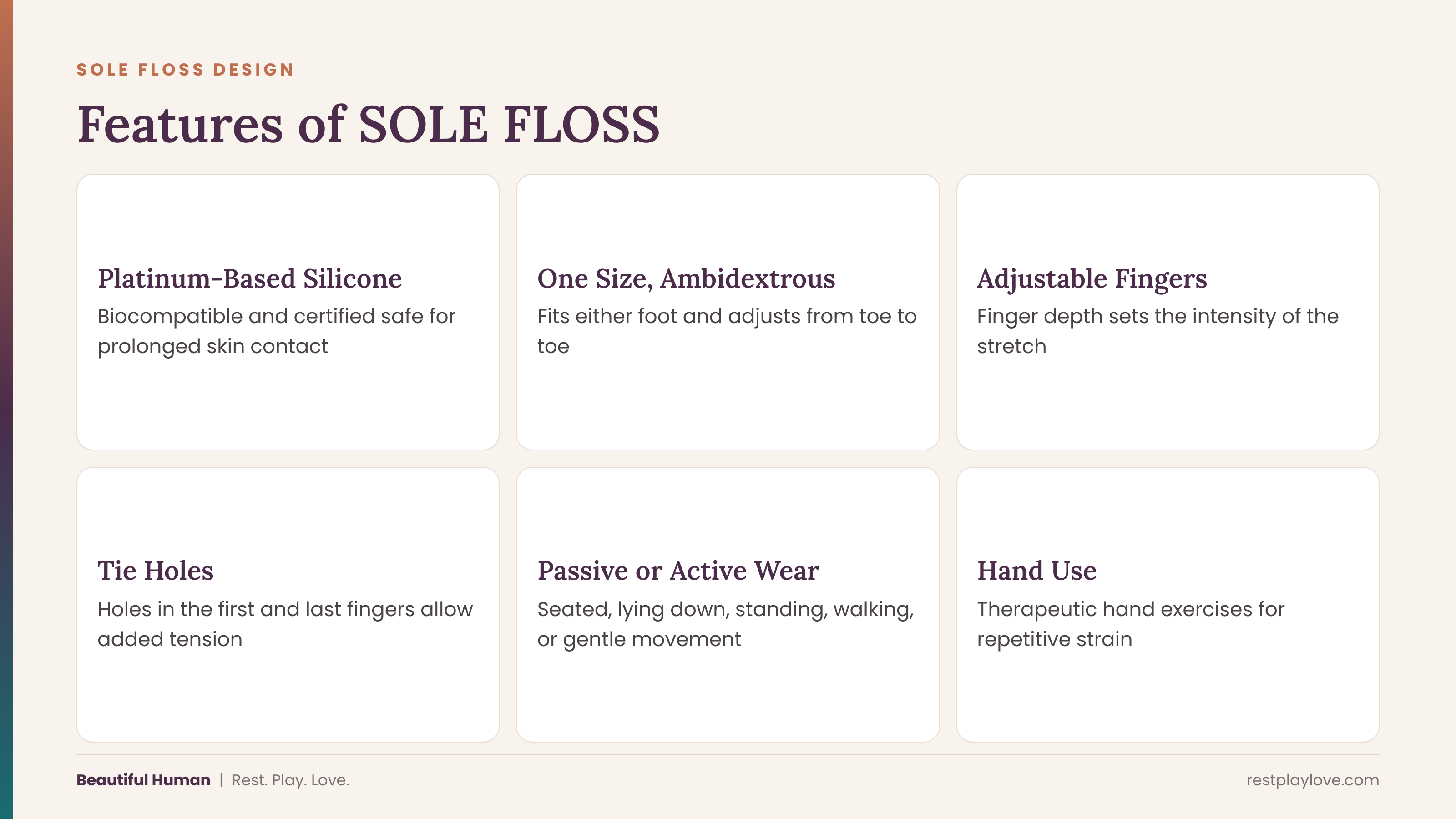
The SOLE FLOSS Design and Features
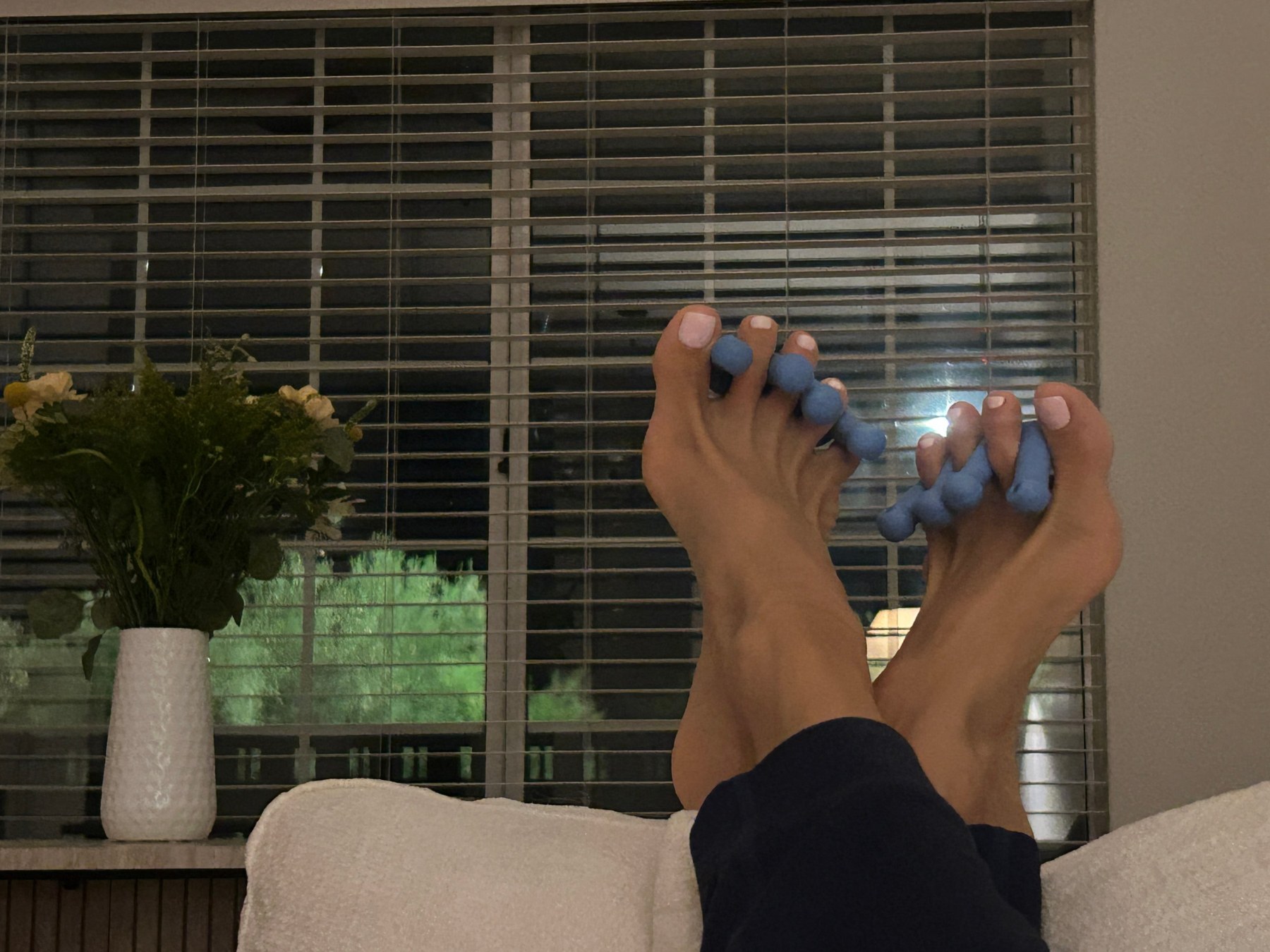
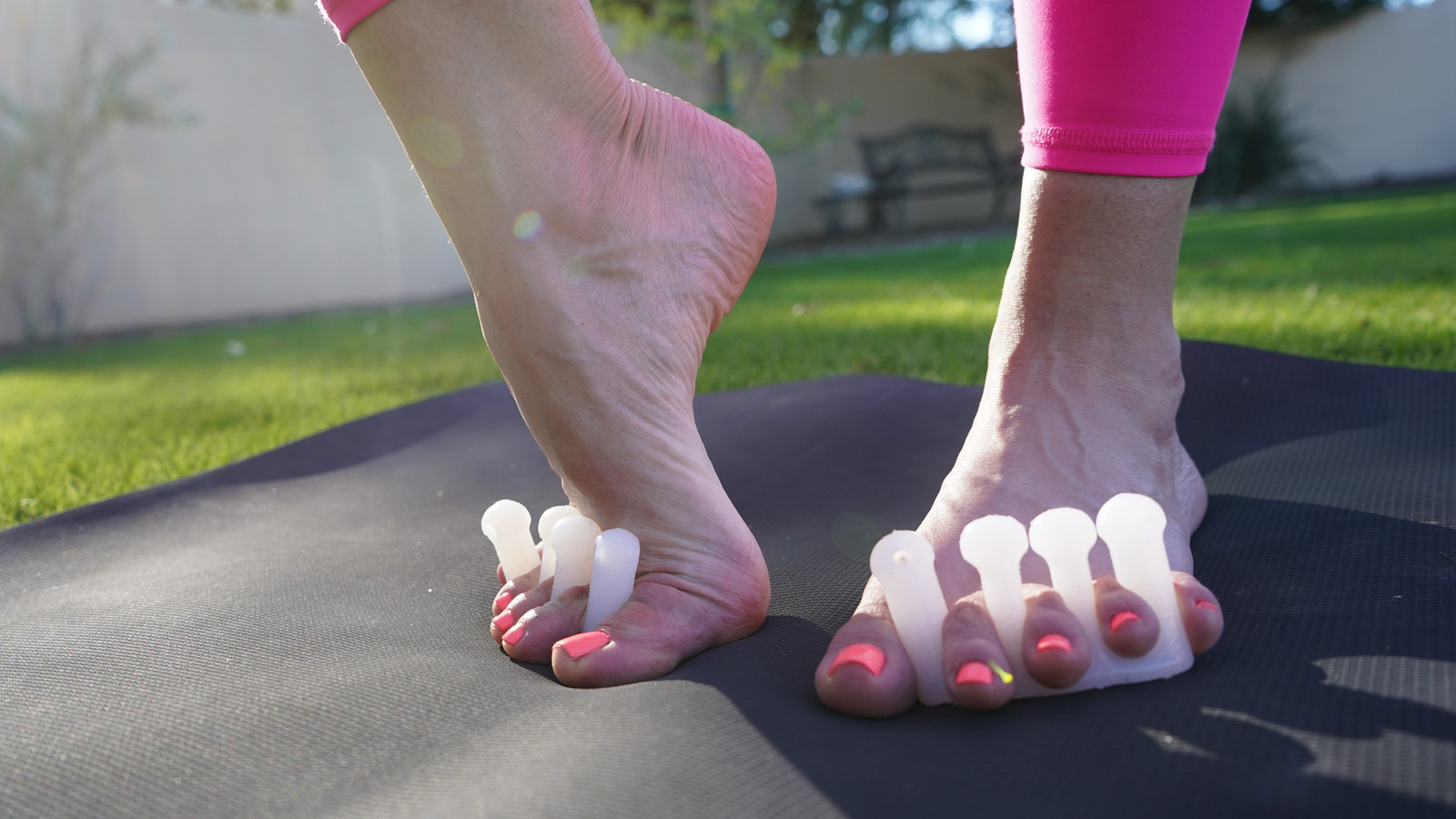
SOLE FLOSS is made from a platinum-based silicone that is biocompatible, certified skin safe, and certified safe for prolonged skin contact, designed to be both durable and flexible. Its four artificial "phalanges" slide between the toes, and each one can be positioned independently, so the device adjusts from foot to foot and toe to toe. It is one size fits all and ambidextrous, fitting either foot.
The first and last fingers include holes that allow you to tie the device on, which applies more tension to the stretch. SOLE FLOSS can be worn passively while seated or lying down, or actively while standing, walking, and moving through gentle stretches, and Beri also uses it for therapeutic hand exercises to rehabilitate repetitive strain. Beri's instructions call for wearing SOLE FLOSS for five minutes at a time, twice a day, before and after wearing shoes, and before bed to release the stress of the day and ease into sleep, gradually increasing duration and frequency as the toes, feet, and body acclimate.


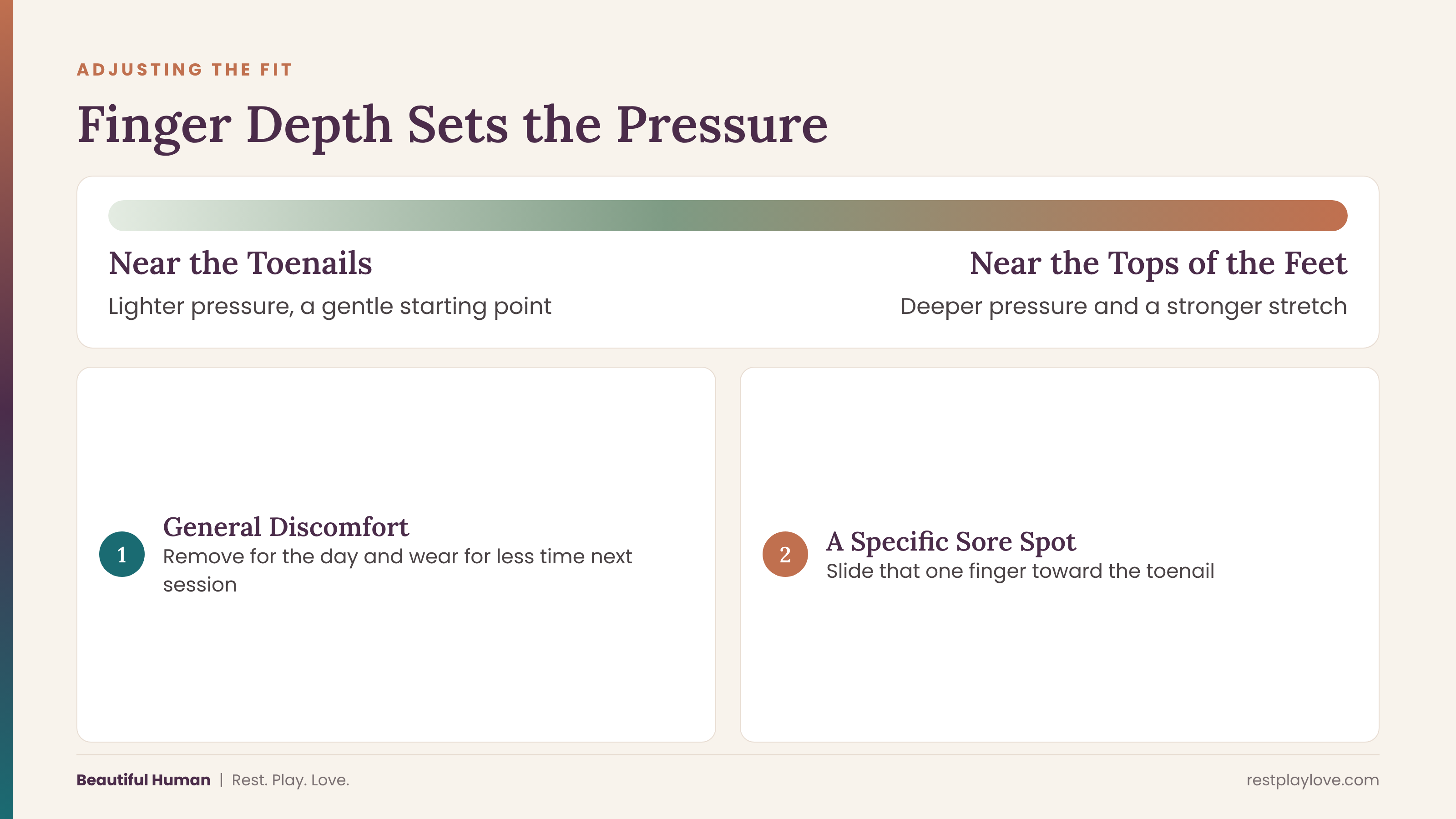
Adjusting SOLE FLOSS for Comfort and Pressure
Some discomfort is common in the first sessions, particularly in the places where your toes are used to being squeezed together. Beri recommends first assessing whether the discomfort is general or specific. For general discomfort, remove SOLE FLOSS for the day, note how long you wore it, and wear it for slightly less time in your next session, also noting whether the discomfort shows up in one foot or both.
For a specific sore spot, adjust the SOLE FLOSS finger at that spot. The closer a finger sits to the tops of your feet, the more intense the pressure, and the closer it sits to your toenails, the lighter the pressure, which lets you customize each finger to work through tight areas gradually. To clean SOLE FLOSS, wash it with warm water and soap and let it air dry, and keep it away from your pets.

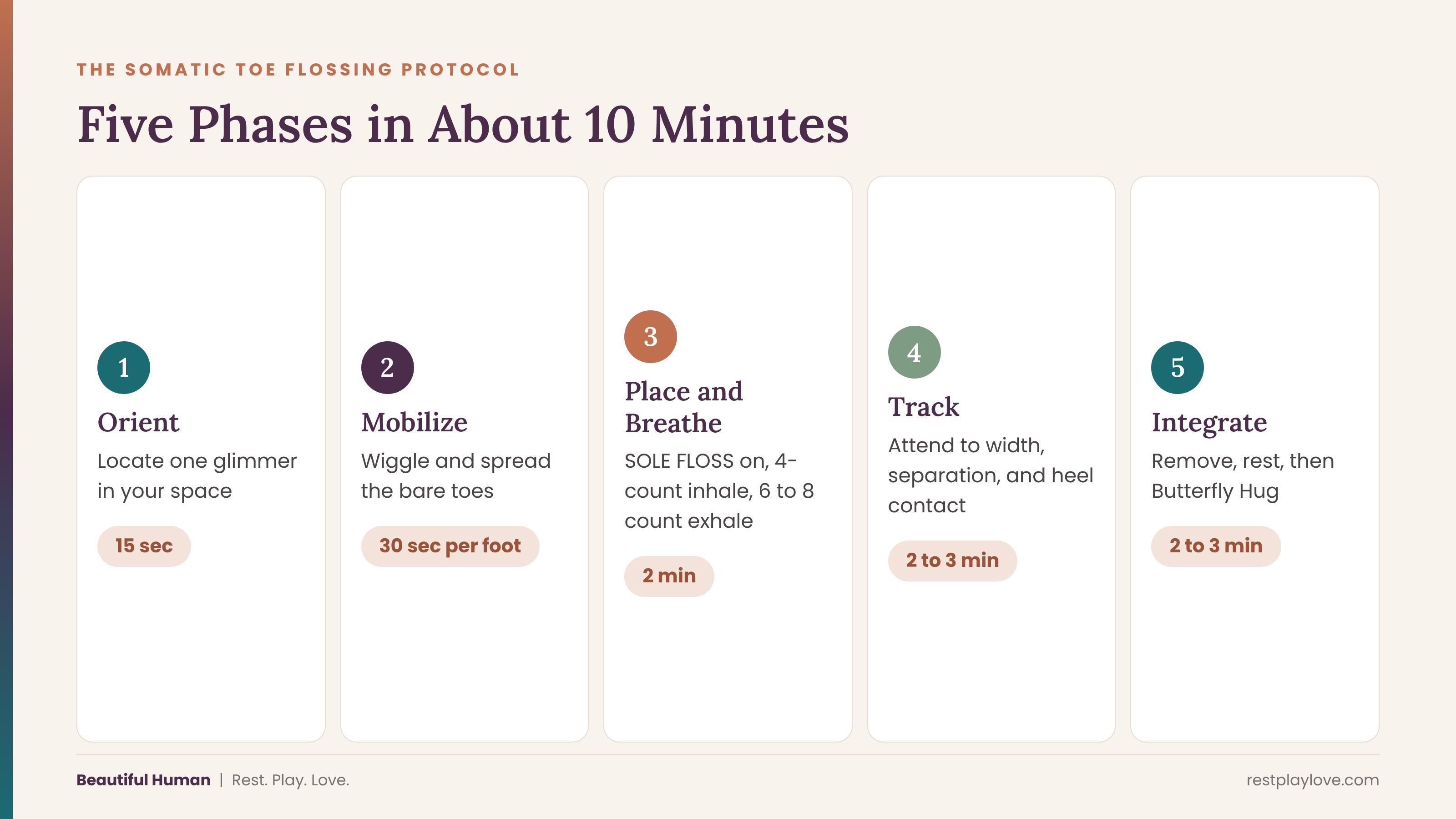
The Somatic Toe Flossing Protocol
The following five-phase protocol combines Beri's SOLE FLOSS instructions with polyvagal-informed pacing, breath work, and bilateral integration, adapted from the somatic practice sequences used throughout this site. The full sequence takes about 10 minutes.
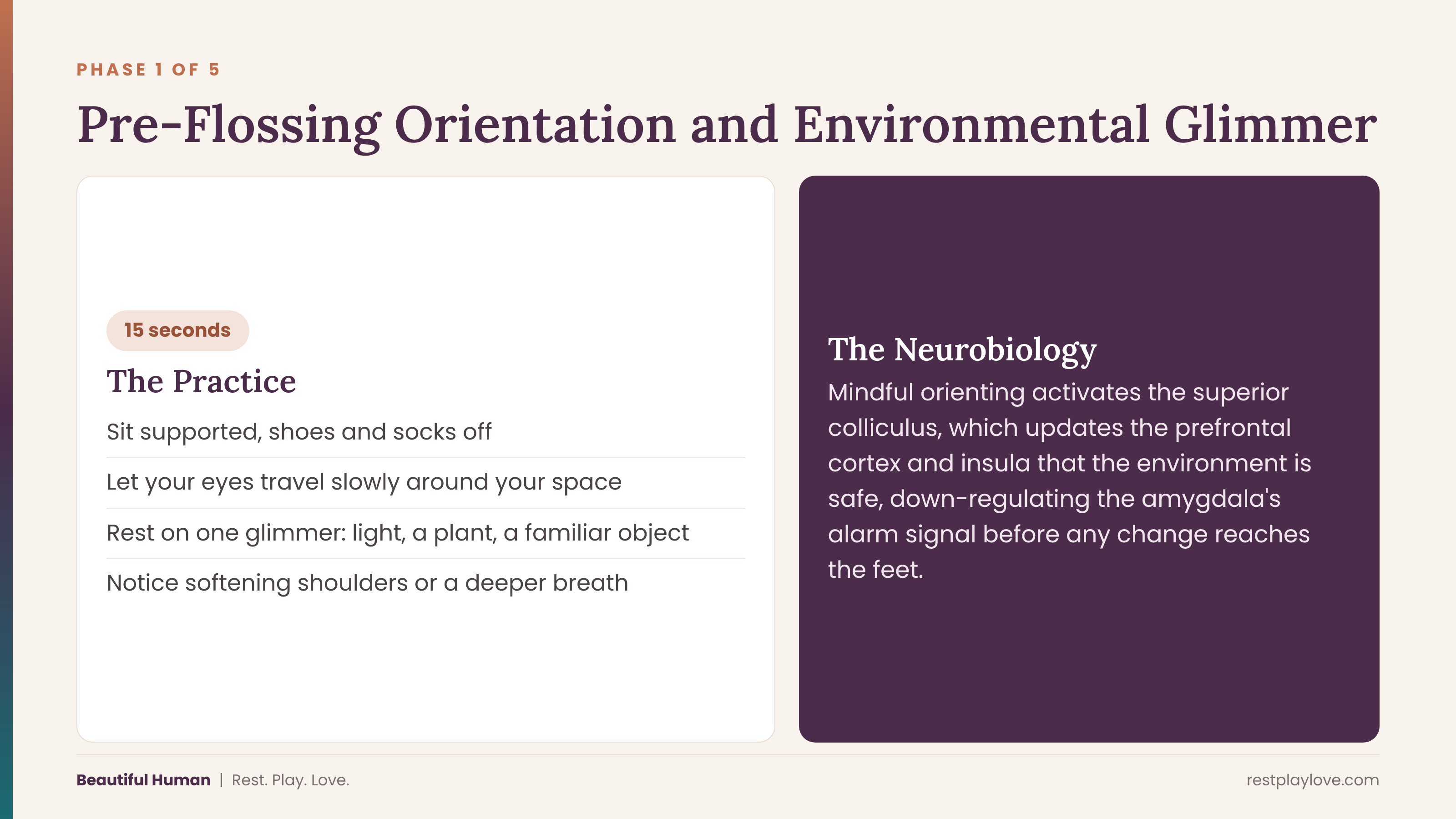
Phase 1: Pre-Flossing Orientation and Environmental Glimmer
Objective: Establish a baseline neuroception of safety before introducing new sensory input to the feet.
The Practice: Sit in a supported position and remove your shoes and socks. Before placing SOLE FLOSS, let your eyes travel slowly around your space and locate one glimmer, a small visual or sensory cue that reads as safe, such as a patch of light, a familiar object, a plant, or a companion animal. Rest your attention on it for 15 seconds and notice any small physical shift, such as a softening in your shoulders or a slightly deeper breath.
The Neurobiology: Mindful orienting activates the superior colliculus in the midbrain, which feeds updated data to the prefrontal cortex and insula confirming that the immediate environment can be evaluated as safe. This down-regulates the amygdala's alarm signal before any change is introduced at the feet.
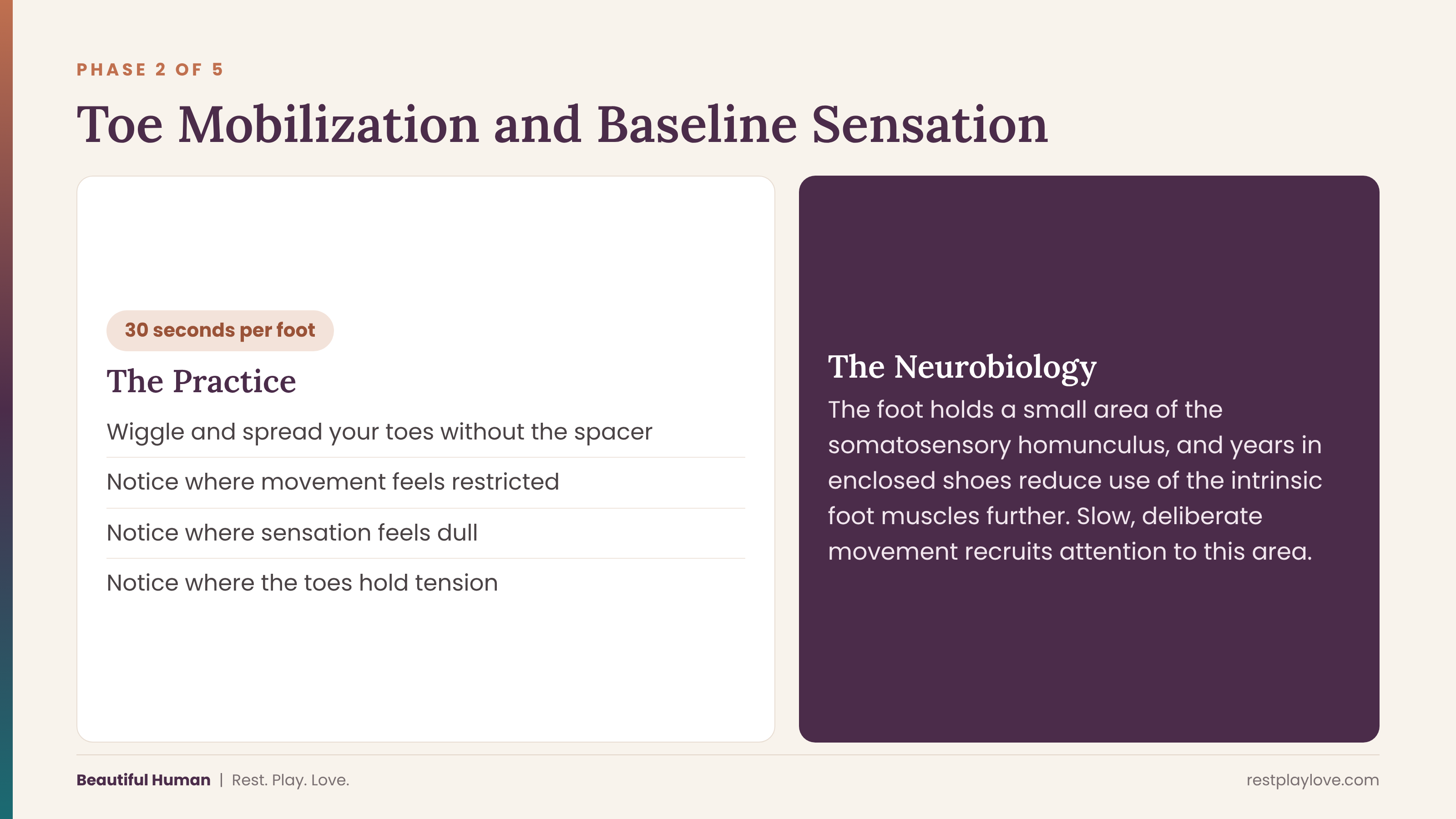
Phase 2: Toe Mobilization and Baseline Sensation
Objective: Wake the nervous system's awareness of the feet before altering their position, consistent with Beri's instruction to gently wiggle the toes first.
The Practice: Gently wiggle and spread your toes without SOLE FLOSS for about 30 seconds per foot. Notice where movement feels restricted, where sensation feels dull, and where the toes are already holding tension.
The Neurobiology: The cortical representation of the foot and toes in the somatosensory homunculus is proportionally small relative to the hands and face, and years of enclosed footwear reduce active use of the intrinsic foot muscles further. Deliberate, slow movement recruits attention to an area that ordinarily receives very little of it.
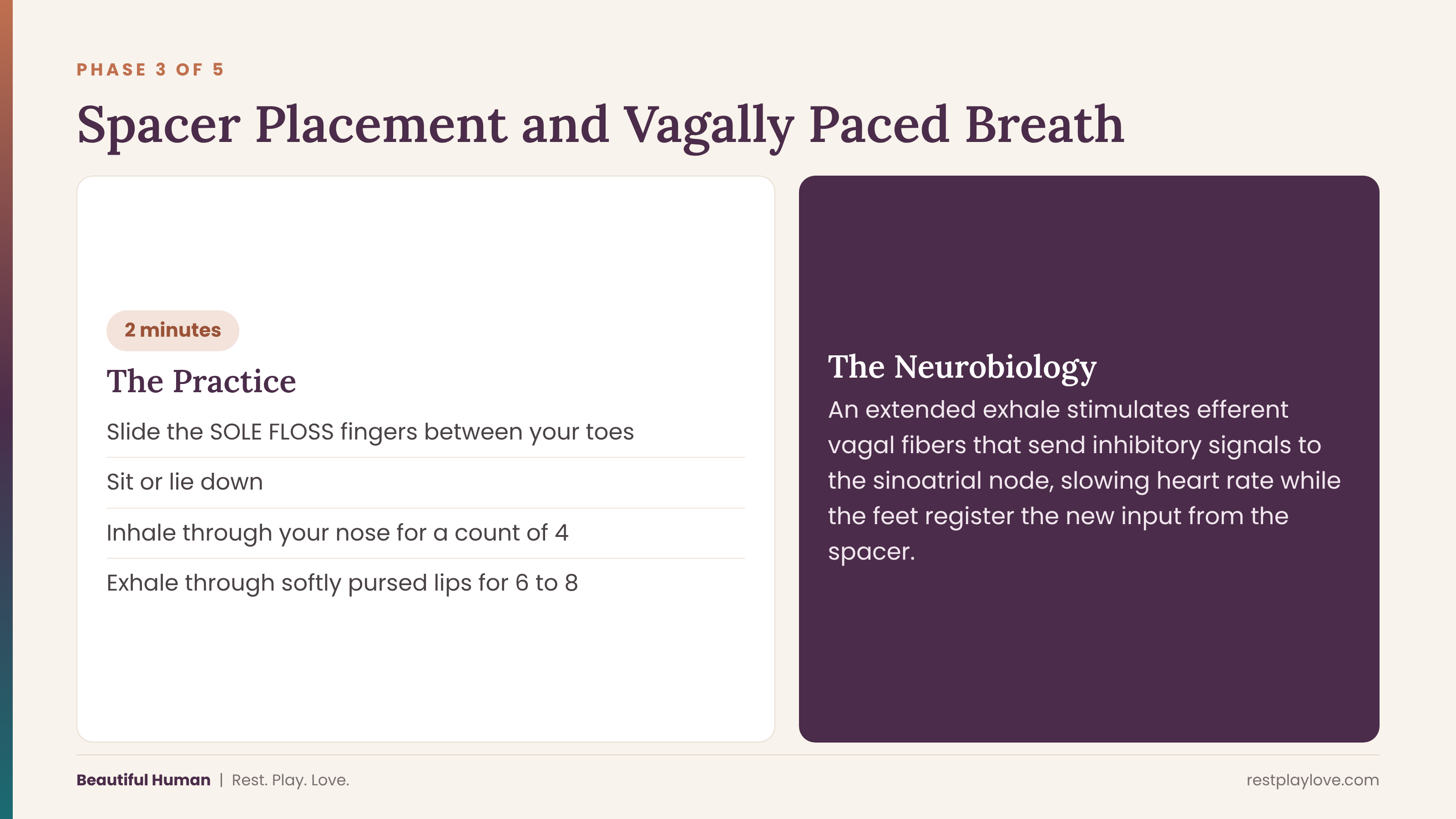
Phase 3: Spacer Placement and Vagally Paced Breath
Objective: Introduce the new proprioceptive input while pairing it with an extended exhale to engage the vagus nerve directly.
The Practice: Slide the SOLE FLOSS fingers gently between your toes on both feet, then sit or lie down. Inhale through your nose for a count of 4, then exhale through softly pursed lips for a count of 6 to 8. Continue for 2 minutes while your feet adjust to the new position.
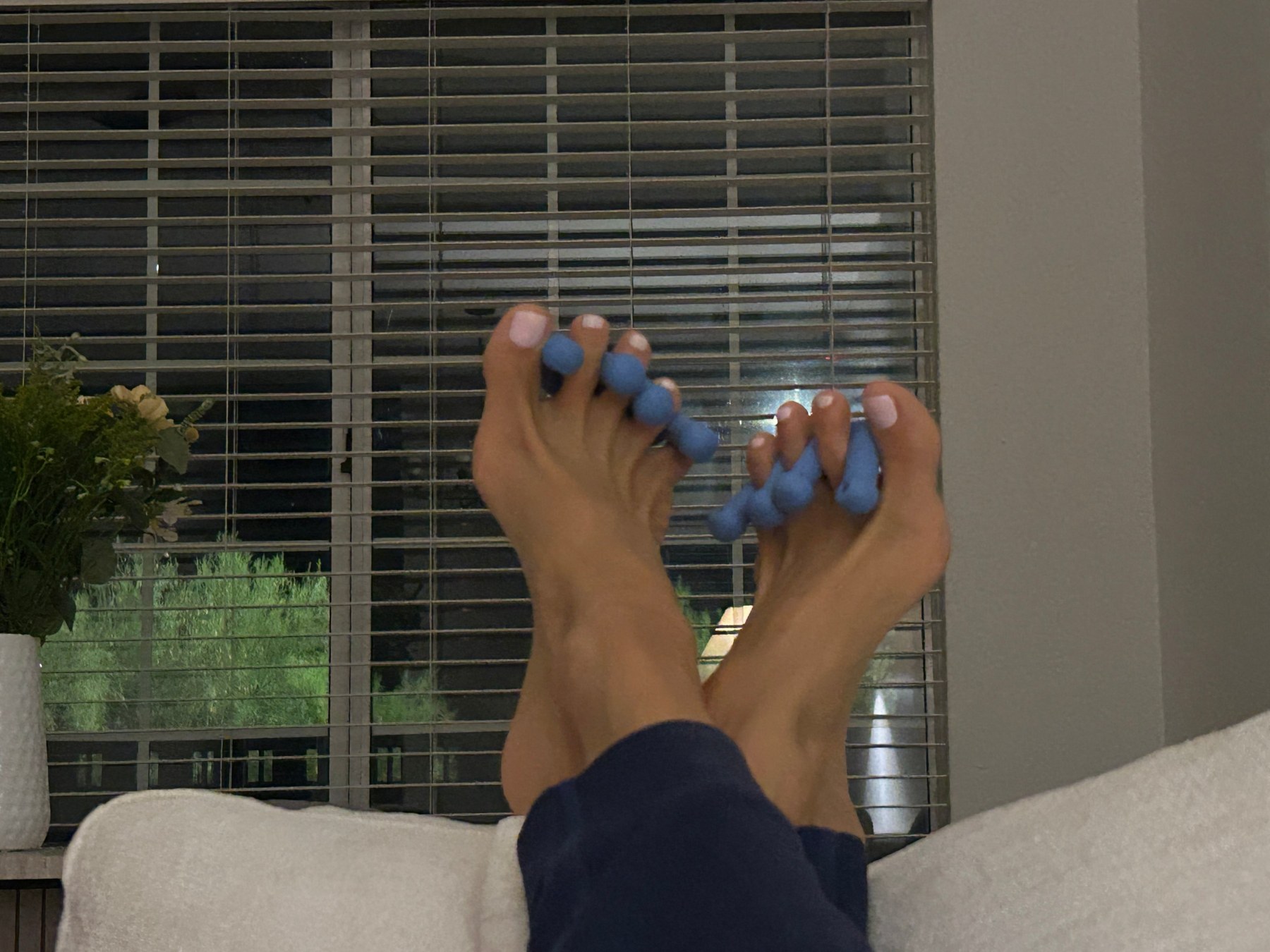
The Neurobiology: An extended exhalation stimulates the efferent fibers of the vagus nerve, sending inhibitory signals to the sinoatrial node of the heart, slowing heart rate and supporting a settled autonomic baseline while the feet register the unfamiliar sensory input of the spacer.

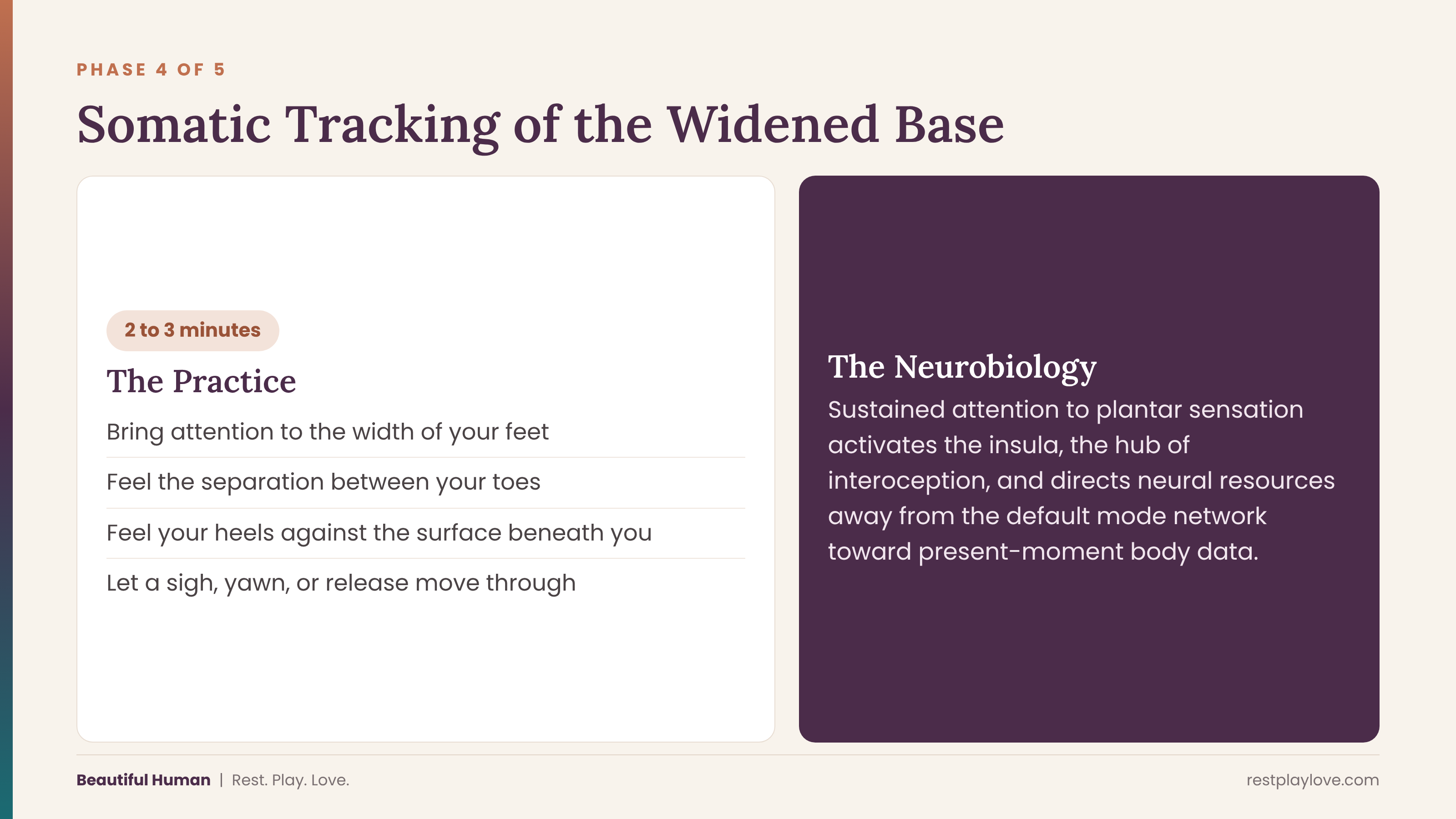
Phase 4: Somatic Tracking of the Widened Base
Objective: Direct conscious attention to the new sensory data your feet are generating, giving your nervous system time to register the shift.
The Practice: For 2 to 3 minutes, bring your attention to the width of your feet, the sensation of your toes separated, and the points of contact between your heels and the surface beneath you. If a sigh, a yawn, or a release of tension elsewhere in the body (jaw, shoulders, low back) arises, let it move through without interrupting it.
The Neurobiology: Sustained attention to plantar sensation activates the insula, the brain region responsible for interoception, the internal tracking of bodily sensation. This directs neural resources away from the default mode network's rumination loop and toward present-moment bodily data.

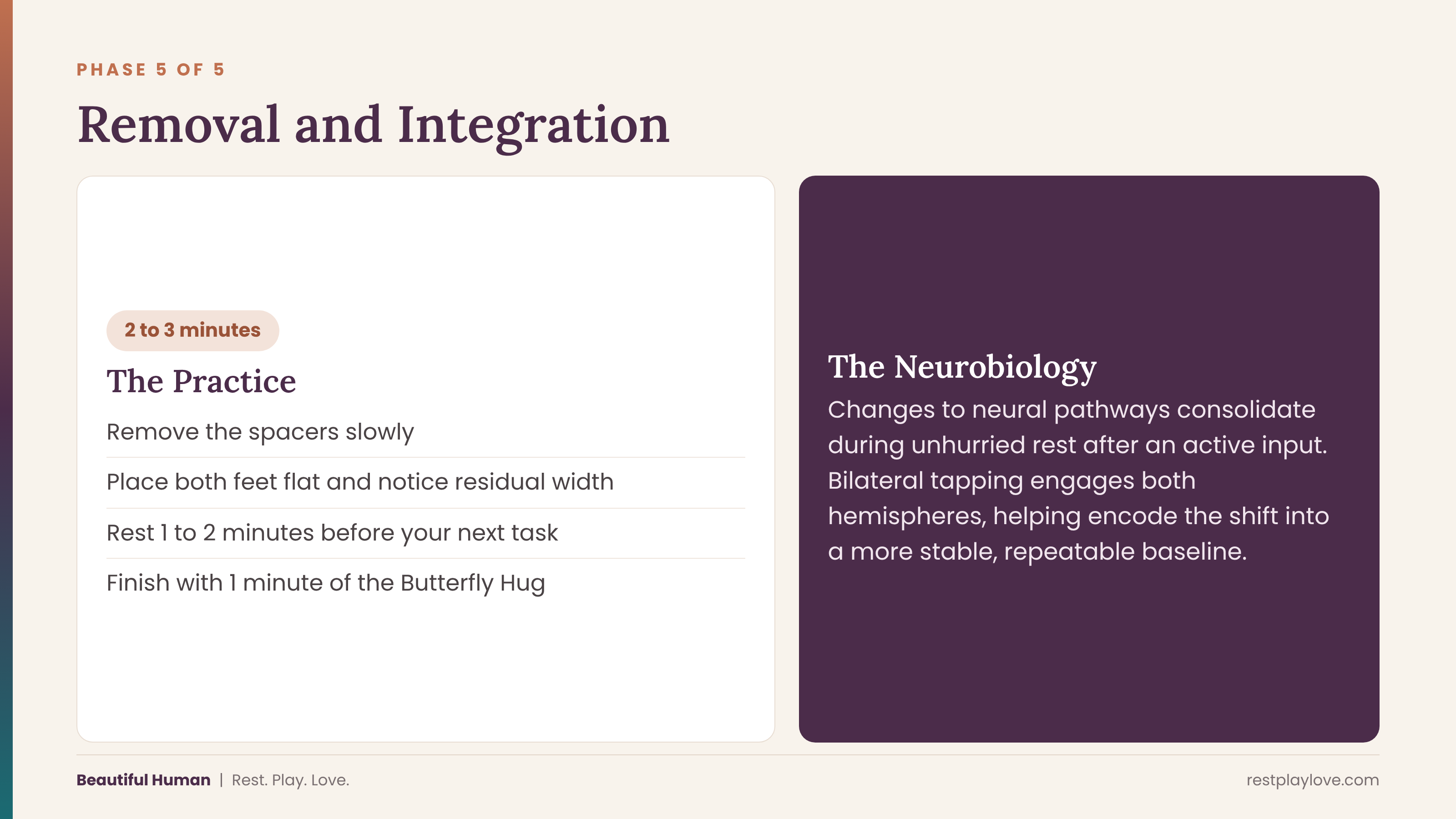
Phase 5: Removal and Integration
Objective: Consolidate the state shift through unhurried rest and bilateral stimulation, following the same integration sequence used after any active somatic practice.
The Practice: Remove SOLE FLOSS slowly. Stand or sit with both feet flat on the floor and notice the residual width or ease across your forefoot. Rest for 1 to 2 minutes before moving to your next task, then follow with 1 minute of the Butterfly Hug, alternating taps on opposite shoulders, to support bilateral integration.
The Neurobiology: Structural changes to neural pathways require unhurried time to consolidate after an active input. Bilateral tapping engages both hemispheres, helping encode the shift from a passing sensation into a more stable, repeatable baseline.
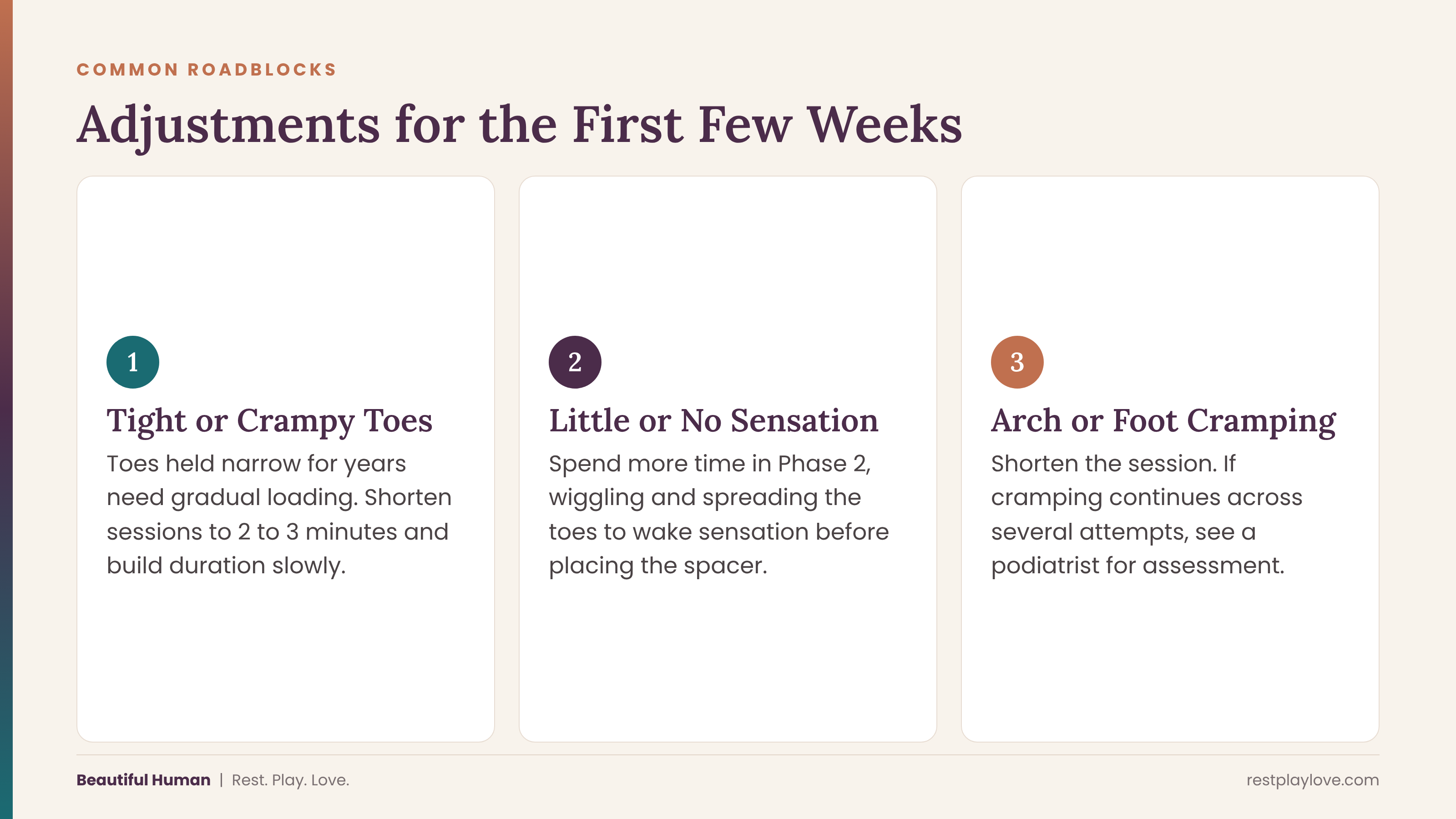
Navigating Common Roadblocks
"My toes feel tight or crampy the first few times I use it." This is a common response from toes that have been held in a narrowed position for years. The intrinsic foot muscles and connective tissue between the toes need gradual loading, so reduce your session to 2 to 3 minutes, slide the SOLE FLOSS fingers toward the toenails for lighter pressure, and build duration slowly, as Beri's instructions recommend.
"I don't feel much of anything." Years in enclosed footwear, or a nervous system baseline shifted toward dorsal shutdown, can both reduce plantar sensitivity and interoceptive awareness. Spend more time in Phase 2, actively wiggling and spreading the toes before placing SOLE FLOSS, to wake sensation before introducing the spacer.
"My arch or foot cramps while wearing them." Cramping usually signals a session that ran longer than your current tolerance, or a structural issue such as an existing bunion, hammertoe, or plantar fascia restriction that needs its own assessment. Shorten the session, and consult a podiatrist if cramping continues across multiple attempts.
Contraindications and Screening
Diabetic neuropathy or any condition involving reduced foot sensation, which raises the risk of unnoticed irritation or injury.
Open wounds, active fungal infection, or skin breakdown between the toes.
Recent foot or toe surgery, an acute fracture, or a severe bunion that a podiatrist has recommended for surgical correction.
An active gout flare in the foot.
Circulatory conditions affecting the feet, including peripheral artery disease or significant edema.
Final Reflections: Grounding Through the Feet
The feet are one of the most densely innervated, most continuously loaded, and most consistently overlooked parts of the body. Where structural correction is the goal, toe spacing works best alongside targeted foot and ankle strengthening, and as a sensory practice, supported by mechanoreceptor research and polyvagal-informed nervous system science, SOLE FLOSS offers a direct, low-effort way to change the proprioceptive data reaching your brainstem from the ground up, giving a nervous system working to locate safety in the present moment a wider, steadier foundation to stand on.
Books and Resources for Grounding Through the Feet
If this exploration has sparked your interest in how sensation from the feet shapes your nervous system, these books and tools offer deeper education and support for your practice.
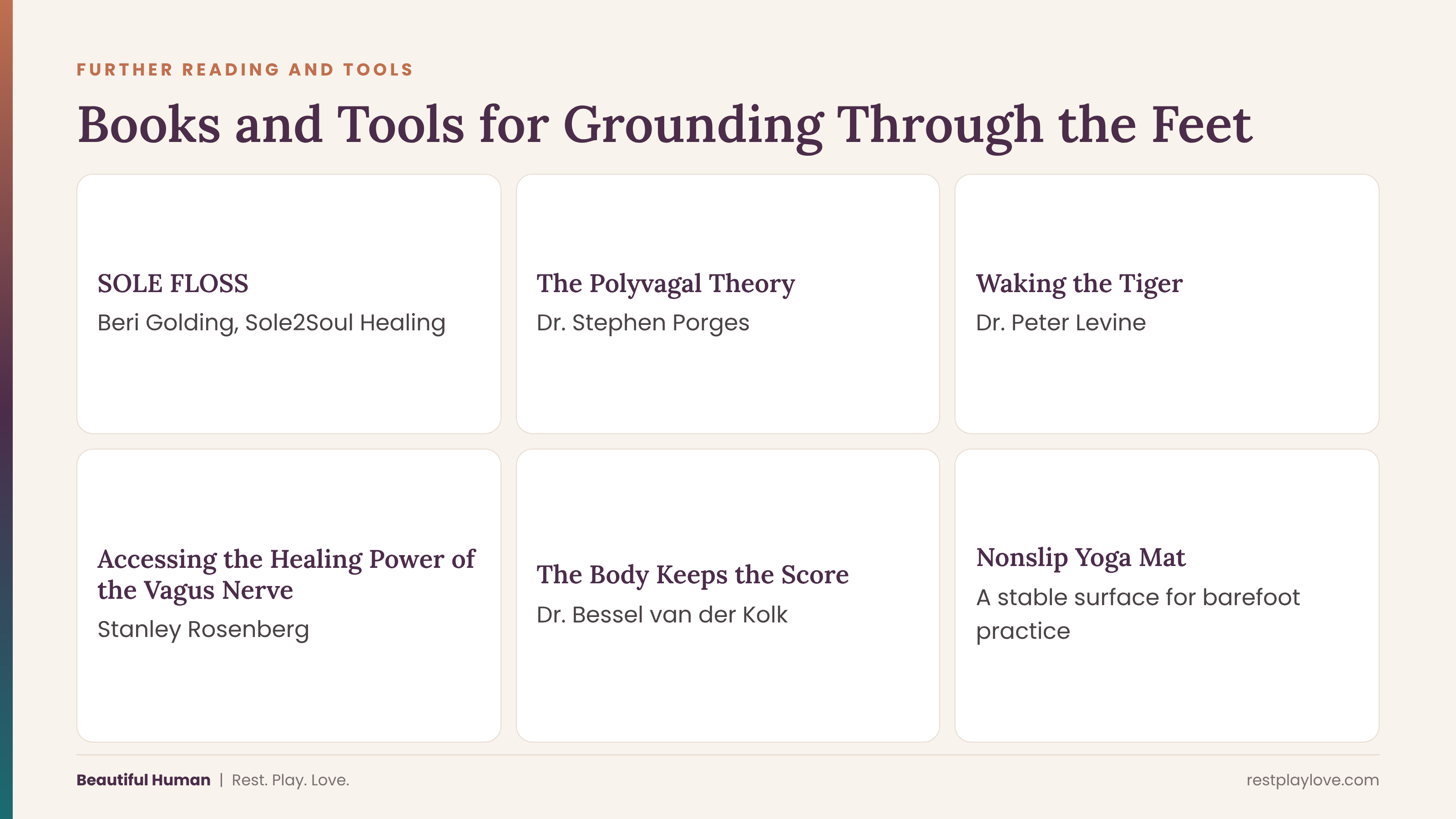
SOLE FLOSS by Beri Golding of Sole2Soul Healing. The therapeutic toe spacing and foot fascial release device used throughout the protocol in this post, along with Beri's Foot Yoga Method for active toe and foot strengthening.
The Polyvagal Theory by Dr. Stephen Porges. For the neurophysiological foundations of neuroception, the ventral vagal system, and the body's detection of safety.
Waking the Tiger by Dr. Peter Levine. For the Somatic Experiencing approach to grounding and bottom-up trauma healing.
Accessing the Healing Power of the Vagus Nerve by Stanley Rosenberg. For self-help exercises that support vagal function alongside a grounding practice.
The Body Keeps the Score by Dr. Bessel van der Kolk. For the research on how trauma is held in the body and how body-based practices support recovery.
A comfortable, organic, non-toxic, nonslip yoga mat for a stable, supportive surface during barefoot practice and the standing phases of this protocol.
This section contains affiliate links. I only share books, protocols, and tools that I've personally integrated and found meaningful enough to include in my personal and professional work and writing. If you choose to purchase through one of my affiliate links, I may receive a small commission at no additional cost to you.
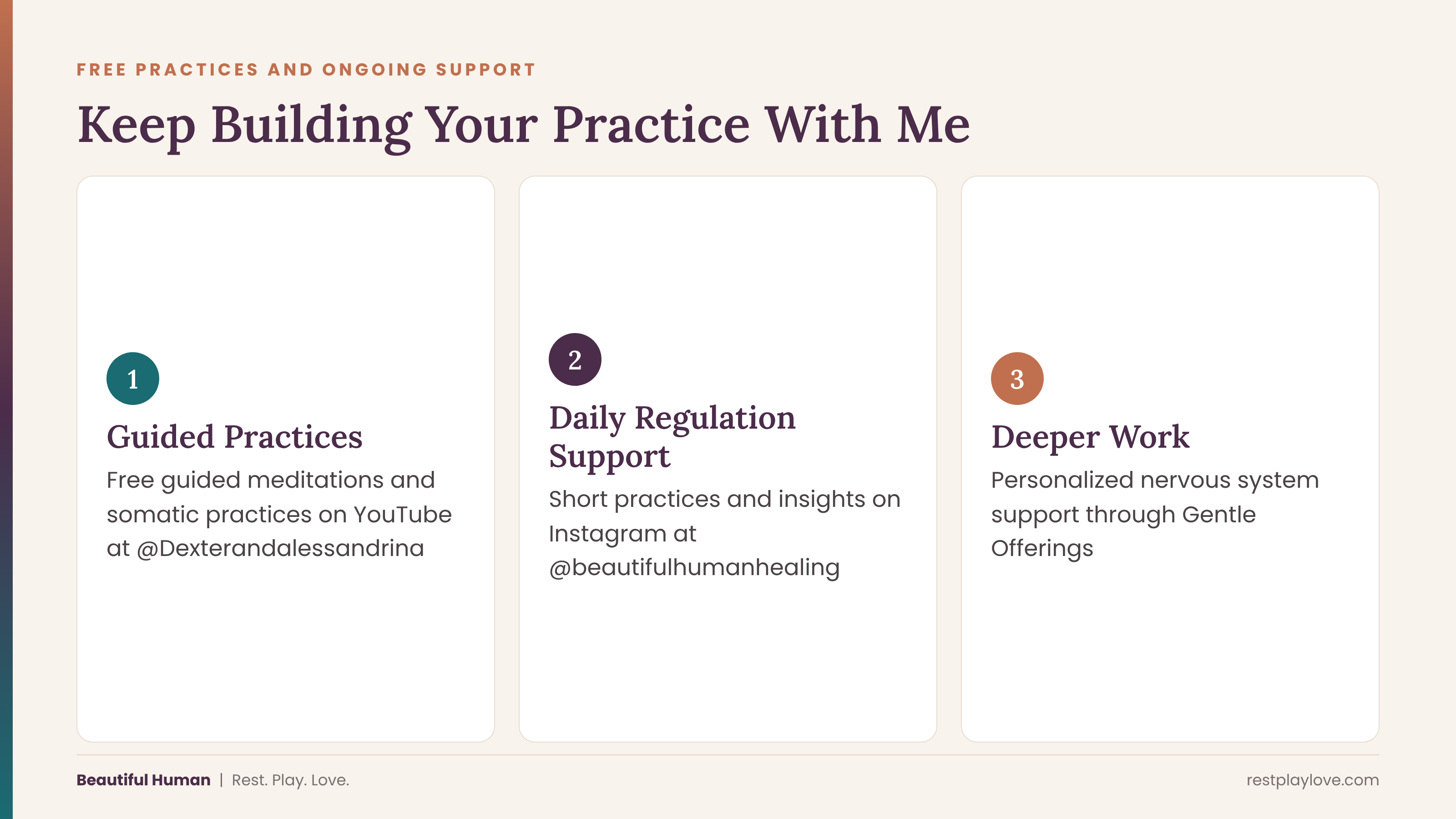
Keep Building Your Practice With Me: Free Practices and Ongoing Support for Grounding and Embodied Safety
Guided Practices: Free guided meditations and somatic practices, including grounding, breath, and Qi Gong, are available on YouTube at @Dexterandalessandrina.
Daily Regulation Support: Follow me on Instagram at @beautifulhumanhealing for short practices and insights on grounding and nervous system regulation.
Deeper Work: Explore personalized support for nervous system regulation and embodied safety through my Gentle Offerings.
Alessandrina Dorer